
Unbiased headlines. Facts, not spin.
Every story is an unbiased news briefing written from 110+ sources across the spectrum — sources linked so you can verify it yourself.
 health
Major Story (7/10)
July 7, 2026 at 05:21 PM
health
Major Story (7/10)
July 7, 2026 at 05:21 PM
Study: Most EpiPens Retain Full Potency Years Past Their Expiration Dates
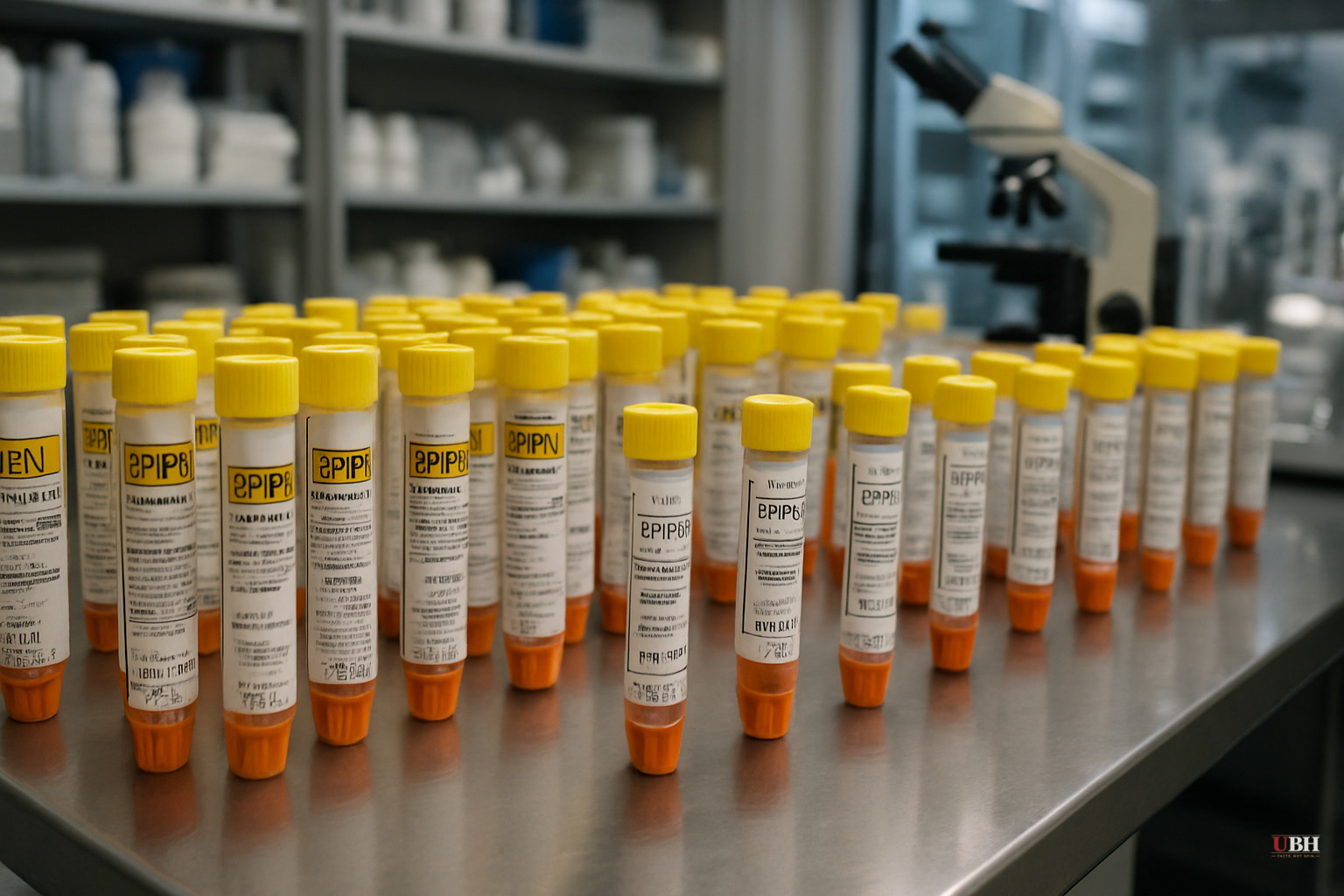
Researchers at Drake University College of Pharmacy and Health Sciences tested 46 epinephrine auto-injectors collected from volunteers, ranging from one month to 168 months (14 years) past their labeled expiration dates. The brands included EpiPen and its authorized generic, Auvi-Q, and the authorized generic of Adrenaclick.
Of the 46 devices tested, 37 — approximately 80% — retained more than 90% of their epinephrine concentration. This 90% threshold is the FDA's own potency benchmark for the drug. Only nine of the expired auto-injectors failed to meet it, according to the study published in The Journal of Allergy and Clinical Immunology: In Practice.
EAIs up to six months past expiration retained 100% of the drug. Devices one year out still showed 95% or better. Every single auto-injector tested up to 30 months beyond its labeled expiration date cleared the FDA's 90% minimum.
"The current expiration dates of EAIs are too short," said lead author Lynn Kassel, PharmD, BCPS, Assistant Professor of Clinical Sciences at Drake University College of Pharmacy and Health Sciences. "The concentrations we saw indicate the devices may still be viable years after the expiration dates."
Kassel noted the findings are consistent with previously published data on epinephrine longevity.
The lab analysis was conducted by Abebe Mengesha, PhD, Associate Professor of Pharmaceutical Sciences at Drake, using reversed-phase high-performance liquid chromatography. Student pharmacist Caroline Jones injected the EAI contents directly into HPLC vials under 10 seconds of sustained pressure to simulate an actual injection. Vials were analyzed immediately.
Epinephrine auto-injectors carry a large financial burden for patients. The source notes a sharp increase in auto-injector prices alongside a shortage of epinephrine in recent years. Families with severe allergies — especially those with children — often carry multiple devices at home, at school, and in vehicles. When the labeled expiration date hits, many discard and replace the devices at significant cost.
If Kassel's data holds up under further scrutiny and the FDA revisits expiration labeling, patients who cannot afford timely replacements wouldn't have to choose between keeping an "expired" device and going without one entirely.
Kassel said directly: "Extending these expiration dates could help patients overcome financial barriers when it comes to obtaining auto-injectors, and may have an impact on the current shortage of epinephrine auto-injectors."
The case for caution is real. Critics of loosening expiration standards would note that the 46-device sample size is small, and that the nine devices that failed the potency test represent roughly 20% of the sample. In an anaphylactic emergency, a 20% failure rate is not a minor statistical footnote. It could be fatal. Anaphylaxis moves fast, and a device that delivers degraded epinephrine at the exact moment someone's airway is closing is worse than a missed expectation. Medical professionals also have no way to know at the point of injection whether a specific device falls in the 80% that passes or the 20% that doesn't.
The study's own data, though, cuts against the sharpest version of that argument: failure rates were concentrated in devices significantly further past expiration, and ZERO devices up to 30 months past expiration failed the FDA benchmark. The risk curve is not flat.
Kassel was explicit about the study's intent: "We are not necessarily advocating for use of an expired medication; however, some patients may need to rely on these while drug shortages and cost of medications continue to make new auto-injectors unattainable. What we do hope is this growing body of evidence will eventually lead to more accurate expiration dates for auto-injectors."
This research, published in 2019 through the American Academy of Allergy, Asthma and Immunology's journal, established the factual foundation. The next step belongs to the FDA. Patients and physicians continue operating under the manufacturers' original expiration dates — dates the Drake University data suggest may be set conservatively short.
Whether the FDA acts on the accumulated evidence, or whether manufacturers have a financial incentive to resist date extensions, remains an open and unanswered question.
Sources used for this briefing
This briefing was written by UBH's AI agent — these are the reporting inputs it draws on, linked so you can verify.


