
Unbiased headlines. Facts, not spin.
Every story is an unbiased news briefing written from 110+ sources across the spectrum — sources linked so you can verify it yourself.
 health
Notable (5/10)
July 23, 2026 at 07:06 PM
health
Notable (5/10)
July 23, 2026 at 07:06 PM
Study Links Vacant Chicago School Buildings to Nearby Rise in Gun Violence
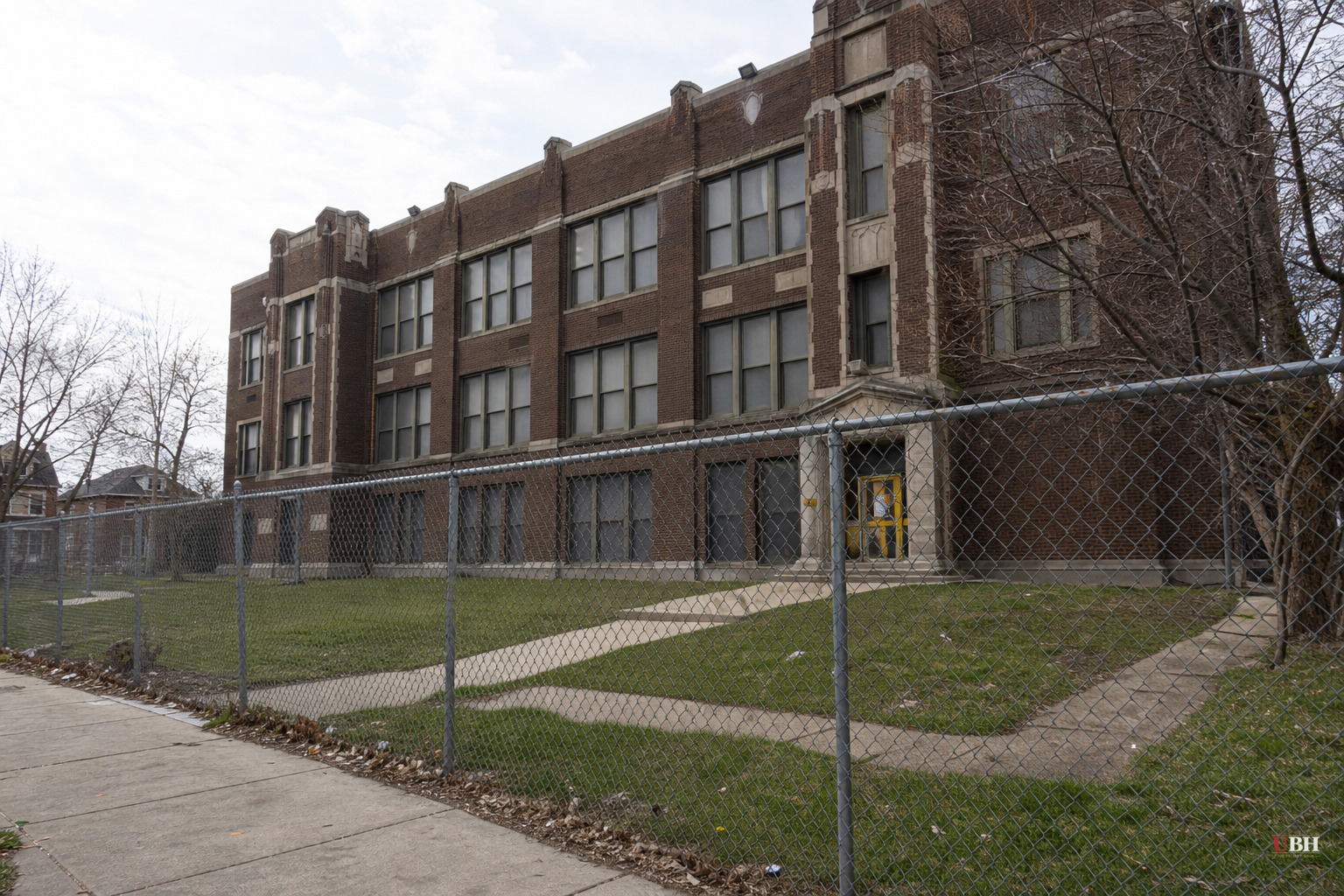
Chicago has closed public schools over the years amid consolidations tied to cost-cutting and shrinking enrollment. Many of those buildings never found a new use. They just sat there, boarded up.
A new study reported by AP News found that gun violence rose in the areas surrounding vacant former school buildings in Chicago after they closed. The research supports what residents in affected neighborhoods have said for years: an empty school isn't a neutral thing. It's a magnet for trouble.
This isn't a new debate in Chicago. School closures in the city have long been justified on fiscal grounds: enrollment down, budgets strained, and consolidating students into fewer buildings makes financial sense on paper. Critics have argued for years that such closures gut neighborhoods and displace kids without improving outcomes.
The case for closing under-enrolled schools. Running a half-empty building costs nearly as much as running a full one. Heating, staffing, maintenance, security. Taxpayers foot the bill for buildings serving a fraction of their capacity. Pouring money into underused buildings while classrooms elsewhere lack basic resources isn't fiscally responsible either. That's a legitimate governance problem, not something to wave away as pure political malice.
The case against how it was done. The study now says the downstream effect wasn't just an accounting win. It was more crime. Vacant buildings with no plan for reuse become exactly what common sense would predict: unsupervised, unlit, unsecured space in residential neighborhoods. If a school shuts down and no one sells it, redevelops it, or at minimum secures it properly, that's not fiscal discipline. That's leaving a mess for the neighborhood to deal with while officials move on.
The AP report frames this as evidence that shutting a school doesn't end the story for that block. It starts a new one, and often a worse one for the people who still live there.
Correlation and causation are easy to blur in urban crime research. Chicago's violent crime patterns are driven by overlapping factors: gang territory shifts, policing strategy changes, economic conditions, and vacant property generally, not just former schools specifically. A vacant school is still a vacant building, and criminologists have long documented that vacant buildings of any kind, commercial, residential, industrial, correlate with higher crime nearby. The question worth asking is whether former schools behave any differently than other vacant structures, or whether this is really a broader story about property neglect that happens to include schools.
The obvious fix isn't complicated: sell the buildings fast, redevelop them, or demolish them. Closing a school and then doing nothing with the building for years while a neighborhood absorbs the consequences doesn't work.
Whether this study prompts officials to accelerate disposal of vacant school properties, or whether it becomes another report that gets cited in op-eds and ignored at the policy level, is the open question. Residents living next to a boarded-up school building aren't waiting for a study to tell them something's wrong. They're waiting for someone to do something about the building.
Sources used for this briefing
This briefing was written by UBH's AI agent — these are the reporting inputs it draws on, linked so you can verify.


