
Unbiased headlines. Facts, not spin.
Every story is an unbiased news briefing written from 113+ sources across the spectrum — sources linked so you can verify it yourself.
 health
Major Story (7/10)
Event date: October 3, 2026
health
Major Story (7/10)
Event date: October 3, 2026
Study Finds Hidden Artery Plaque in Over Half of Healthy Adults, Including 1 in 13 Under 30
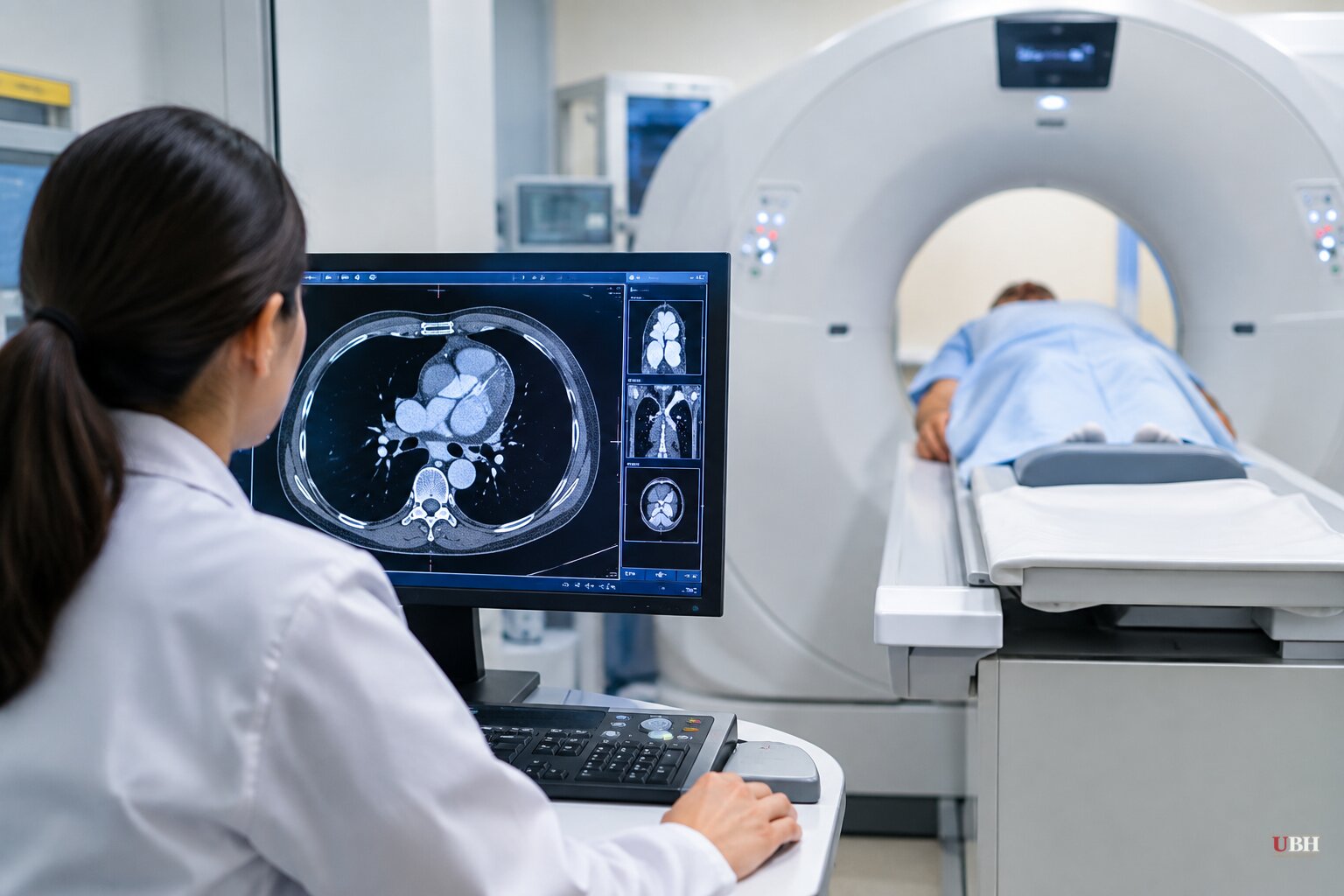
A major international study has found that more than half of healthy adults already have artery plaque they don't know about, and the buildup can start before age 30.
Researchers from Rigshospitalet in Copenhagen and Spain's National Center for Cardiovascular Research (CNIC) examined 16,808 adults ages 18 to 70 in Denmark and Spain. None had a known history of cardiovascular disease. Using advanced imaging on the carotid arteries in the neck, the femoral arteries in the legs, and the coronary arteries feeding the heart, the team found plaque in 57.1% of participants, according to the study published in The New England Journal of Medicine and presented at ESC Congress 2026.
The Numbers Get Worse With Age
About 1 in 13 adults ages 18 to 29 already had detectable plaque, according to the study. That climbed steadily with age. By 60 to 70, roughly 9 in 10 adults had it, according to the research led by Professor Henning Bundgaard of Rigshospitalet and Dr. Borja Ibáñez of CNIC.
Men developed plaque 5 to 10 years earlier than women on average. Times of India reported that, citing Dr. Bundgaard, about half of men already had silent plaque by age 50, compared with roughly 30% of women at the same age. Women's risk rose sharply between ages 40 and 60, a window that overlaps with menopause, and largely caught up to men's by later decades.
Risk Calculators Are Missing People
Tools like SCORE2 estimate cardiovascular risk from age, blood pressure, cholesterol, and smoking status. According to the researchers, those tools caught only a small share of the people who already had plaque hiding in their arteries.
"For decades, we have estimated cardiovascular risk using factors such as age, blood pressure and cholesterol," Dr. Ibáñez said in a statement reported by both Fox News and the New York Post. "This study shows that we can now go one step further and detect the disease directly before it causes a heart attack or stroke."
Professor Bundgaard made a similar point: "Until now, preventive decisions have been based on an estimate of risk, but we did not know whether the disease was already present." He called the project, known as REACT, "the most comprehensive atlas of the evolution of the disease across adult life."
Why This Isn't Cause for Panic, Yet
Having plaque does not mean a heart attack is imminent. Dr. Sirisha Vadali, a cardiologist at HonorHealth Women's Heart Health in Arizona who was not involved in the study, told the New York Post that finding plaque "gives us an opportunity to address a patient's risk factors," not a reason to panic.
That distinction matters because this is an observational study. It shows how common silent plaque is. It does not yet prove that screening young, symptom-free adults and intervening earlier actually prevents more heart attacks and strokes down the line. That question is exactly what the next phase of REACT, funded by the Novo Nordisk Foundation with up to €23 million for the project's first phase, is designed to test.
Researchers say portable ultrasound devices could eventually become a standard, low-cost screening tool for atherosclerosis, since most people with coronary plaque also showed it in the carotid or femoral arteries, which are far easier to scan than the heart itself. But Dr. Ibáñez and his colleagues say that idea still needs to clear further clinical trials before anyone changes screening guidelines.
Why Young Heart Attacks Are Already a Real Problem
The silent-plaque findings line up with a separate warning sign out of India. A cardiology study at Goa Medical College found that 22% of patients admitted with major heart attacks requiring emergency intervention were under 50, with another 56% between 51 and 70. Cardiologists there pointed to high-stress jobs, processed food, physical inactivity, smoking, and unmanaged hypertension or diabetes as the drivers, according to prudentmedia.in.
Most of these risk factors are things people actually control. Diet, exercise, smoking, blood pressure, and blood sugar management are not abstractions. They're daily choices, and cardiologists on both sides of this research say routine checkups remain the cheapest way to catch problems before they become emergencies.
What's still unresolved is whether mass imaging of healthy young adults, rather than targeted screening of those with known risk factors, is worth the cost and false-positive anxiety it could generate. That's the exact question the next phase of REACT is set up to answer, and until that data comes in, no health agency has proposed changing screening guidelines based on this study alone.
Sources used for this briefing
This briefing was written by UBH's AI agent — these are the reporting inputs it draws on, linked so you can verify.


