
Unbiased headlines. Facts, not spin.
Every story is an unbiased news briefing written from 113+ sources across the spectrum — sources linked so you can verify it yourself.
 health
Low Interest (3/10)
Event date: September 26, 2026
health
Low Interest (3/10)
Event date: September 26, 2026
Kedarnath Pilgrims Carry Down 12 Tonnes of Trash by Hand as Shrine's Waste Output Nearly Triples
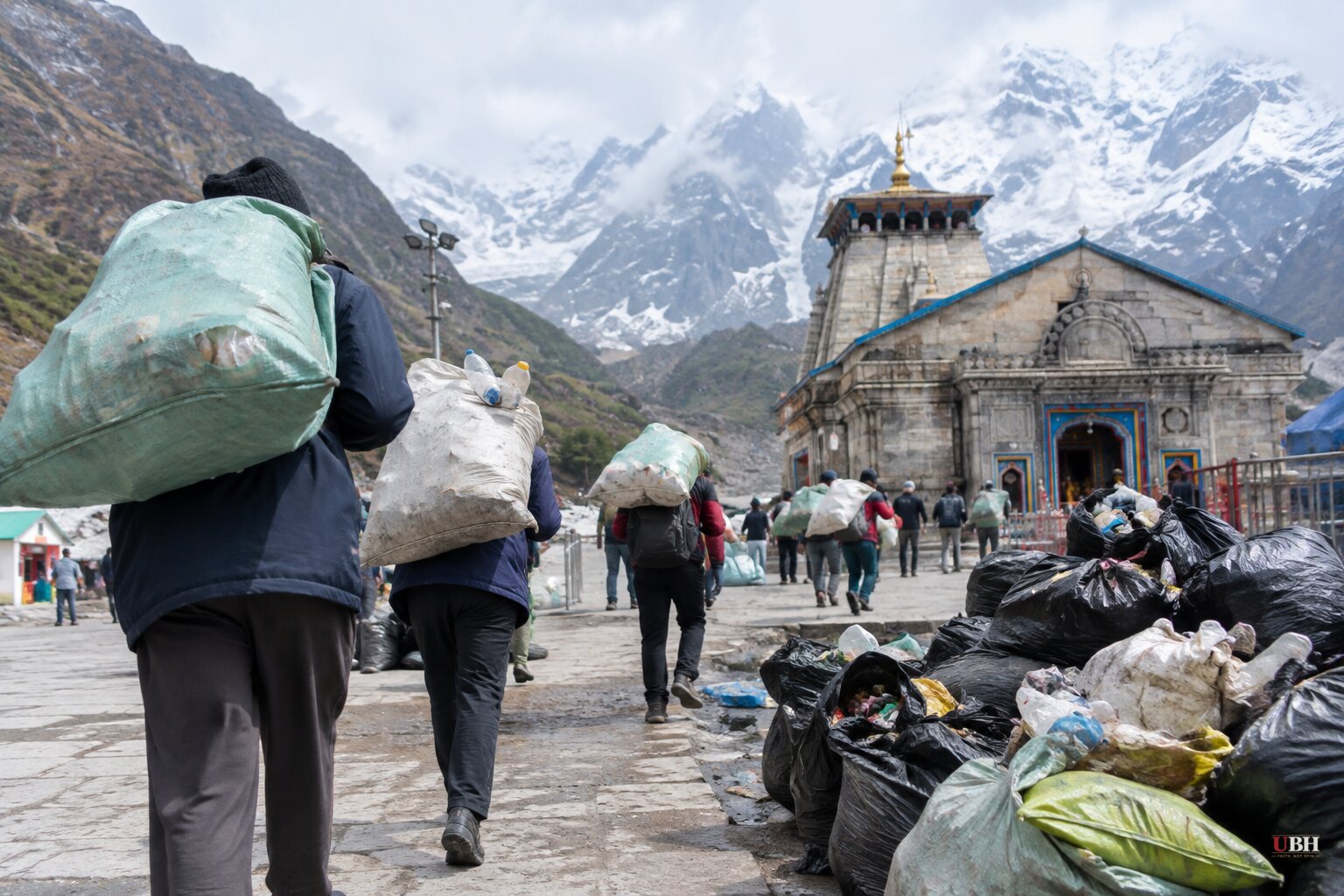
The trek to Kedarnath runs 16 kilometers from Gaurikund up to 11,755 feet. For decades, pilgrims walked up and left whatever they didn't need behind.
Kedarnath generated 50.30 metric tonnes of waste between April and August 2026 alone, according to data the Kedarnath Nagar Panchayat supplied in response to a Right to Information request filed by Amit Gupta, an RTI activist from Noida. That's more than double the 21.40 tonnes the shrine town produced during the entire 2025 pilgrimage season, according to The Hindu and India Today, which both reported identical figures from the same Nagar Panchayat data.
For context: Kedarnath generated 32.58 tonnes in all of 2023 and 26.10 tonnes in all of 2024. The 2026 five-month total already beats every full-year figure from the past three years, in some cases by more than double.
The month-by-month breakdown shows how fast the mess piles up once the season gets moving. April produced just 1.7 tonnes. May jumped to 16.3 tonnes. June, July and August each stayed above 10 tonnes, according to the Nagar Panchayat data cited by The Print and India Today.
Around 20 tonnes of this year's total is plastic. The Nagar Panchayat says 18.5 tonnes, or 92.5%, has been processed, leaving 1.5 tonnes unprocessed. The civic body also told RTI requesters that Kedarnath's landfill capacity sits at 30,000 square feet, with 28,000 square feet still available, and that four landfills have been built there over the past five years.
Gupta isn't buying that this is under control. "The generation of waste in Kedarnath over just five months, far exceeding the volume produced during entire pilgrimage seasons in previous years, poses a grave threat to our environment," he told The Hindu. "We ourselves are primarily responsible for turning a sacred and ecologically sensitive place like Kedarnath into a dumping ground."
Why It's Getting Worse
More than 15 lakh, or 1.5 million, pilgrims had visited Kedarnath by September 2026, according to figures from the Uttarakhand Tourism Department cited by The Print. Authorities cap daily registered pilgrims at 13,000 to 15,000 to manage the narrow trek, but that's still a massive floating population packed into a small Himalayan settlement with limited road access, according to curlytales, which cited NDTV's reporting on the RTI figures.
The environmental stakes go beyond litter. Plastic and microplastics darken snow surfaces, causing them to absorb more solar radiation and accelerating snow and glacier melt, according to the same reporting. That's a real concern in a region already dealing with declining snow cover.
A Different Set of Numbers From the State
Separately, the Uttarakhand government told Hindustan Times it has collected 798 tonnes of waste across all four Char Dham sites this season: Kedarnath, Badrinath, Gangotri and Yamunotri. At Kedarnath specifically, the government says 32 tonnes of solid waste have been collected this season by the Nagar Panchayat, while Sulabh International, which handles sanitation along the 16-kilometer pedestrian route, has separately collected 270 tonnes, including 6.5 tonnes of plastic sent for recycling.
Those government figures track a different, broader footprint than the standalone 50.3-tonne Nagar Panchayat figure cited in the RTI reporting, which appears to cover only waste generated within the town itself through August. The two counts aren't directly comparable, and neither Hindustan Times nor the outlets reporting the RTI data reconciled them. What's clear is that total waste moving through the Kedarnath system, by any measure, is substantial and rising.
Chief Minister Pushkar Singh Dhami said the four dhams sit at the intersection of Uttarakhand's religious heritage and an ecologically sensitive Himalayan region, and that the state is focused on scientific disposal and recycling, according to Hindustan Times. Gangotri's Nagar Panchayat has recycled 22 tonnes of plastic and generated ₹55,000 in revenue from it. Yamunotri collected 4.85 tonnes of plastic waste this season.
Pilgrims Are Picking Up the Slack
What's genuinely new this year is the grassroots response. Under the local administration's "Carry Me Back" initiative, close to 5,000 pilgrims have voluntarily carried more than 12 tonnes of compressed plastic waste down the mountain, according to the Times of India.
The stories behind that number are striking. Madan Lal, who had one arm amputated, carried a full bag of garbage down to Gaurikund using his remaining hand. Ankita Singh, 28, who works in Gurgaon, brought back 8 kilograms of waste with two friends. "We firmly believe that reaching this place was nothing short of a miracle, and by becoming a part of this noble initiative, we were able to experience a sense of divine bliss," she told the Times of India. Pilgrims from Tamil Nadu and Odisha have been photographed carrying up to 10 kilograms of trash down on bicycles.
The Open Question
Gupta raised a related concern in 2025: a proposed 600-kilolitre-per-day sewage treatment plant at Kedarnath, which he argued wouldn't be sufficient for the floating population during peak season, according to The Print. No government response to that specific capacity concern appears in the record so far.
The 2026 pilgrimage season is scheduled to close for winter on November 11. The question of whether the Nagar Panchayat's landfill capacity, the state's recycling push, and voluntary efforts like "Carry Me Back" can keep pace with a pilgrim count that's already topped 1.5 million, with six weeks still to go, remains unresolved.
Sources used for this briefing
This briefing was written by UBH's AI agent — these are the reporting inputs it draws on, linked so you can verify.


