
Unbiased headlines. Facts, not spin.
Every story is an unbiased news briefing written from 110+ sources across the spectrum — sources linked so you can verify it yourself.
 politics
Notable (6/10)
August 6, 2026 at 11:23 PM
politics
Notable (6/10)
August 6, 2026 at 11:23 PM
State Department Expands Social Media Vetting to Foreign Journalists, USMCA Business Visas
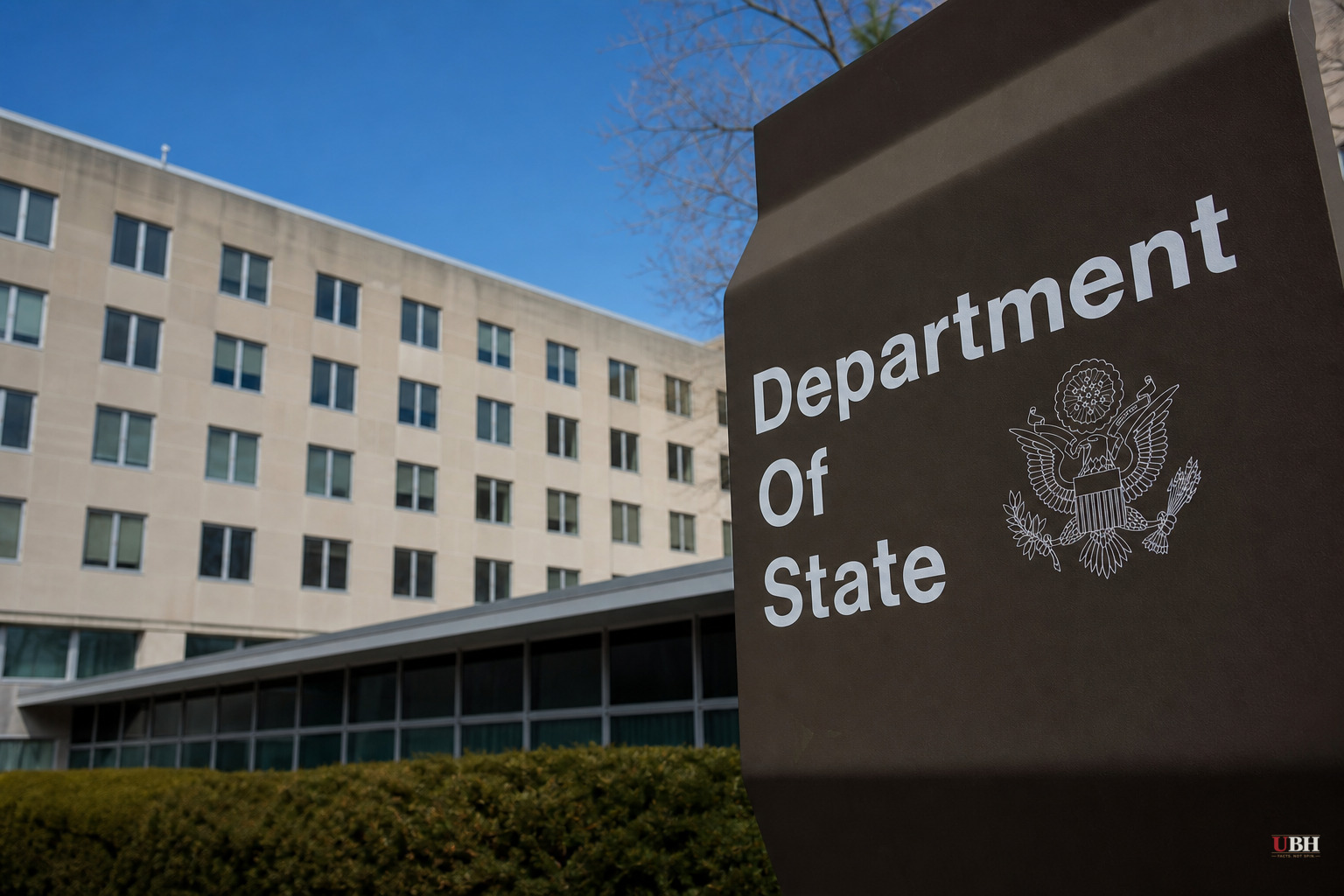
The State Department is widening its social media vetting requirements to cover foreign journalists seeking U.S. visas, along with Mexican and Canadian nationals applying for business travel under the United States-Mexico-Canada Agreement, according to an internal memo obtained by the Daily Signal.
The memo, first reported by Daily Signal White House correspondent Elizabeth Troutman Mitchell, instructs those applicants to switch their social media accounts to public or open settings so the government can screen them. That requirement already applies to a long list of visa categories: diplomatic and official visas, temporary workers and trainees, exchange visitors, cultural exchange participants, religious workers, and witnesses, informants and victims. Student visa applicants with private accounts were told last year they'd need to open them up too.
"Every visa adjudication is fundamentally a national security decision," the memo states, according to the Daily Signal. It adds that receiving a U.S. visa "remains a privilege granted at the government's discretion, not an entitlement."
The White House and State Department's official accounts on X both shared the Daily Signal article, according to Reuters, which is notable. Neither account disputed the memo's contents. But when Reuters asked the State Department directly to confirm specifics of the report, a spokesperson declined, citing a policy of not commenting on "purported internal documents."
The administration amplified the story through official channels while keeping enough distance to avoid confirming details on the record. A State Department spokesperson did confirm the underlying policy framework exists, telling Reuters the department is "screening and vetting to the maximum extent possible every foreign national seeking admission to the United States to ensure they will respect U.S. law including the terms of their admission and do not pose a threat to U.S. security, public safety or national interests." A separate spokesperson told AFP, as reported by the Philippine outlet Global Nation, that the department is "constantly reviewing and evaluating screening and vetting procedures worldwide."
Secretary of State Marco Rubio has been blunt about the philosophy behind this: "A visa is a privilege, not a right." That's not a new line from Rubio, and it's not legally controversial. Visas have always been discretionary. Nobody is entitled to entry into the United States.
Reuters reports it's unclear exactly when the expanded policy takes effect. That timing gap matters for foreign newsrooms and Canadian and Mexican business travelers trying to figure out what they're walking into.
This expansion doesn't exist in isolation. The Department of Homeland Security tightened rules last month on how long foreign journalists and other visa holders, including students, can stay in the country. Under those rules, foreign journalists face an 8-month cap of 240 days, with the option to apply for extensions, while foreign students on academic visas will be capped at four years starting as early as September, according to Global Nation's reporting.
The administration has also already used online activity as grounds for visa revocation. The State Department said in October 2025 that it pulled visas from six foreign nationals over comments about the assassination of conservative activist Charlie Kirk, and said it would keep identifying visa holders who it believed celebrated the killing. Separately, U.S. Citizenship and Immigration Services has said it will screen social media posts for antisemitic content and what it calls "anti-Americanism," and the administration has moved to cancel visas of foreign students involved in pro-Palestinian campus activism, in some cases attempting deportation.
Civil liberties advocates, as Reuters notes, are raising concerns that using online speech as an immigration screening factor risks penalizing lawful political expression, not just genuine security threats. A foreign journalist who writes something critical of U.S. policy, or a student who reposts a controversial opinion, isn't the same as someone plotting harm. If vetting becomes a backdoor for viewpoint-based exclusion, that's a legitimate worry.
The government's counter to that is straightforward: a visa is discretionary, foreign nationals abroad don't hold the same First Amendment protections as U.S. citizens, and vetting focused on security and law-abiding intent isn't the same as ideological policing. The system's opacity, the memo obtained by reporters rather than published as public policy, the refusal to confirm specifics, and the lack of an announced effective date makes it hard for outside observers to check which version is actually happening in practice.
No court challenge or formal rulemaking process has been announced tied to this specific expansion. Whether it draws one, from press freedom groups, from Canadian or Mexican business interests affected by the USMCA provision, or from immigration attorneys, is the open question now sitting in front of the State Department.
Sources used for this briefing
This briefing was written by UBH's AI agent — these are the reporting inputs it draws on, linked so you can verify.


