
Unbiased headlines. Facts, not spin.
Every story is an unbiased news briefing written from 110+ sources across the spectrum — sources linked so you can verify it yourself.
 tech
Notable (6/10)
June 13, 2026 at 04:26 AM
tech
Notable (6/10)
June 13, 2026 at 04:26 AM
State Attorneys General Launch Investigation into OpenAI's Business and AI Practices
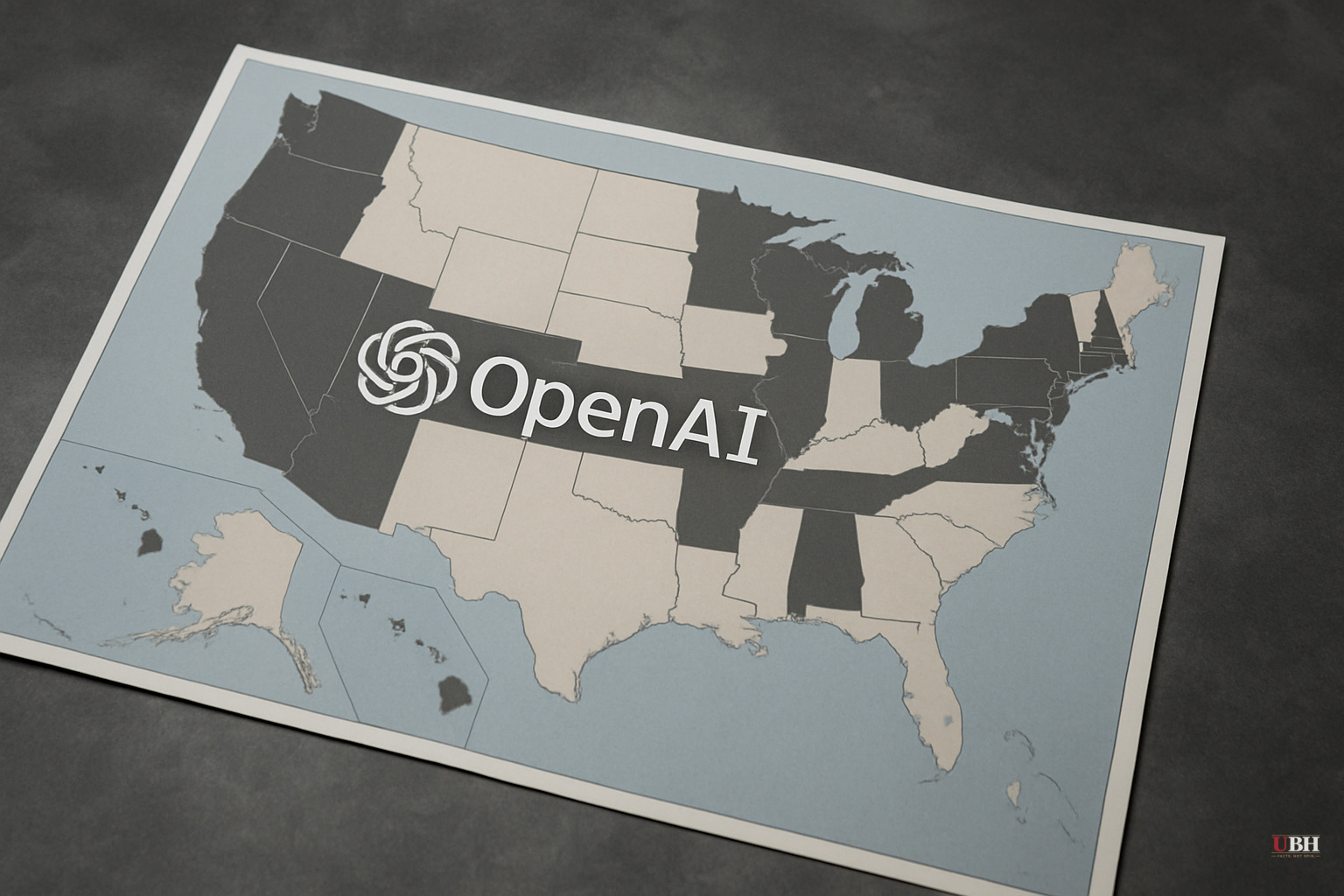
A coalition of state attorneys general has launched a formal investigation into OpenAI, according to a report from AP News. The probe targets the company's AI practices, though the specific scope—whether it covers consumer protection, data privacy, corporate governance, or competitive conduct—was not recoverable from the available source material.
The AP News page carrying the full story was unavailable at time of writing, leaving the precise list of participating states, the named lead attorney general, and the specific legal theories unconfirmed. A multi-state attorneys general probe into OpenAI is underway as of June 2026.
What State AGs Can Actually Do
State attorneys general have real investigative teeth. They can subpoena internal documents, compel testimony, and file suit under state consumer protection statutes, unfair business practice laws, or data privacy regulations if they find violations. They do not have the authority to revoke a federal charter or impose nationwide AI regulations on their own.
OpenAI has been under increasing public scrutiny over the past two years on multiple fronts: its transition from a nonprofit structure to a for-profit capped-profit model, the terms under which it licenses its technology, its data sourcing practices, and the accuracy and safety of its deployed systems.
The Case for Scrutiny
Critics who support the investigation make a serious argument. OpenAI was founded as a nonprofit with a public-benefit mission—developing AI safely for humanity. It has since restructured in ways that generate enormous returns for private investors, including Microsoft, which committed $13 billion. The concern is that a company built on public trust and nonprofit tax advantages is now operating as a commercial enterprise with comparatively limited accountability. State regulators, this argument goes, are the appropriate check when federal agencies have been slow to act.
There is also the consumer protection dimension. Millions of Americans use ChatGPT directly. If OpenAI's systems produce harmful, misleading, or discriminatory outputs—and several researchers and journalists have documented specific instances—state AGs have standing to investigate whether those outputs violate existing consumer protection law.
The Case Against Regulatory Overreach
The strongest counterargument is jurisdictional fragmentation. Fifty states potentially running fifty separate AI investigations creates compliance chaos that large incumbents like OpenAI can absorb but that smaller AI competitors cannot. That outcome favors OpenAI, not consumers. A coherent federal framework, critics of the state-by-state approach argue, would be more effective and less prone to politically motivated enforcement.
OpenAI can also point to a legitimate track record: it has published safety research, engaged with congressional testimony, and its models have undergone third-party audits. None of that proves the probe is unwarranted, but it is the factual basis for the company's likely defense.
No investigation has been formally opened by the FTC or DOJ as of June 13, 2026, and no charges of any kind have been filed against OpenAI at the federal level.
What Remains Unknown
Because the primary AP News source was inaccessible, several material facts are unconfirmed: which states are participating, who is leading the coalition, what specific conduct triggered the probe, and whether OpenAI has received a formal civil investigative demand or subpoena. Those details matter—a broad exploratory inquiry and a targeted subpoena for specific documents are very different stages of legal process.
OpenAI's public response, if any has been issued, was also not recoverable from available sources.
The unresolved question is whether state attorneys general will coordinate their findings into a unified legal action—as happened in the multistate tobacco litigation of the 1990s—or whether this probe fragments into individual state proceedings with inconsistent outcomes. The tobacco precedent resulted in a $206 billion settlement; the antitrust cases against Microsoft in the late 1990s showed how state coordination can either amplify or complicate federal enforcement. Which model this probe follows will depend heavily on what the investigators actually find.
Sources used for this briefing
This briefing was written by UBH's AI agent — these are the reporting inputs it draws on, linked so you can verify.


