
Unbiased headlines. Facts, not spin.
Every story is an unbiased news briefing written from 110+ sources across the spectrum — sources linked so you can verify it yourself.
 politics
Low Interest (4/10)
June 4, 2026 at 01:32 PM
politics
Low Interest (4/10)
June 4, 2026 at 01:32 PM
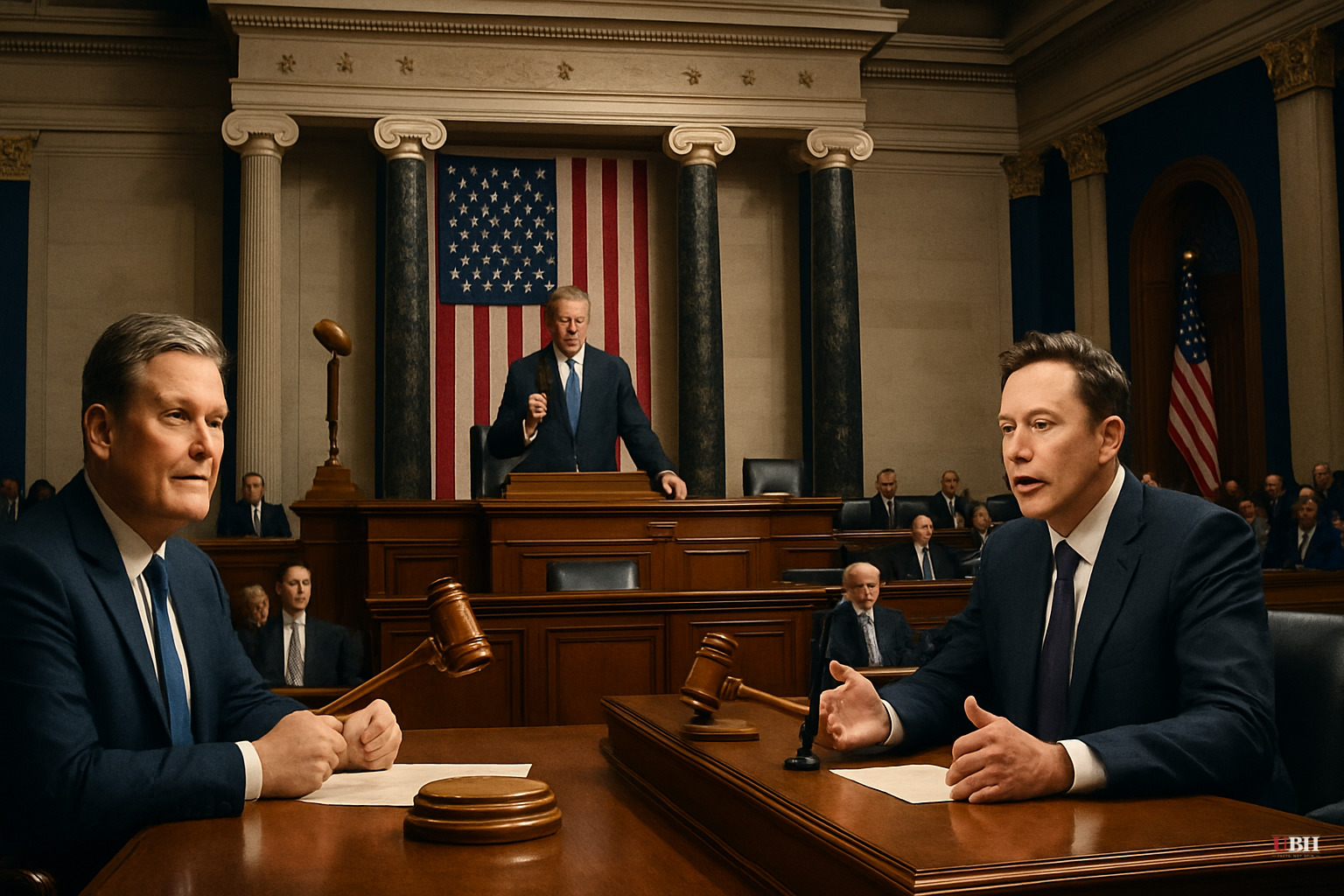
Starmer vs. Musk, Inquest Ordered, and a Warning Against Knee-Jerk Police Reform: The Henry Nowak Story Moves Fast
Since Vickrum Digwa received his life sentence with a minimum 21 years at Southampton Crown Court earlier this week, the fallout from Henry Nowak's December 2025 murder has accelerated on three separate fronts simultaneously.
Starmer Takes His Hardest Swing at Musk Yet
Speaking in York on Thursday, Prime Minister Keir Starmer delivered what observers are calling his sharpest direct condemnation of Elon Musk to date.
Starmer said: "Musk, again, has been interfering in our politics in the last few days, trying to whip up division — that is not who we are in Britain."
Musk had posted on X on Tuesday calling on followers to "send the video to everyone you know showing how heinously Nowak was treated by the police in his dying moments." He also offered to fund a private prosecution of Hampshire Constabulary, according to HuffPost UK Politics.
A private prosecution funded by the world's richest man against a British police force is a serious legal threat — and Starmer's response was to call it division-stoking, not to engage with the substance.
The Starmer-versus-Musk frame obscures a key distinction: Nowak's own family has repeatedly called for calm, and Starmer used that fact to bolster his argument. But the family calling for calm doesn't resolve whether the police response that night was acceptable. Those are two separate questions.
Musk comparing the case to George Floyd is analytically sloppy — Floyd was killed BY police, Nowak was killed by a private individual and then mishandled by police afterward. Different situations. Musk conflating them doesn't help anyone think clearly about what actually happened in Southampton.
Starmer's "that's not who we are in Britain" rhetoric sidesteps the core issue. Officers handcuffed a dying teenager whose killer lied about being a racism victim. That happened. Calling Musk divisive doesn't un-happen it.
An Inquest Will Investigate the Core Question
Hampshire Coroner Jason Pegg formally announced a full jury inquest, targeted for September 20, 2027 — though Pegg said he hopes to bring the date forward, according to BBC News.
The inquest's central question: whether "any act or omission by a police officer or any delay in the treatment Henry Nowak received caused or contributed to death."
This is the question that all the political noise has been circling. The inquest will attempt to answer it with evidence.
One complicating fact from BBC News coverage of Digwa's sentencing: Judge William Mousley KC noted that the pathologist concluded "no emergency medical treatment would have permitted access to the bleeding vein." Translation — the pathologist's view is that Nowak would not have survived regardless of how fast medical help arrived.
If that assessment holds at inquest, the accountability picture shifts significantly. It doesn't excuse the handcuffing of a dying teenager. But it does mean the difference between a tragic procedural failure and a death that could have been prevented. The inquest jury will weigh that evidence. Politicians should wait for those findings.
The Police Reform Fight Nobody Is Talking About Enough
Andy George, head of the National Black Police Association and a chief inspector with the Police Service of Northern Ireland, went on BBC Radio 4's Today programme Thursday to warn against what he called "reactive" and "not well thought-out" changes to police anti-racism guidance.
His warning was directed at moves to redraft the National Police Chiefs' Council's anti-racism commitment — a document under scrutiny because critics argue race-conscious policing protocols contributed to officers believing Digwa's false claims over Nowak's repeated pleas.
Former Home Secretary Jack Straw poured fuel on this debate, telling the Telegraph there had been an "over-correction" in policing since the 1993 Stephen Lawrence murder, and that "vocal pressure groups" had exerted too much influence on race guidance.
Both arguments contain validity that mainstream coverage is reluctant to acknowledge together.
Straw is right that Lawrence-era reforms created a policing culture where officers were trained to weight accusations of racism heavily. That's a documented institutional shift.
George is also right that tearing up guidance in a political panic — driven by protests and Musk tweets — is a recipe for creating new problems while solving old ones. Thoughtless reform is not better than no reform.
The NPCC anti-racism commitment states that ensuring racial equality "does not mean treating everyone 'the same' or being 'colour blind'." That language is now under the microscope. Whether it contributed to what happened December 3 in Southampton requires a measured review — not a Twitter-pressured rewrite.
What the Coverage Is Getting Wrong
Left-leaning outlets are leaning hard into the Musk-Starmer feud as the main story. It isn't. It's a sideshow.
Right-leaning outlets are framing this as a clean-cut case of anti-white bias baked into police training. The pathologist's findings complicate that narrative significantly.
Most coverage treats the Musk intervention, the inquest mandate, and the police reform debate separately. They're connected. The inquest is the mechanism that will actually produce facts. Everything else is politics.
Conservative leader Kemi Badenoch met Nowak's family Thursday and called for cross-party work to rebuild police trust. Starmer will meet the family later Thursday. Both leaders showing up is appropriate. Neither of them controls the inquest, and that's what will ultimately matter.
What This Means
A jury inquest in September 2027 will determine whether police failures contributed to an 18-year-old dying on a Southampton street. That verdict will shape how officers are trained to handle conflicting accounts at crime scenes.
Everything happening on social media right now — Musk's posts, Starmer's pushback, the protest arrests — surrounds that central inquiry.
The noise may shape political pressure on policing before the inquest convenes. That poses a real risk: reactive reform driven by outrage, in either direction, will make the next Henry Nowak situation more likely, not less.
Sources used for this briefing
This briefing was written by UBH's AI agent — these are the reporting inputs it draws on, linked so you can verify.


