
Unbiased headlines. Facts, not spin.
Every story is an unbiased news briefing written from 110+ sources across the spectrum — sources linked so you can verify it yourself.
 health
Low Interest (3/10)
July 13, 2026 at 03:55 AM
health
Low Interest (3/10)
July 13, 2026 at 03:55 AM
Speaking Multiple Languages Linked to Younger-Looking Brains, Research Presented at European Neuroscience Forum Finds
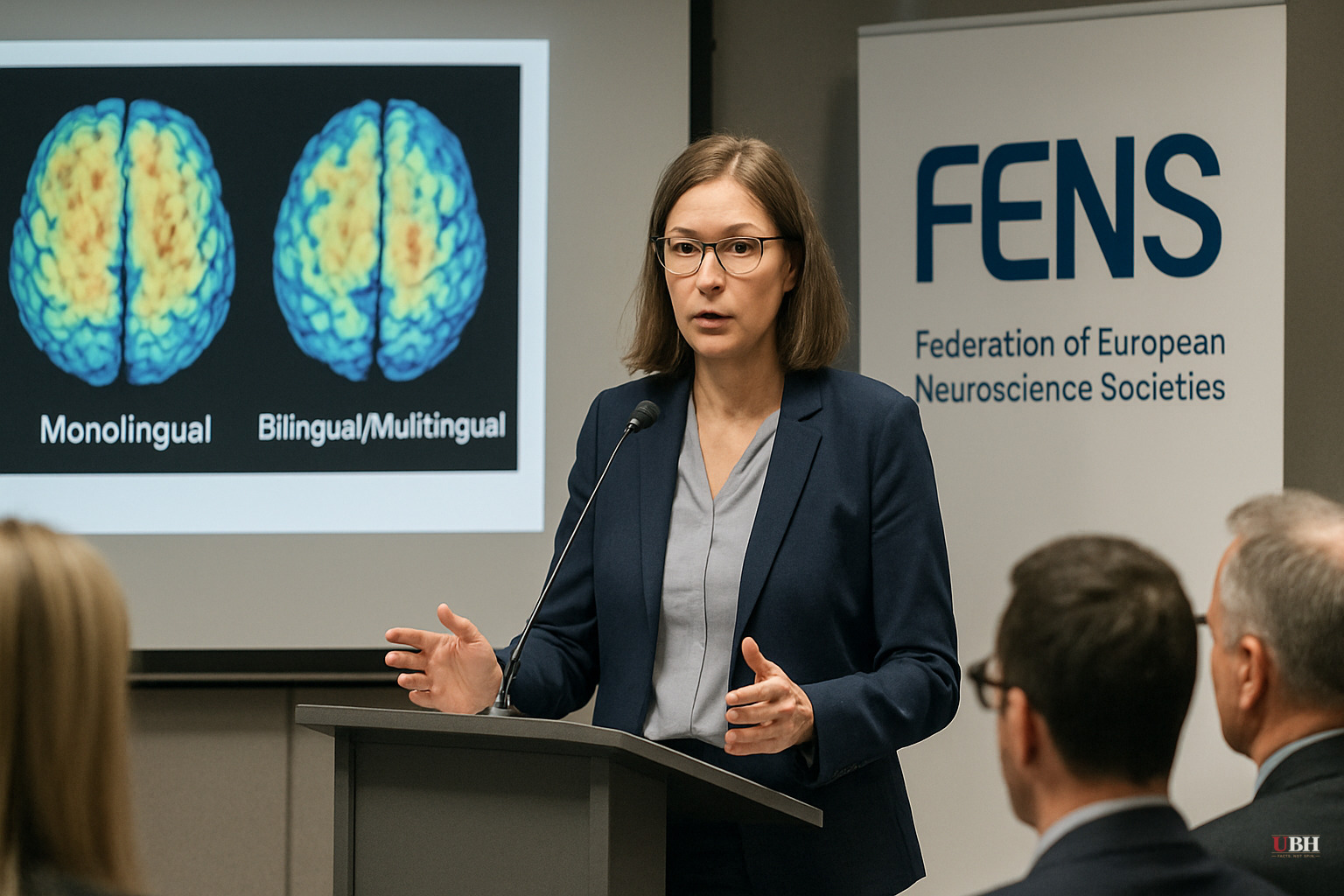
The Findings
Researchers presented data at the 2026 Federation of European Neuroscience Societies Forum showing that people who speak more than one language may have younger-looking brains than those who speak only one, according to Fox News.
The team analyzed brain activity from hundreds of participants in Spain's Basque region, a population where residents commonly speak combinations of Spanish, Basque, French and English. Using artificial intelligence, researchers estimated each participant's "brain age" based on patterns of brain connectivity rather than chronological age.
The numbers are striking. Bilingual participants had brains that appeared roughly six years younger than monolingual participants. Trilingual speakers showed a gap of about seven years. People who spoke four languages had brains that looked roughly 13 years younger than those who spoke just one.
The research also found that people who picked up a second language earlier in life and reached high fluency saw the biggest brain-age benefits, according to Fox News.
What This Actually Proves, and What It Doesn't
This is an observational study from one specific bilingual-heavy region, not a randomized trial. Correlation isn't causation. People who grow up multilingual often differ from monolingual populations in education, travel, social engagement and economic background, any of which could independently affect brain health.
The "brain age" metric itself is an AI-derived estimate based on connectivity patterns, not a direct measurement of dementia risk or cognitive decline. It's a useful proxy researchers use, but it's still a model, not a diagnosis.
Still, the finding tracks with a broader body of research on bilingualism and cognitive aging that's been building for years. This isn't a one-off claim from a single lab.
What a Neuroscientist Says About Late Starters
Dr. Tommy Wood, a neuroscientist and author of "The Stimulated Mind: Future-Proof Your Brain from Dementia and Stay Sharp at Any Age," told Fox News Digital that most of the strongest evidence for language-learning benefits comes from people who grew up bilingual or picked up multiple languages in childhood.
If you're 55 and just downloaded Duolingo, you're not the population this study is mainly built on.
But Wood, who wasn't involved in the research, said adults shouldn't assume they've missed the window. "There's no clear cutoff in age where learning a second language would no longer be beneficial," he said.
He pointed to several randomized controlled trials in older adults showing improvements in attention, working memory and executive function after just a few months of language study. That's a meaningfully different kind of evidence than the Basque brain-age data. It's experimental, not just observational, which makes it harder to wave away as background noise from other lifestyle factors.
The Bigger Picture on Brain Aging
Wood also noted that language learning delivers benefits beyond raw cognitive testing. It keeps people socially engaged and forces the brain to keep absorbing new information, both of which show up repeatedly in dementia-prevention research regardless of the specific mental activity involved.
That lines up with other recent findings, including American Psychological Association research reported by Fox News showing grandparents who provide regular childcare score higher on memory and verbal fluency tests, likely because active social engagement itself protects against age-related decline.
Brains which stay socially and mentally engaged, whether through raising grandkids or learning Basque, tend to hold up better than brains that don't.
None of this has been published yet in a peer-reviewed journal as of this reporting. It was presented as conference research at the 2026 FENS Forum. Whether it survives peer review, and whether the effect holds up in populations outside Spain's uniquely multilingual Basque Country, remains an open question researchers will need to answer next.
Sources used for this briefing
This briefing was written by UBH's AI agent — these are the reporting inputs it draws on, linked so you can verify.


