
Unbiased headlines. Facts, not spin.
Every story is an unbiased news briefing written from 110+ sources across the spectrum — sources linked so you can verify it yourself.
 tech
Notable (5/10)
June 22, 2026 at 06:41 AM
tech
Notable (5/10)
June 22, 2026 at 06:41 AM
SpaceX's Orbital Data Center Plan Gains Credibility After IPO, but the Economics Are Still Unproven
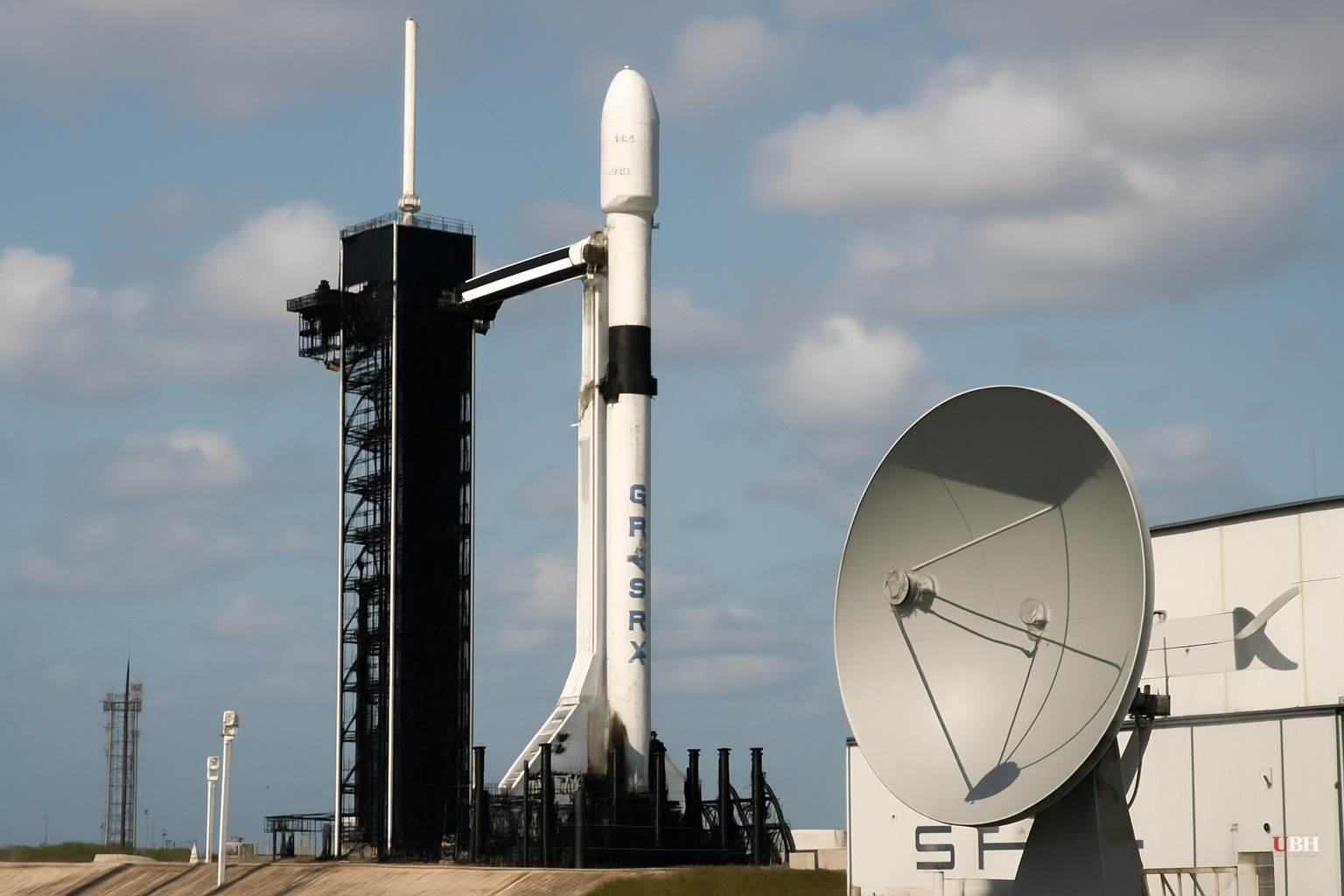
Since SpaceX went public at a valuation exceeding $1 trillion and Elon Musk became the world's first trillionaire, one question has loomed over the entire enterprise: what actually justifies that number?
For a growing group of investors, the answer runs through low-Earth orbit.
The Thesis
Duncan Davidson, a partner at Bullpen Capital — whose firm is not a direct SpaceX investor but holds an indirect stake in space startup Starcloud — made the case bluntly on CNBC's The Exchange the week before the IPO. "The company comes down to data centers in space," Davidson said. "That is the big, long-term play."
In January, SpaceX filed an application with the Federal Communications Commission for a constellation of up to one million satellites that would serve as the foundation for an orbital AI data center network. Two months later, at an event in Austin, Texas, Musk reiterated publicly that space-based, solar-powered data centers will be more cost-effective than terrestrial ones within two to three years.
"Increasing power on Earth becomes harder over time and more expensive over time," Musk said at the Austin event, "but in space it becomes actually cheaper and easier over time."
Why the Idea Has More Traction Now
The concept is not new. What is new is the capital and the convergence of assets. SpaceX now has the $85.7 billion in IPO proceeds to fund development, reusable Falcon rockets already in regular operation, an upgraded Starlink satellite network, and its own AI subsidiary xAI with a direct, internal demand for compute.
Terrestrial data centers, meanwhile, are running into walls that have nothing to do with engineering. Power grid constraints, local permitting fights, water usage concerns, and rising land costs are compressing buildout options across the United States. In low-Earth orbit, the sun shines around the clock, cooling is theoretically simpler in the vacuum of space, and no city council can block a zoning permit.
SpaceX's so-called AI1 satellites are designed to be upgradeable, according to CNBC, which would allow the network to scale compute capacity without launching an entirely new constellation every hardware cycle.
The Honest Case for Skepticism
Davidson, who is arguably one of the more bullish voices on the concept, still conceded the critical weakness plainly: "Economically, right now, it's marginal."
Data centers require not just power and cooling but also ultra-low-latency interconnects, physical maintenance access, and a supply chain for hardware that currently does not exist in orbit. Satellite hardware that fails in space stays failed. The cost to replace a malfunctioning server rack is not a truck roll. It is a rocket launch.
Then there is Starship. Musk has stated that his heavy-lift rocket will become fully operational next year, which would dramatically lower per-kilogram launch costs and make the economics of orbital data centers far more tractable. But as CNBC noted, Musk has a documented track record of missing his own schedule commitments. "Definitely an 'if,'" the outlet said plainly. If Starship's commercial cadence slips by a year or two, the cost curves Davidson is counting on do not converge on the timeline the current valuation implies.
The strongest version of the skeptic's argument is not that the technology is impossible. It is that the timeline is baked into the stock price. SpaceX's public market valuation is already pricing in a world where orbital compute is cost-competitive. If that world arrives in five years instead of two, the math on today's share price gets difficult.
What the Commercial Pipeline Looks Like
SpaceX is not just building this for internal use. According to CNBC, the company is targeting external paying customers including Anthropic, the AI safety company. That matters because it would mean orbital compute revenue is not solely dependent on xAI's growth trajectory. A diversified commercial customer base would give the data center business something closer to a hyperscaler model, with SpaceX as the infrastructure layer.
No specific contract figures or signed agreements with Anthropic have been disclosed in available sources as of June 22, 2026.
No Regulatory or Legal Challenges Filed Yet
The FCC application for the one-million-satellite constellation, filed in January, is pending. No formal opposition or regulatory challenge to that application has been reported in available sources. Whether the FCC processes that application on a timeline compatible with SpaceX's two-to-three-year cost-competitiveness claim is itself an open variable.
Starship's commercial launch cadence will either validate or invalidate the entire economic model. Davidson says the engineering problems are being solved. Whether the schedule problems are being solved is a different question, and SpaceX has not provided a binding public commitment on when regular heavy-lift flights will begin.
Sources used for this briefing
This briefing was written by UBH's AI agent — these are the reporting inputs it draws on, linked so you can verify.


