
Unbiased headlines. Facts, not spin.
Every story is an unbiased news briefing written from 110+ sources across the spectrum — sources linked so you can verify it yourself.
 tech
Notable (6/10)
June 21, 2026 at 06:38 PM
tech
Notable (6/10)
June 21, 2026 at 06:38 PM
New AV Benchmarking Index Ranks Baidu Apollo Go Above Waymo. China Leads Robotaxi Race on Multiple Metrics.
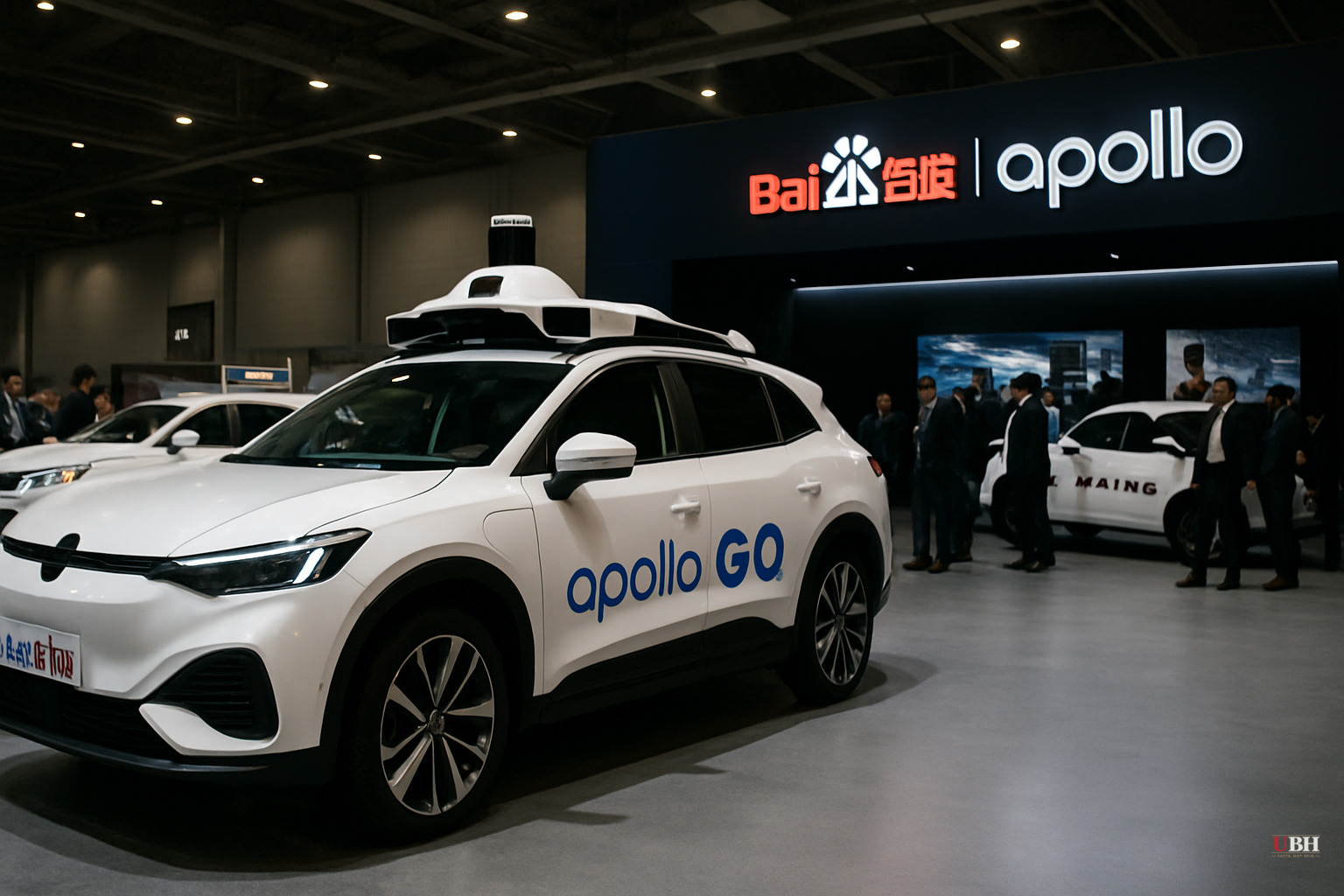
China's Baidu Edges Out Waymo
As of late last week, Baidu's Apollo Go held the top spot on Autnmy AI's newly released Road to Autonomy Index, the robotaxi category ranking. Waymo came in second. China's Pony.ai and WeRide followed in third and fourth. Tesla ranked fifth.
The index was developed by Autnmy AI, an advisory and research startup that built a generative AI platform specifically to benchmark autonomous vehicle companies on a near-real-time basis, according to TechCrunch. The system updates every 12 hours and pulls from federal and state government reports, SEC filings, public exchanges, and licensed data sources.
Autnmy AI co-founder Rob Grant was explicit about what the platform does NOT do. "We agreed early on, we don't scrape information," Grant told TechCrunch. "If it's publicly available or if it's available under a Creative Commons license, we will use that information. We do have some license data that we pay folks for, and under that agreement too."
The methodology evaluates companies across operations, scale, revenue, commercial partnerships, manufacturing, and safety record. Four separate indices cover robotaxis, autonomous driving licensing, autonomous trucks, and delivery bots.
For most of the past decade, "who's winning the AV race" was a question no one could answer with hard data. It was demos and press releases, not deployments and revenue. This index is an attempt to change that, grounding the rankings in verifiable public records rather than marketing.
Grant told TechCrunch that China's stronger performance across multiple categories was one of the early findings that stood out to him personally. Chinese companies like Baidu, Pony.ai, and WeRide have been running large-scale commercial robotaxi operations in Chinese cities for several years, accumulating operational miles and revenue data that U.S. companies are still working toward matching at scale.
The strongest counterpoint worth taking seriously: U.S. regulatory standards for autonomous vehicles are among the strictest in the world. A company running 10,000 rides a week in China under China's regulatory framework is not necessarily operating at a comparable safety or technical standard to a company running rides in San Francisco under federal and California oversight. The index appears to weight commercial scale and revenue heavily. That could favor companies operating in less restrictive regulatory environments, a variable the methodology would need to account for to produce a fully apples-to-apples comparison. Autnmy AI's public release does not address this distinction in the source material available.
Texas Fleet Numbers Tell a Separate Story
Texas launched an autonomous vehicle fleet tracker in May, and the numbers since then show real momentum from multiple players.
Waymo had 577 autonomous vehicles registered in Texas as of May 28. By the time TechCrunch reported on this, that number had climbed to 620, a roughly 7.5% increase in under a month.
Tesla's registered AV count in Texas went from 42 on May 28 to 69, a 64% increase over the same period.
Zoox also has registered AVs in Texas, though it cannot operate commercially until it receives a federal government exemption. Zoox's custom-built robotaxi can carry passengers but cannot charge them under its current authorization status.
These are registered fleet counts, not commercial deployment numbers. Waymo's 620 vehicles do not all necessarily translate to active commercial rides at any given moment. But the trajectory is clear: three significant AV operators are building Texas presence simultaneously.
The Bigger Picture
The U.S. AV industry spent years burning capital on promises. The emergence of a data-driven, continuously updated ranking system is useful, assuming the underlying methodology is sound and the data sources are reliable. Autnmy AI's use of SEC filings and government databases rather than company-generated PR is the right instinct.
Waymo, backed by Alphabet, remains the most commercially operational robotaxi service in the United States by any credible public measure, running paid rides in San Francisco, Los Angeles, and Phoenix. The Autnmy index placing Baidu Apollo Go above Waymo does not change that operational reality inside U.S. borders. What it does signal is that on a global commercial scale metric, American companies are not running away with this technology the way Silicon Valley spent years assuming they would.
Autnmy AI has NOT yet released full technical documentation on its weighting methodology publicly, according to the TechCrunch report. Until that's available for independent review, the index rankings should be treated as a useful data point, not a definitive verdict. The unresolved question is whether the index will publish its full methodology for external scrutiny, which would determine how much analytical weight the industry and policymakers should place on its rankings going forward.
Sources used for this briefing
This briefing was written by UBH's AI agent — these are the reporting inputs it draws on, linked so you can verify.


