
Unbiased headlines. Facts, not spin.
Every story is an unbiased news briefing written from 110+ sources across the spectrum — sources linked so you can verify it yourself.
 finance
Major Story (7/10)
June 15, 2026 at 01:04 AM
finance
Major Story (7/10)
June 15, 2026 at 01:04 AM
SpaceX's IPO Puts Three AI Companies on Deck. What Happens to Public Markets When OpenAI and Anthropic Follow?
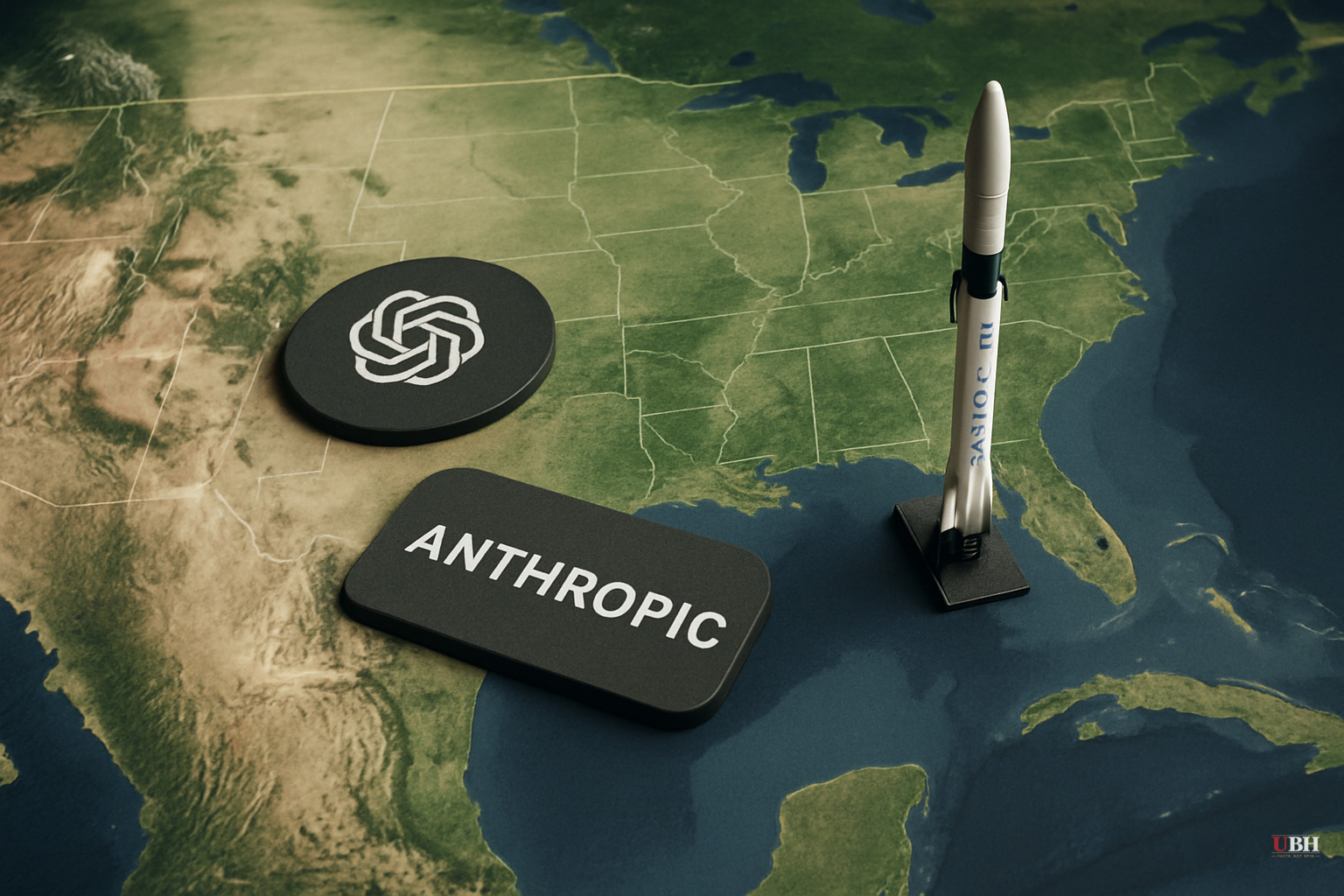
Three AI Companies Are Watching SpaceX's Potential IPO Closely. What Happens to Public Markets When OpenAI and Anthropic Follow?
SpaceX remains one of the most closely watched private companies in the world, with persistent speculation about a potential public offering. The broader story, however, involves what could line up after any such headline.
OpenAI and Anthropic: IPO Speculation Is Growing
Both OpenAI and Anthropic have been the subject of significant IPO speculation. Neither has publicly confirmed a filing, set a pricing date, or disclosed an offering size. Any confidential filings, if they exist, have not been publicly confirmed. These are possibilities, not events.
But the directional shift in investor attention is real. The old FAANG grouping — Facebook (now Meta), Amazon, Apple, Netflix, Google (now Alphabet) — has increasingly given way to AI infrastructure plays and deeptech bets. Some analysts and commentators have proposed updated acronyms to reflect the companies commanding the largest valuations, with AI labs and aerospace firms entering the conversation. Netflix is out. AI labs and a rocket company are in.
It marks a real capital shift. The companies drawing the most investor attention are no longer primarily consumer platforms monetizing advertising and subscriptions. They are AI infrastructure plays and deeptech bets, some of which have never turned a profit.
The Concentration Problem Is Real
A structural market question surrounds any potential SpaceX IPO: how much control can one person have over a public company? Public company governance evolved around the assumption that dispersed shareholders have meaningful checks on executives. Musk has spent years demonstrating that assumption doesn't hold when a founder controls enough voting shares. If OpenAI's Sam Altman or Anthropic's Dario Amodei follow the same playbook and lock in super-voting share structures, retail investors buying these stocks would own economic exposure with limited governance rights.
The counterargument worth taking seriously: concentrated founder control has produced some of the most valuable companies in history, including Google, Meta, and Amazon. Investors who bought Alphabet Class C shares knowing they had no votes still made money. The argument is that talented founders with long time horizons outperform committee-run boards, and that public markets can price in the governance discount. That's a reasonable case. It doesn't eliminate the risk. It just says investors can see it and price it.
The Ripple Into Adjacent Sectors
One second-order effect worth watching: startups are already raising money for orbital data centers and related concepts, riding the notion that a successful SpaceX public listing would help legitimize the category. A credible public market exit raises the perceived legitimacy of adjacent ideas, lowers the bar for pitches in that neighborhood, and pulls investment dollars toward a theme. Some of those bets will be legitimate deeptech. Some will be SpaceX-adjacent hype dressed up in technical language. Distinguishing between them requires due diligence that retail investors rarely have time to do.
What the Coming Months Could Mean for Markets
Public markets may be asked to absorb an unusual concentration of capital-intensive, pre-profitability, founder-controlled companies in a relatively short window. Whether that's a sign of genuine innovation finally reaching public investors or a late-cycle rotation of venture risk onto retail shareholders depends heavily on what AI monetization actually looks like at scale over the next three to five years. That question remains genuinely unresolved.
If and when OpenAI and Anthropic file S-1 registration statements publicly — a required step before any IPO prices — the governance structures and actual financials will become visible for the first time. Those documents, not the hype cycle, will answer whether these are businesses or bets.
Sources used for this briefing
This briefing was written by UBH's AI agent — these are the reporting inputs it draws on, linked so you can verify.


