
Unbiased headlines. Facts, not spin.
Every story is an unbiased news briefing written from 110+ sources across the spectrum — sources linked so you can verify it yourself.
 finance
Major Story (7/10)
June 18, 2026 at 02:42 PM
finance
Major Story (7/10)
June 18, 2026 at 02:42 PM
SpaceX's First Week on Nasdaq: Index Inclusion Arrives Thursday, the Tesla Merger Question Won't Go Away, and Your 401(k) May Already Own It
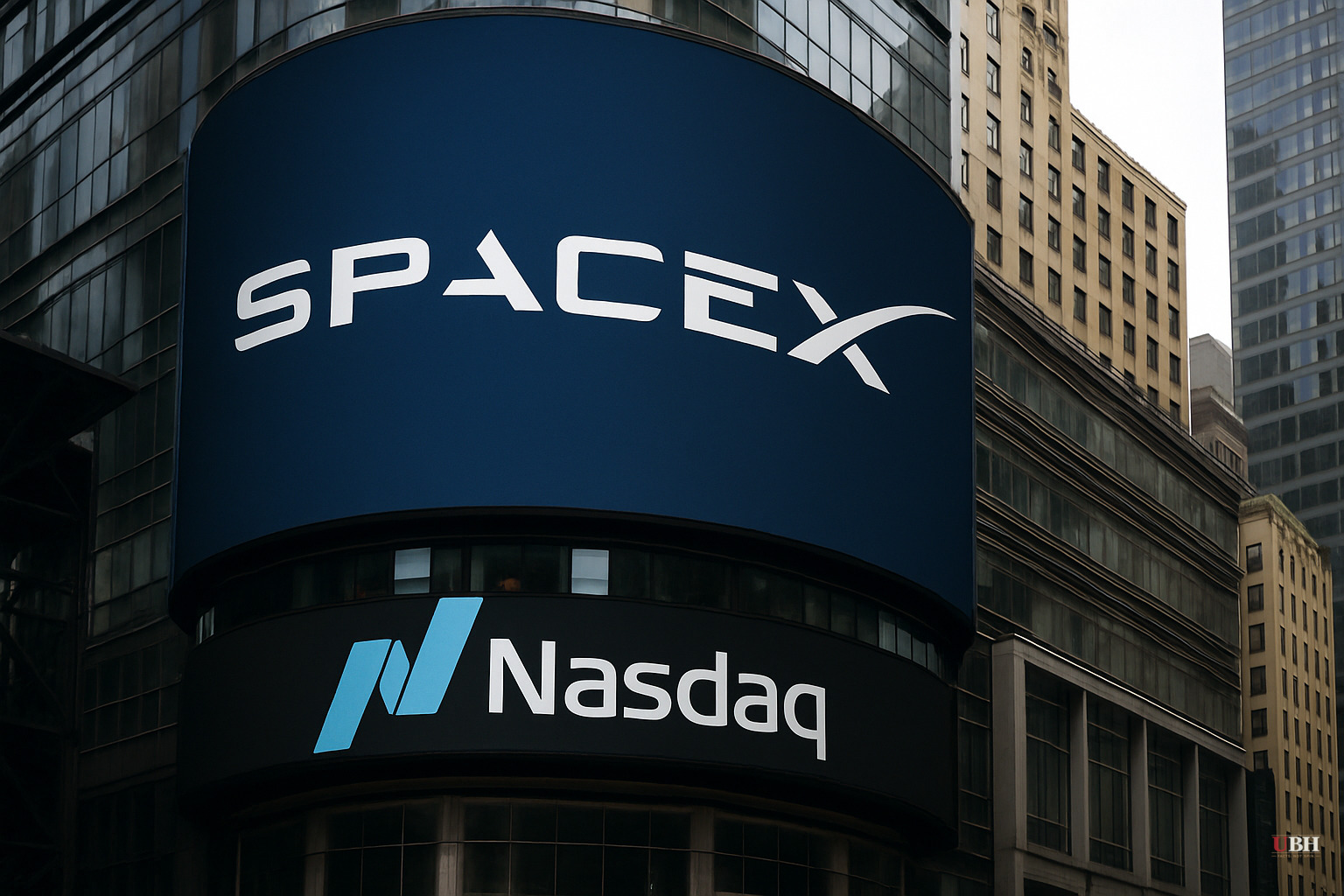
Since SpaceX listed on the Nasdaq on June 12, the story has moved fast enough that the milestones from earlier this week are already old news — the $75 billion raised, the 38% options-market odds of overtaking Nvidia by mid-2028. What's changed as of Thursday, June 18: index inclusion is here, a merger is being talked about openly by SpaceX's own president, and a lot of retirement savers are about to become SpaceX shareholders whether they chose to or not.
The Index Clock Ran Out
The Russell 1000 can absorb a mega-IPO after as few as five trading days. For SpaceX, that threshold hits after Thursday's close, according to CNBC. Passive index funds tracking the Russell 1000 will be required to buy shares to match their benchmark — no analyst opinion required, no buy decision needed. The Nasdaq-100 inclusion follows on July 6, which is 15 trading days after the IPO date.
When a stock enters these indexes, trillions of dollars in passive assets must reallocate. It doesn't guarantee the price goes up — it guarantees institutional buying pressure on a specific timeline.
You May Already Own It
Fidelity's parent company FMR holds 0.98% of existing SpaceX shares spread across 46 funds, according to S&P data cited by CNBC. Baron Capital holds 0.21% across seven funds, with four Baron funds where SpaceX accounts for 20% or more of net asset value. Franklin Resources, BlackRock, and Neuberger Berman also hold positions. Eight active funds total carry SpaceX exposure exceeding 10% of their net asset value, per Morningstar.
If you have a 401(k) with Fidelity — the nation's largest 401(k) provider — there's a real chance you already have indirect SpaceX exposure. Once index inclusion hits, that extends to virtually any broad-market index fund.
The Tesla Merger Isn't Just Rumor
The New York Times reported this week that speculation about a SpaceX-Tesla merger is no longer confined to social media. Investors, analysts, and SpaceX executives are discussing it openly. SpaceX President Gwynne Shotwell acknowledged the logic directly: "There's no question that there are synergies between Tesla and SpaceX in our futures."
The strategic case isn't unfounded. Tesla brings chip design, AI, data-center construction expertise, and a global energy footprint. SpaceX brings orbital infrastructure, Starlink satellite broadband, and launch capacity. Combined, the two companies would form a conglomerate spanning rockets, electric vehicles, robotics, AI, and satellite communications — with a combined valuation somewhere around $4 trillion, per ZeroHedge's reporting on the Times piece.
Ark Invest, which holds shares in both, told the Times the combination makes strategic sense, though it would prefer Tesla's robotaxi business to mature before any deal closes.
The Conflict-of-Interest Problem Is Real
Skeptics have a legitimate point. Musk controls SpaceX outright and holds roughly 20% of Tesla's voting power. Any merger would be, in practical terms, Musk negotiating with himself. That raises genuine conflict-of-interest concerns and the potential for Tesla minority shareholders to get a bad deal.
Legal experts quoted in the Times note that Texas corporate law — both companies are incorporated there — makes shareholder challenges difficult. Plaintiffs generally need to own at least 3% of the company to sue, which translates to roughly $45 billion in Tesla shares. That's a bar almost no individual investor clears. A merger would still require approval from two-thirds of Tesla shareholders, and Musk's 20% stake alone doesn't get him there. But Tesla's board has historically aligned with Musk, and ZeroHedge notes that SpaceX recently added longtime Musk associate Roelof Botha to its board — a move that signals closer coordination, not more independence.
The concern that minority Tesla shareholders could be steamrolled in a self-dealing transaction is a standard corporate governance issue that securities regulators and plaintiff attorneys will scrutinize hard if a deal is ever formally proposed. No merger has been announced. No regulatory review has been initiated. These remain allegations of risk, not established harms.
The Wealth Gap Number That Keeps Coming Up
Musk's 46% stake in SpaceX is worth over $1 trillion. Combined with his Tesla holdings, he is, per Forbes data cited by CNBC, the world's first trillionaire by a substantial margin — more than quadruple the net worth of the second-richest person, Google co-founder Larry Page, at roughly $300 billion. Senators Bernie Sanders and Elizabeth Warren have been publicly critical of that concentration of wealth, according to CNBC.
What it doesn't change: the valuation math is based on share prices set by millions of buyers and sellers in public markets, not a government grant.
Where the Numbers Actually Stand
SpaceX's market cap climbed above Amazon's on Tuesday, closing at $2.66 trillion that day, according to CNBC — in a neck-and-neck race with Amazon for fifth-largest company globally. Apple and Alphabet both trade above $4.4 trillion. Nvidia sits at $5 trillion. Getting to number one requires a substantial gain from current levels, assuming competitors don't move.
The options market currently prices a 38% probability of SpaceX overtaking Nvidia by June 2028, and a 41% probability by December 2028, based on ThinkOrSwim options chain data reported by CNBC.
The Open Question
The Russell 1000 rebalancing after Thursday's close is the most concrete near-term event. What happens to the stock when passive funds are forced to buy — and whether that buying is already priced in — is the question active traders are working through right now. The answer will start showing up in the closing print today.
Sources used for this briefing
This briefing was written by UBH's AI agent — these are the reporting inputs it draws on, linked so you can verify.


