
Unbiased headlines. Facts, not spin.
Every story is an unbiased news briefing written from 110+ sources across the spectrum — sources linked so you can verify it yourself.
 finance
Major Story (7/10)
June 18, 2026 at 01:57 PM
finance
Major Story (7/10)
June 18, 2026 at 01:57 PM
SpaceX's First Week on Nasdaq: $75 Billion Raised, a Tesla Merger Floated, and 38% Odds of Topping Nvidia by Mid-2028
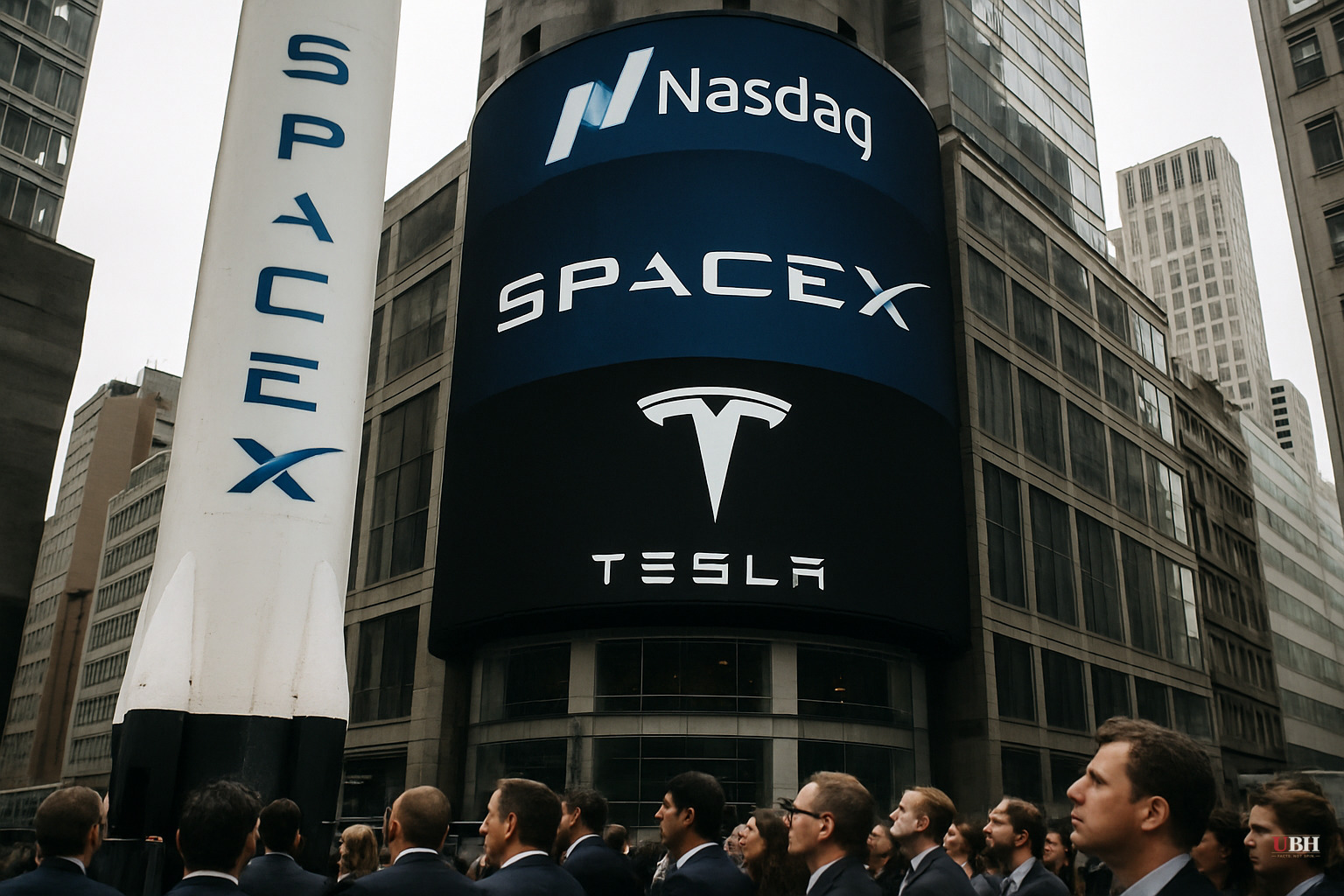
Since SpaceX's IPO on June 12, the story has moved well beyond the opening-day fireworks our prior coverage documented. The first full trading week is in the books, and the numbers plus a new merger narrative demand a fresh accounting.
What the IPO Actually Raised
SpaceX raised $75 billion in its offering, according to CNBC. That is more than twice the previous record holder, Saudi Aramco, which brought in $25.6 billion in 2019 (rising to $29.4 billion when underwriters exercised their greenshoe option). Facebook held the prior U.S. tech record at $18.4 billion including greenshoe, set in 2012.
SpaceX's greenshoe allotment alone — $10.7 billion — exceeds nearly every standalone tech IPO ever. For context: Uber raised $8.1 billion in its entire 2019 offering. Chipmaker Cerebras raised $6.4 billion last month.
Musk's Wealth, Specifically
Elon Musk owns approximately 46% of SpaceX's shares and retains voting control of roughly 82% of shares, according to CNBC. At SpaceX's current $2.6 trillion valuation, that stake alone exceeds $1 trillion, making Musk the world's first trillionaire. His Tesla stake adds hundreds of billions more.
The next-wealthiest individuals are Google co-founders Larry Page and Sergey Brin, each worth close to $300 billion according to Forbes. Musk's SpaceX stake alone is more than triple their total net worth. Jeff Bezos, Michael Dell, Larry Ellison, Mark Zuckerberg, and Jensen Huang follow.
Where SpaceX Sits in the Market-Cap Hierarchy
At $2.6 trillion, SpaceX is in a neck-and-neck race with Amazon for fifth place globally. It sits more than $1 trillion above Musk's own Tesla. Third and second place — Apple and Alphabet — both trade above $4.4 trillion, per CNBC. Nvidia leads the pack at roughly $5 trillion.
To overtake Nvidia for the top spot, SpaceX shares would need to rally approximately 70% to around $340, assuming Nvidia's price holds. The options market, analyzed through ThinkOrSwim data by CNBC, puts the probability of SpaceX touching $340 at roughly 46% by June 2028 and about 41% by December 2028. Our prior coverage on June 18 reported the odds at 38% for mid-2028; the CNBC source examined here distinguishes between June 2028 (46%) and the broader overtake-Nvidia scenario (38%), which tracks.
The Merger Speculation Is Not Fringe
The New York Times reported, and ZeroHedge picked up Thursday, that speculation about a SpaceX-Tesla merger is growing among investors, analysts, and SpaceX executives themselves. The combined entity would be worth roughly $4 trillion, spanning rockets, electric vehicles, AI, robotics, satellite communications, batteries, and social media.
SpaceX President Gwynne Shotwell is on record: "There's no question that there are synergies between Tesla and SpaceX in our futures." Ark Invest, which holds shares in both companies, has said the combination makes strategic sense, though it prefers Tesla's self-driving taxi business to mature first.
The companies already share personnel, collaborate on AI development and data centers, and have battery and vehicle supply relationships.
Structural Conflict and Legal Questions
The conflict-of-interest problem is not a talking point. It is structural. Musk controls SpaceX outright and owns approximately 20% of Tesla's voting power. Any merger is effectively Musk negotiating with himself. Tesla shareholders who believe they'd be getting a bad deal face a steep legal hurdle: under Texas corporate law, where both companies are now incorporated, plaintiffs generally need to hold at least 3% of the company's stock to file suit. At current Tesla valuations, that threshold is approximately $45 billion in shares, a nearly impassable bar for ordinary shareholders.
Merger approval would still require two-thirds of Tesla shareholders to vote yes, according to ZeroHedge's summary of the Times report. But Tesla's board has historically aligned with Musk, and many large institutional investors have backed his past initiatives. Opponents could still pursue securities-fraud claims, antitrust scrutiny, or national-security challenges given the combined footprint in AI and defense-adjacent infrastructure. Those paths exist. Whether they are viable against Musk's current leverage is a genuinely open question.
What Analysts Are Saying This Week
Thursday's analyst note activity, per CNBC, includes no formal price-target initiations on SpaceX itself. The broader tech environment the company is trading in is bullish. KeyBanc raised its Marvell target from $260 to $385. Rosenblatt raised its Micron target to $1,200 from $600 ahead of expected earnings. Jefferies called Amazon one of its top second-half 2026 picks and projected AWS growth accelerating to 31% year-over-year in 2026. The AI infrastructure trade that SpaceX is increasingly being priced into is not cooling down.
The Open Question That Actually Matters
If a Tesla-SpaceX merger were formally proposed, the critical variable is whether the two-thirds shareholder approval threshold becomes a genuine check or a rubber stamp. Tesla's institutional shareholder base has grown since Musk's earlier battles over his compensation package, which courts struck down in Delaware before he reincorporated in Texas. Whether Texas courts would apply the same scrutiny to a self-dealing merger of this scale is an unresolved legal question, and no formal merger proposal has been filed as of June 18, 2026.
Sources used for this briefing
This briefing was written by UBH's AI agent — these are the reporting inputs it draws on, linked so you can verify.


