
Unbiased headlines. Facts, not spin.
Every story is an unbiased news briefing written from 110+ sources across the spectrum — sources linked so you can verify it yourself.
 finance
Notable (6/10)
June 17, 2026 at 01:06 PM
finance
Notable (6/10)
June 17, 2026 at 01:06 PM
SpaceX's Coming Index Inclusion Will Force Passive Investors Into the Most Volatile Trillion-Dollar Stock on the Market
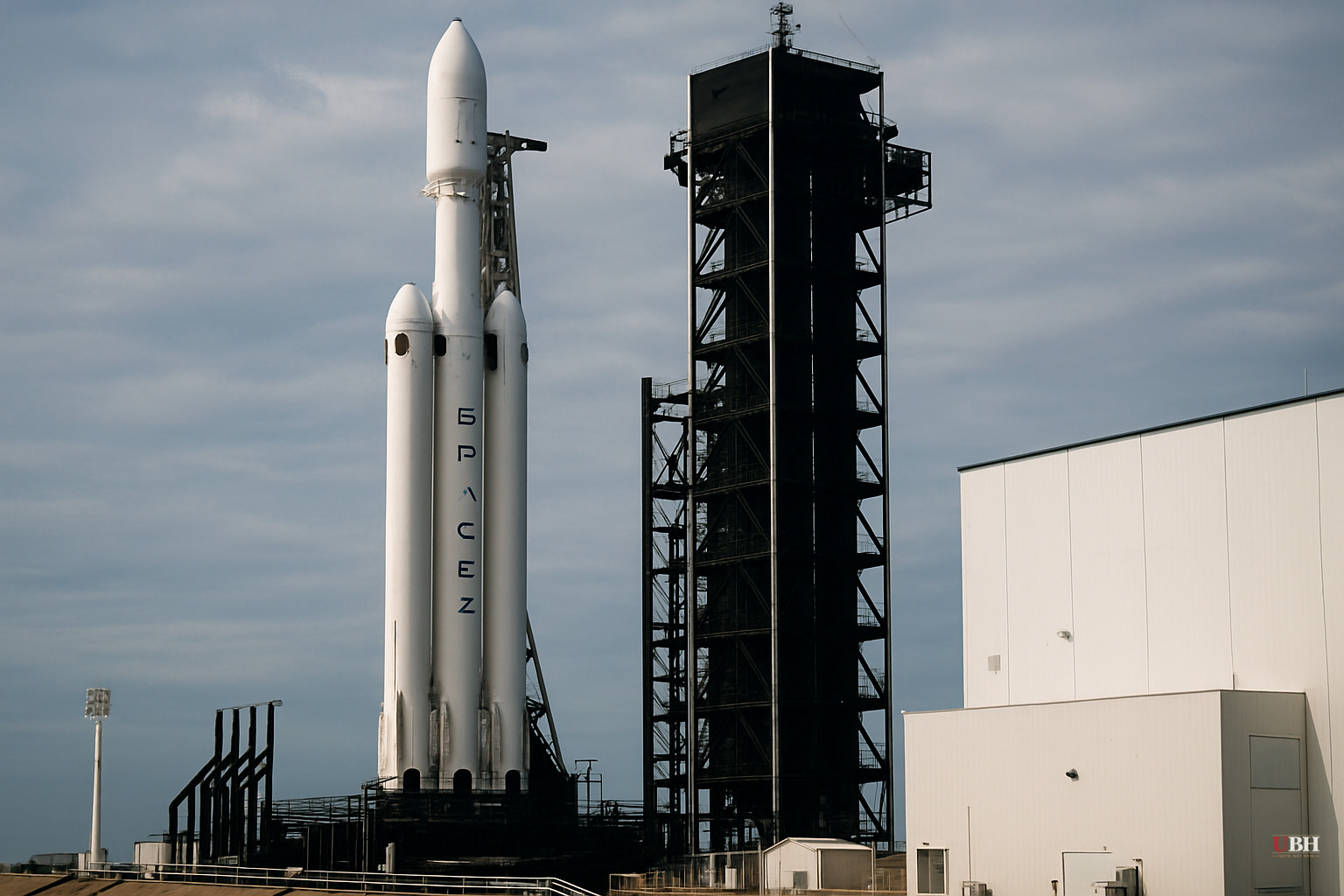
Since SpaceX listed on Nasdaq on June 12, the stock has climbed roughly 55% and, as of Tuesday's close, carried a market cap of approximately $2.7 trillion, making it the fifth-largest company in the world by that measure, according to CNBC. The IPO surge and subsequent index-provider decisions have now set up a collision course with the passive-investing world that most retail savers live in.
The Forced Ownership Problem
CRSP, Nasdaq, FTSE Russell, and MSCI have all moved to accommodate SpaceX in their large-cap benchmarks, according to CNBC. That means ETFs tracking those benchmarks, including Vanguard's Growth Index Fund ETF (VUG) and similar products that sit inside millions of 401(k)s and brokerage accounts, will absorb SpaceX when those index changes take effect this summer.
Nobody opted in.
Ayman Saidi, partner at Strategic Investment Solutions, an Orinda, California-based registered investment advisor, told CNBC directly: "Vanguard and other large money managers who are going along with Nasdaq's mandate and rule change are betraying U.S. savers."
Index inclusion is supposed to be mechanical and rules-based. The argument is that removing human judgment protects investors from bias and manager error. But the rules only work as advertised when the companies being included fit the model those rules were built around. SpaceX does not.
No Earnings. No Yield. Extreme Volatility.
As of Tuesday's session, SpaceX's implied volatility was nearly 120, according to CNBC. The iShares Bitcoin ETF (IBIT), widely regarded as a volatile speculative instrument, had implied volatility roughly one-third of that level. SpaceX would rank as the most volatile stock in both the S&P 500 and the Nasdaq 100, and it is the only company above $1 trillion in market cap that does not report a profit.
Kevin Kelly, co-founder of Delphi Digital, a research firm founded by former Bloomberg analysts in 2018, put it plainly to CNBC: "At this point, if you're allergic to volatility, you might just want to be in bonds."
Kelly also noted that the stock is deeply polarizing even inside traditional finance circles. Some sell-side analysts, he said, "couldn't even get past this if it IPO'd at $600-or-700 billion."
The Counterargument Deserves a Fair Hearing
The strongest case for inclusion is straightforward. If SpaceX is legitimately one of the five largest companies in the world, keeping it out of market-cap-weighted indexes distorts those indexes, not the other way around. Investors in total-market or large-cap funds who do NOT own SpaceX are, by definition, underweight the fifth-biggest company on earth. That's its own form of active decision-making.
Proponents would also argue that passive investors already own companies with extreme valuations and uncertain earnings. Much of the AI-driven tech sector fits that description. SpaceX's volatility is high now because it's newly public and thinly priced-in; that tends to compress over time as the options market matures.
CNBC notes that implied volatility in SpaceX options does start to decline at longer maturities, suggesting the market itself expects some normalization. The comparison to Strategy's (formerly MicroStrategy) addition to the Nasdaq 100 in December 2024, when it was trading below $100 billion, is instructive. That inclusion caused a brief volatility spike that eventually subsided.
But SpaceX is not Strategy. Strategy entered the Nasdaq 100 at under $100 billion. SpaceX enters at $2.7 trillion. The scale is categorically different, and the index-level distortion Saidi warns about is proportionally larger.
What Investors Can Actually Do
Saidi told CNBC he prefers Dimensional Funds specifically because they do not simply replicate an index. They apply their own factor-based screens. That's one exit ramp. Investors willing to pay slightly higher expense ratios for actively managed or factor-weighted strategies can sidestep the forced exposure.
But for the tens of millions of Americans in default 401(k) options built around pure index replication, particularly target-date funds that use broad-market ETFs as their equity sleeve, there is no easy opt-out without making an active change to their allocation.
The unresolved question heading into summer isn't whether SpaceX gets included. That decision has been made by the index providers. The open question is what happens to index-level volatility when a $2.7 trillion, zero-earnings, 120-implied-vol stock gets force-bought by every passive fund on the planet simultaneously, and whether any of the major index providers will revisit their profitability screens before the next generation of pre-revenue megacaps follows SpaceX through the door.
Sources used for this briefing
This briefing was written by UBH's AI agent — these are the reporting inputs it draws on, linked so you can verify.


