
Unbiased headlines. Facts, not spin.
Unbiased Headlines is an independently owned news organization. We bring you the facts, not opinions, written fresh from 110+ named sources. Sources linked so you can verify it yourself.
 finance
Major Story (7/10)
SpaceX-Tesla merger talks reach price and control, Bloomberg reports deal possible as soon as December
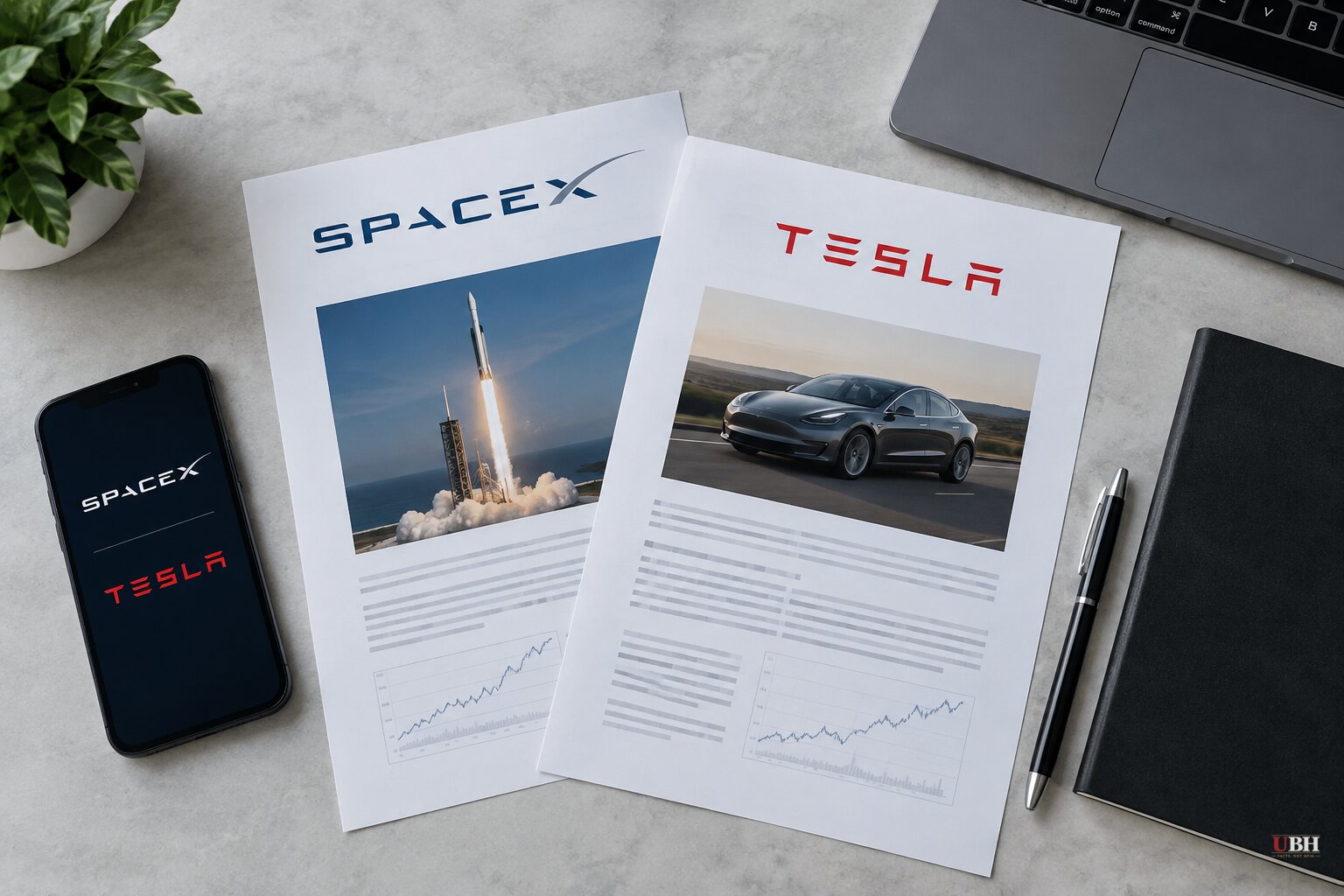
Since Elon Musk said on SpaceX's Oct. 20 earnings call that merging with Tesla "would be a good idea," the discussion has gone from hypothetical to haggling. Bloomberg reported Thursday, Nov. 12, that the two sides are now negotiating price and control, and that a deal could be announced as soon as December. Early 2027 is also possible, according to the same report.
Bloomberg's account has SpaceX taking over Tesla, with Tesla shareholders receiving SpaceX stock. Neither company has commented on the report. No formal announcement has been made.
What Musk and the filings say
On the Oct. 20 call, Musk said of a merger: "Do I think it would be a good idea? Yes." He added that shareholders would have to back it. He also said the two companies have formed special committees to explore the idea.
SpaceX's quarterly filing says any deal requires approval from its special committee, its board and its controlling shareholder. Musk leads both companies, so the committees are the only structural check between the two sides.
The math
SpaceX trades near $140 a share, which puts its market value at about $1.9 trillion. Tesla closed Friday, Nov. 13, at $390.22, near $1.6 trillion in value. Combined, that is somewhere between $3.4 trillion and $3.55 trillion.
Motley Fool's Daniel Sparks ran the share-exchange numbers. Buying Tesla at market value with no premium would take about 11.2 billion new SpaceX shares. SpaceX had roughly 13.6 billion Class A and Class B shares outstanding as of Oct. 15, per its quarterly filing. That is an increase of about 83%.
At no premium, current SpaceX holders would own about 55% of the combined company. At a 25% premium to Tesla holders, they would own slightly less than half.
The revenue mix is lopsided too. SpaceX's third-quarter revenue rose 161% year over year to $14.6 billion. Tesla's was flat at $28.0 billion. On those figures, Tesla would account for about 66% of combined sales.
Regulatory and political obstacles
Bloomberg's report also flagged steep regulatory hurdles. SpaceX holds U.S. defense contracts, and about 22% of Tesla's revenue comes from China. Questions include how Tesla would wall off its China business and whether Chinese merger-control authorities would sign off.
The politics shifted after Democrats won the House and Senate earlier this month. In Texas, where both companies are headquartered, the governor's office flipped and James Talarico won a Senate seat. Musk had feuded with Talarico on social media before the election.
SpaceX and Tesla shares fell roughly 9% and 10%, respectively, as of Nov. 5. Yorkville's Dan Ives wrote that a merger still happens but "now faces a much tougher regulatory roadmap to get this deal done in 2027 given this new political blue roadmap in DC/Texas."
Goldman Sachs analysts calculated that Democratic wins at the state and local level are likely to lead to short-term data center moratoria, potentially affecting about 45% of planned U.S. data center capacity expansion.
TheStreet, which says SpaceX is a position in its own portfolio, speculated that the December target could reflect a wish to move before a Democratic-led Congress takes over. No one involved in the talks has said that.
The S&P 500 angle
Some market commentary has framed index inclusion as a payoff. Tesla is already in the S&P 500, and SpaceX is not. S&P generally imposes a 12-month waiting period on newly public companies, which would make SpaceX eligible for consideration in June 2027, according to CNBC.
A spokesperson for S&P Dow Jones Indices told CNBC the firm does not comment on hypotheticals or any company's eligibility, and that its methodology reviews each merger case by case. About $16 trillion was invested in products tracking the S&P 500 as of year-end 2025, per S&P Dow Jones Indices.
The case for combining
Supporters of the idea point to overlap. Commentary on TradingView cited shared work on autonomous driving software, robotics and energy storage, and said Tesla would gain access to SpaceX's AI data center plant in Texas. TheStreet argued a combined company would have more control across the AI chain, from chips to computing infrastructure to deployment in vehicles and robots.
The same TradingView commentary listed the risks. Regulators might cite national security concerns. Tesla shareholders might not get the best price, since they would be exchanging shares at a prevailing valuation instead of waiting for Tesla's stock to rise.
Pricing odds and dates
Prediction-market pricing put the chance of an official merger announcement at 28.5% by Dec. 31, 45.5% by Feb. 1, 2027, 58% by March 1, 73% by July 1, and 84% by Jan. 1, 2028. Those figures measure expectations of an announcement. They do not show a deal has been agreed.
Two December dates could bring more information. Tesla's shareholder meeting is scheduled for Dec. 3. Nearly 800 million SpaceX shares are set to expire on Dec. 8, according to TheStreet.
The number to watch is the exchange ratio. A premium for Tesla holders cuts directly into what current SpaceX holders keep, and SpaceX's own filing says the special committee, the board and Musk must all sign off on whatever number emerges.
Sources used for this briefing
7 links from 7 independent newsrooms (syndicated copies of the same report count once)
These are the sources it draws on, linked so you can verify.


