
Unbiased headlines. Facts, not spin.
Unbiased Headlines is an independently owned news organization. We bring you the facts, not opinions, written fresh from 110+ named sources. Sources linked so you can verify it yourself.
 finance
Notable (6/10)
CFTC Staff: Exchanges and Clearinghouses May Count Bitcoin, Ether Toward Operating Reserves After 20% Haircut
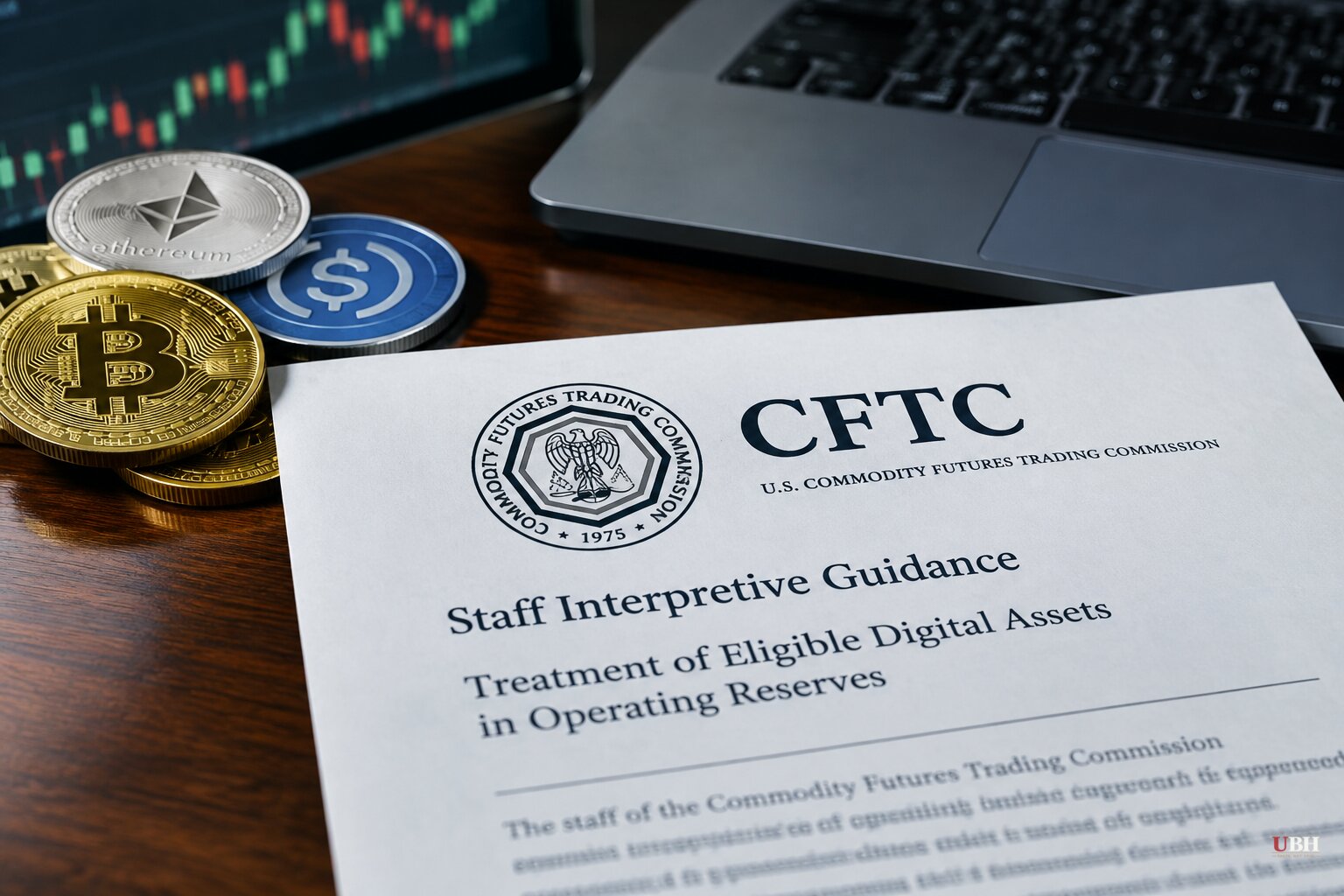
Staff at the Commodity Futures Trading Commission said Monday, Nov. 23, that U.S. derivatives exchanges and clearinghouses may count some crypto held on their balance sheets toward mandatory financial reserves. There are limits, and they are significant.
The advisory, CFTC Staff Letter 26-31, came from the agency's Division of Market Oversight and Division of Clearing and Risk. It covers swap execution facilities (SEFs), designated contract markets (DCMs) and derivatives clearing organizations (DCOs).
What the guidance says
Under three existing CFTC rules, those entities must hold financial resources covering at least 12 months of operating costs on a rolling basis. Until now, only cash and traditional financial assets counted toward that buffer.
Staff said they will not object to Bitcoin and Ether counting toward the buffer, provided the entity applies a haircut of at least 20%. Payment stablecoins that qualify can count with a minimum haircut of 2%.
Other crypto assets that are not readily marketable and do not qualify as payment stablecoins would generally take a 100% haircut. In practice, they count for nothing.
Entities must also account for wrong-way risk. That is the possibility that a drop in crypto prices arrives at the same time as losses in the entity's own business.
The liquidity floor
The bigger constraint is a separate liquidity requirement. SEFs must hold at least three months of operating costs in unencumbered, liquid financial assets. DCMs and DCOs must hold at least six months.
Staff said crypto assets, stablecoins included, are not cash under GAAP and are not highly liquid securities under the relevant rules. They cannot satisfy that portion.
For a DCM or DCO, that arithmetic means crypto can cover at most the other half of the 12-month requirement. Each dollar of Bitcoin counts as no more than 80 cents.
The advisory does not address whether crypto can meet DCO default resource requirements, the funds a clearinghouse holds against a member failure.
Not a rule
The advisory is staff guidance. It creates no new rules or enforceable rights, is not a no-action position, and does not necessarily represent the views of the Commission itself. The CFTC framed it as an explanation of how three existing regulations apply: Regulation 37.1301 for SEFs, 38.1101(a) for DCMs and 39.11(a)(2) for DCOs.
The haircut figures echo earlier moves. The CFTC allowed Bitcoin, Ether and USDC as collateral for derivatives transactions in December 2025. Three months later, staff set capital charges of 20% for Bitcoin and Ether and 2% for payment stablecoins held by brokers, in line with SEC guidance.
Who is affected
CFTC-registered venues include Coinbase Derivatives, Crypto.com's North American Derivatives Exchange, Bitnomial Exchange, and prediction markets Kalshi and Polymarket US. A growing number of regulated venues hold corporate reserves or collect fees in digital assets, and regulated entities had asked whether those holdings could support mandatory operational capital buffers.
The practical effect is modest. The guidance frees some balance-sheet capital at crypto-native venues. It does not create new demand for Bitcoin or Ether, and spot ETF flows are unlikely to feel it.
The wrong-way risk test matters most for crypto-focused venues, whose trading revenue tends to fall when the market does. That could argue for haircuts well above the minimum.
It is unclear whether the Commission itself will formalize any of this. Staff guidance can be changed or withdrawn, and the advisory says plainly that it does not bind the Commission.
Sources used for this briefing
7 links from 7 independent newsrooms (syndicated copies of the same report count once)
These are the sources it draws on, linked so you can verify.


