
Unbiased headlines. Facts, not spin.
Unbiased Headlines is an independently owned news organization. We bring you the facts, not opinions, written fresh from 110+ named sources. Sources linked so you can verify it yourself.
 finance
Major Story (7/10)
Treasury Flags $14.7 Billion in Possible Iranian Shadow Banking Flows, Sanctions 22 Companies and 8 People
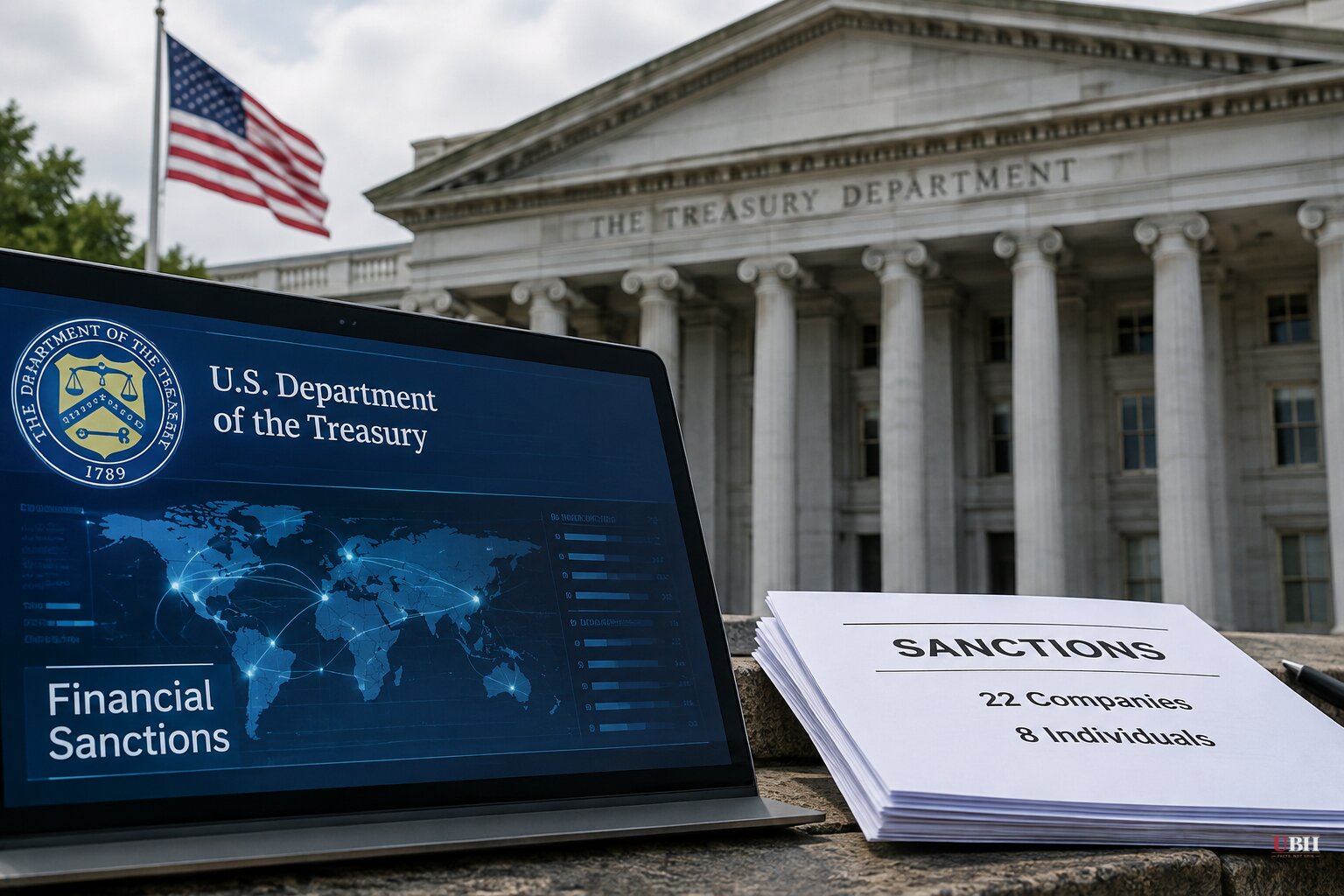
The Treasury Department says it has traced roughly $14.7 billion in potentially Iran-linked transactions through shadow banking networks over 20 months, and on Monday, Nov. 23, it paired that finding with a new round of sanctions.
The Financial Crimes Enforcement Network, known as FinCEN, covered January 2025 through August 2026. The figure comes from suspicious activity reports filed by U.S. financial institutions. FinCEN calls the transactions "potentially" linked to Iran. These are flagged transactions, not proven violations.
Where the money came from
The funds originated at banks in China, Singapore and the United Kingdom and were routed to financial institutions in the United Arab Emirates, according to the FinCEN analysis.
The breakdown:
- At least $2.6 billion came from China-based banks.
- $981 million came from Singapore-based banks.
- $922 million came from UK-based banks.
Other suspicious transactions originated in the Marshall Islands and the British Virgin Islands, and in businesses tied to Iran in shipping, trading and oil. Treasury also described networks running through the UAE, Hong Kong and Singapore, involving oil, shipping, investment and technology procurement.
FinCEN's analysis does not announce sanctions. It is a trend report meant to tell banks what to look for.
What FinCEN wants banks to do
FinCEN told U.S. institutions to keep filing Bank Secrecy Act reports on suspicious Iran-related activity. It specifically pointed them to cross-border payments involving UAE-based banks, offshore shell companies, registry-linked addresses, and Iran-connected shipping, oil, trading or procurement activity.
It also invited tips. U.S. and foreign persons can report suspected Bank Secrecy Act or OFAC sanctions violations involving Iranian proxies and overseas facilitators. Awards may be available when the information leads to a successful enforcement action carrying monetary penalties exceeding $1 million.
"Financial institutions are often the first line of defense in denying Iranian regime-linked funds access to the U.S. economy," Treasury Secretary Scott Bessent said.
The sanctions list
In a separate action under what Treasury calls Operation Economic Outcast, the Office of Foreign Assets Control (OFAC) designated 22 companies and eight individuals. The targets operate in Iran, the UAE, Turkey and Hong Kong. Treasury describes them as exchange houses, front companies and financial intermediaries accused of helping Iran move billions of dollars through international channels.
Four Iranian companies are on the list:
- Iran Center for Exchange of Currency and Gold
- Mellat Exchange Company
- Mina Fashki and Partners Exchange Company
- Rahbar Bazargani Nesim Baharan Qeshm, a financial intermediary based on Qeshm Island
Eight Iranian individuals tied to three of those exchange and financial businesses were also designated.
The UAE took the largest share of the overseas designations. Sixteen Dubai-based companies were added, among them Integral Petro Energy Trading and Grand Target Heavy Equipment and Machinery Spare Parts Trading. The listed businesses span currency and gold exchange, petroleum trading, industrial machinery, building materials, raw materials and general trading.
Treasury's stated goal
Treasury says the aim is to cut off Iran's access to foreign currency at a time when falling oil revenue and economic pressure are squeezing its ability to pay for military activity and weapons programs.
"Iran's economy is underwater," Bessent said, calling shadow banking a crucial financial lifeline for Tehran. He said Treasury will keep dismantling the networks until it has "buried the head of the snake." In a separate statement, he said Treasury would "continue to sever the financial lifelines on which the regime relies to fund its military, weapons programs, and terror proxies."
What the numbers do and don't show
The flagged total is large, and $2.6 billion routed from China-based banks is the single biggest named piece. It lands in the middle of a U.S.-China rivalry in which Washington has repeatedly accused Chinese institutions of enabling sanctioned trade. This report adds a dollar figure to that argument.
But the analysis sorts transactions by where the money originated, not by who is legally responsible. Banks file suspicious activity reports on transactions that look unusual, and a report is a lead for investigators. A flagged payment is not a finding of guilt by the bank that sent it or by the customer behind it.
The sanctions announced Monday hit exchange houses, front companies and intermediaries. They did not hit the banks in China, Singapore or the UK that the analysis identifies by country as the origin of the flagged money.
Whether Treasury moves from guidance to penalties against any foreign institution is the open question. For now, FinCEN is asking banks to keep reporting, and it has put a $1 million enforcement threshold on awards for tips.
Sources used for this briefing
5 links from 5 independent newsrooms (syndicated copies of the same report count once)
These are the sources it draws on, linked so you can verify.


