
Unbiased headlines. Facts, not spin.
Unbiased Headlines is an independently owned news organization. We bring you the facts, not opinions, written fresh from 110+ named sources. Sources linked so you can verify it yourself.
 finance
Major Story (7/10)
Event date: November 16, 2026 ·
Taiwan's Short-Sale Price Floor Takes Effect After 17.5% Weekly Taiex Drop; Gold Bounces Off One-Year Low
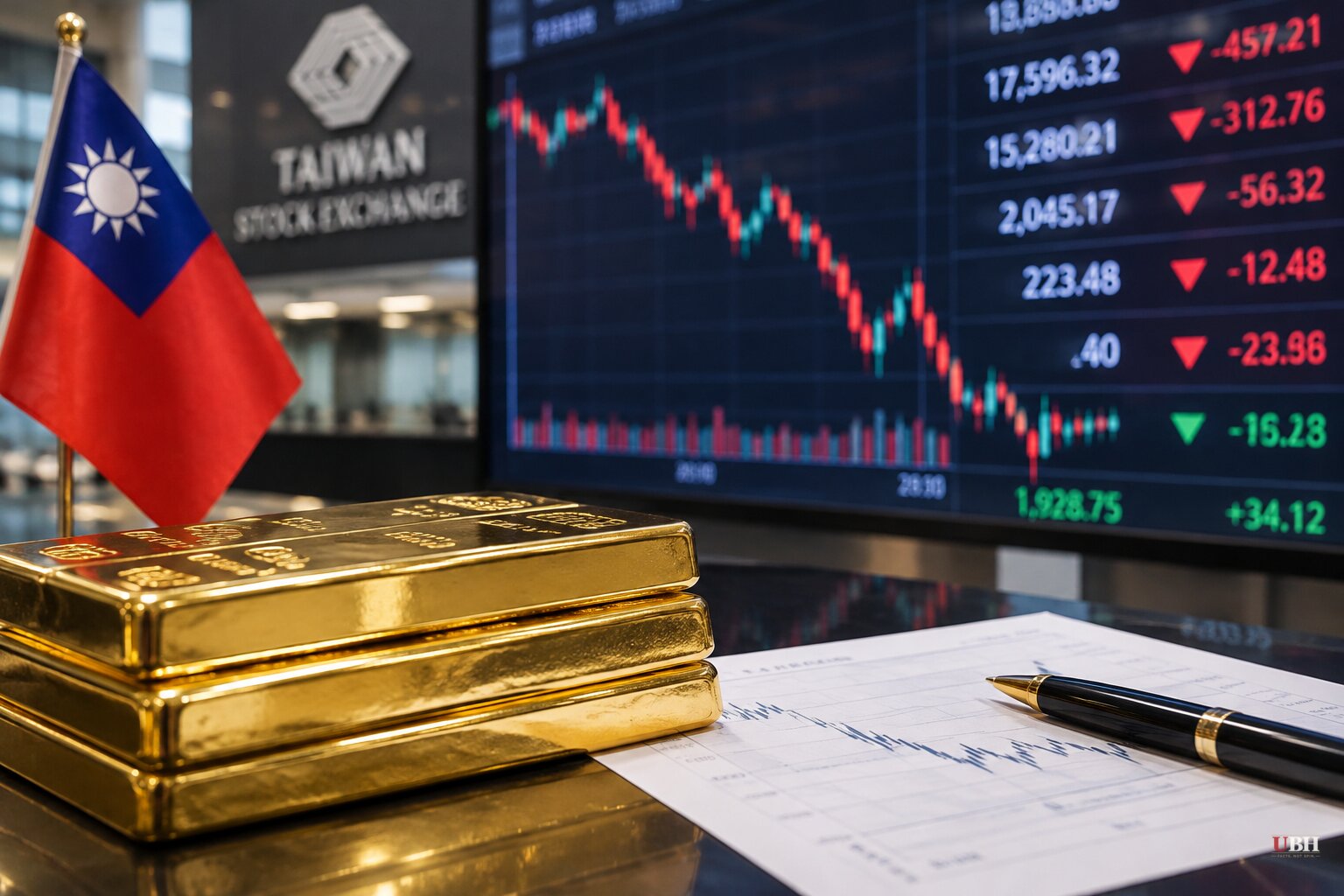
Since Taiwan's Taiex closed at 36,033.29 on Friday, Nov. 20, after losing 17.5% in a week, regulators have moved from tightening short-selling quotas to a near-blanket restriction. It took effect Monday, Nov. 23.
What the rules do
The Financial Supervisory Commission (FSC) announced the package Saturday. Under it, no one may short a listed or over-the-counter stock, or a Taiwan Depositary Receipt, below the previous day's closing price. That applies to both margin shorts and securities-lending shorts.
Until Friday, the restriction hit only stocks that had fallen 3.5% or more the prior session. Now it covers every name.
The margin requirement on short sales rises to 150% from 130%. It stood at 90% at the start of the month.
The FSC also stopped accepting brokers' applications to list new put warrants. Those are products that pay off when a stock falls.
Financial institutions were urged to stop lending shares, recall shares already on loan, or let existing loans lapse. Listed companies were urged to speed up buybacks. Securities and futures firms keep an exemption for hedging.
Third round in about two weeks
The borrowing quota was cut from 30% of average daily volume to 3% earlier this month, then to 1% on Nov. 19. The quota technically stays at 1%. But a short seller can now only sell into a stock that is already trading above its prior close.
Taiwan's Finance Ministry says its NT$500 billion (about $15 billion) National Financial Stabilization Fund is actively buying shares. The fund has been in the market since Nov. 6. The Taiex fell 7,641.83 points last week and remains well below its record high of 49,968.92 set on Oct. 6.
Why the slide hit Taiwan so hard
Tech makes up more than 70% of the Taiex, according to Bloomberg's reporting. That leaves the index exposed to swings in sentiment on artificial intelligence.
UOB Kay Hian executive director Steven Leung blamed Anthropic's listing for failing to lift sentiment. "The listing of Anthropic failing to lift the market sentiment is the main hit on AI across Asia," he said. Anthropic shares fell 4.7% in after-hours U.S. trading.
Leung also said falling prices are intensifying margin calls and forcing investors to cut leverage. Each forced sale pushes prices lower and triggers more margin calls.
Do the curbs change the underlying selling?
S3 Partners research head Matthew Unterman argues they do not. "Limiting short-selling activity does not eliminate underlying bearish sentiment or selling pressure from investors reducing existing long exposure," he said.
He added that hedge funds holding established bearish positions "may have limited incentive to cover solely because new short-selling activity has become more restrictive."
S3's data points the same way. Aggregate short interest across Taiwanese listed stocks was 5.28% of float as of Thursday, Nov. 19. That compares with about 5.49% on Nov. 6, the day authorities first restricted shorting.
Short interest barely moved over two weeks of curbs. It also means a pool of bearish bets remains open.
The FSC's stated aim is to blunt accelerating intraday selloffs. Foreign institutions kept selling through the stabilization fund's buying, and what they do next is the main variable.
Gold rebounds, Fed hike bets pared
The AI selloff has also hit other markets. Gold rose as much as 2.8% to above $3,637 an ounce, following a near 9% fall last week to its lowest in more than a year. That was its biggest weekly decline in eight months.
Bloomberg reported that dip-buyers stepped in as the market pared bets on a Federal Reserve rate hike in December. Gold's 14-day Relative Strength Index has also fallen below 30, a level that signals the metal may be oversold. Bloomberg's earlier reporting tied last week's drop to a hawkish Fed and the AI selloff.
What to watch
The measures are in place and the fund is buying. The open questions are whether foreign selling eases and whether the 5.28% short-interest figure falls once the new price floor has been in force for a few sessions. Taiwan's authorities have not said when the curbs will be lifted.
Sources used for this briefing
8 links from 8 independent newsrooms (syndicated copies of the same report count once)
These are the sources it draws on, linked so you can verify.


