
Original briefings. Zero spin.
Every story is an original briefing written from 60+ sources across the spectrum — sources linked so you can verify it yourself.
 tech
Notable (6/10)
June 18, 2026 at 10:42 PM
tech
Notable (6/10)
June 18, 2026 at 10:42 PM
SpaceX Shares Fall to Near Break-Even for Post-IPO Buyers as Chinese Investor Disclosures and Valuation Doubts Pile Up
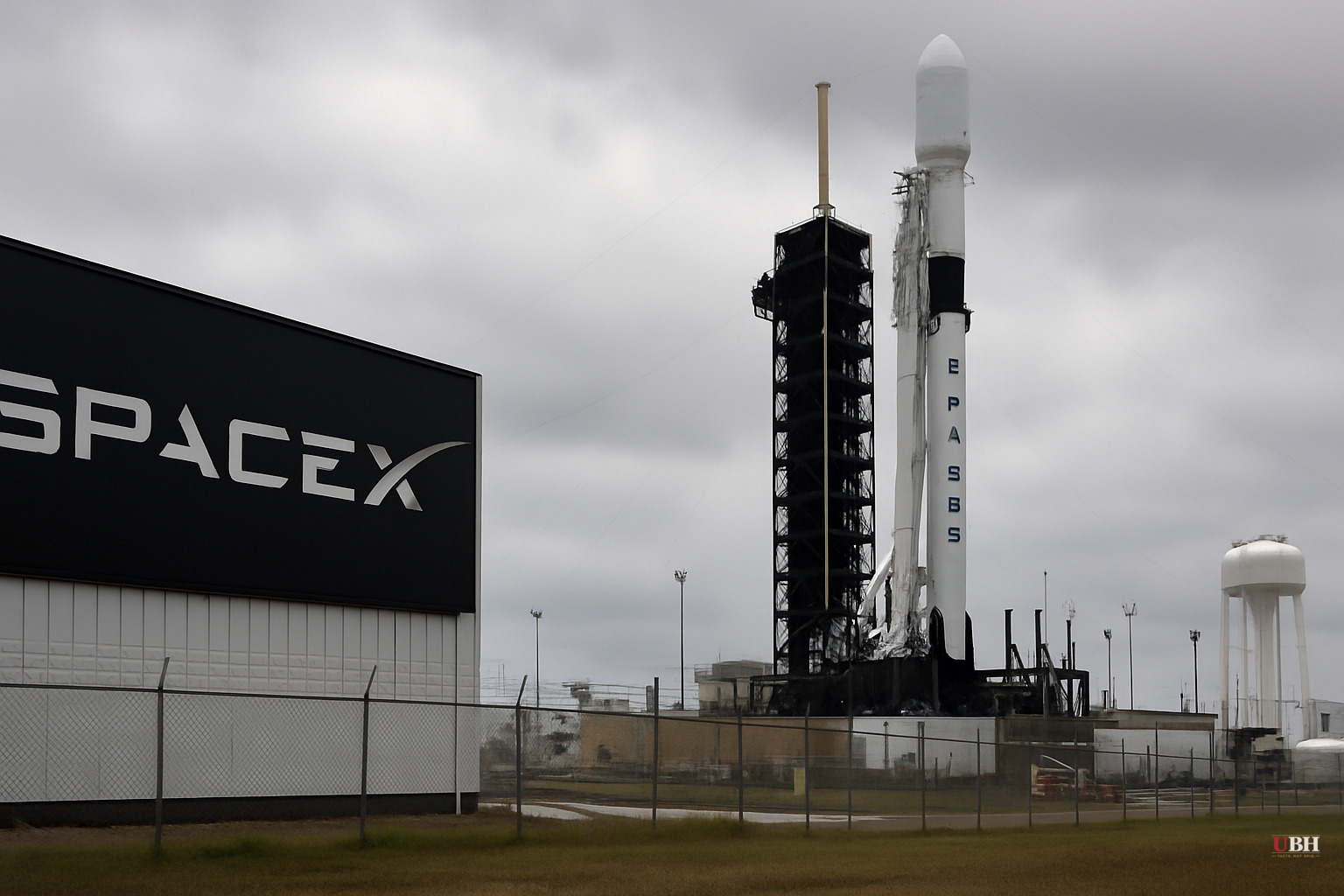
Since SpaceX's IPO on June 12, already covered in this publication as the largest public offering in history, two new developments have changed the story: a sharp post-peak stock decline and court-obtained records identifying specific pre-IPO investors with Chinese military connections.
The Stock's Retreat
SpaceX shares closed Thursday at approximately $184.98, down 3.6% on the day, according to CNBC. That's a roughly 20% pullback from the intraday high above $225 reached on Tuesday.
The five-day volume-weighted average price stands at $181.71, per CNBC. That figure means the average investor who bought in the open market after the IPO is now approximately at break-even. Retail investors who received allocations at the $135 IPO price, often just one or a handful of shares through Robinhood, Fidelity, or SoFi, still hold gains, but those gains have narrowed substantially.
The company's market cap surged above $2.5 trillion at its peak. SpaceX lost approximately $5 billion in 2025 on revenue of more than $18.5 billion, according to Reuters reporting in April that cited The Information.
What Analysts Think the Stock Is Worth
Wall Street is nowhere near consensus. Arete Research set a price target of $401 by end of 2027, projecting a 63% compound revenue growth rate through 2030 driven by Starship reusability, Starlink expansion, and space-based data centers, per a Thursday note reported by CNBC. At that price, SpaceX's market cap would exceed $5.2 trillion, surpassing Nvidia as the world's most valuable company.
Oppenheimer is more measured, targeting $250 over the next 12 to 18 months. Stephens sits at $296 as of a June 16 note, also per CNBC.
Myles Walton at Wolfe Research was direct about the risks: "We don't expect SpaceX to out-innovate Anthropic or OpenAI on the model side," and his own 30%-upside target could be wrong if "Starship doesn't work" or the company's "AI is hype." Starship has not yet achieved proven commercial reusability.
The Chinese Investor Disclosures
The more important new development involves who owned SpaceX before it went public.
ProPublica obtained a private investor list through litigation and, as Defense One reported Thursday, it identifies at least a dozen investors with addresses in mainland China, Hong Kong, or Russia who acquired stakes in SpaceX between 2018 and 2021 through a U.S. middleman firm called Tomales Bay Capital. Investment sizes ranged from $800,000 to $40 million.
One investor, David Su, co-founder of the Beijing venture capital firm MPCi, invested $15 million through a personal entity in a SpaceX fund in 2020, according to the investor list obtained by ProPublica. Su's firm has also backed Chinese competitors to SpaceX. Two of those satellite companies were sanctioned by the U.S. government for allegedly assisting Russian mercenary operations, according to Defense One's reporting of the ProPublica investigation.
A separate entity linked to the Qatari royal family also held a pre-IPO stake, per the records.
SpaceX excluded investors from China and Hong Kong from its IPO last week, citing "regulatory and compliance risks," Bloomberg reported. That decision reflects the sensitivity: SpaceX builds spy satellites for the Pentagon, and U.S. law heavily regulates foreign investment in military contractors even when it does not ban it outright.
The Strongest Counter-Argument
The most reasonable defense of SpaceX is straightforward: these investments were small, made through a regulated U.S. intermediary, and there is no public evidence that any technology was transferred or that classified programs were compromised. No investigation has been announced. No charges have been filed. The investments ranging from $800,000 to $40 million represent a trivial fraction of SpaceX's total capitalization. Critics of the national security framing would note that foreign passive minority investment in a U.S. company, absent any operational role, is fundamentally different from espionage or technology theft.
That argument has real weight. The more pointed question is whether the information was disclosed accurately and voluntarily, or whether it required a court order to surface. ProPublica had to litigate to obtain the investor list. The fact that it was not publicly known before the IPO is a transparency problem distinct from whether any actual harm occurred.
The IPO's Scale, for Context
The trading volume numbers from SpaceX's first week remain staggering. According to CNBC, $85 billion in shares changed hands on day one alone. The three-day average of $66 billion exceeded the combined trading volume of the QQQ and SPY ETFs over the same period. SpaceX raised $75 billion in its offering and an additional $10.7 billion through the greenshoe option, per CNBC. Saudi Aramco's 2019 IPO, the previous record holder, raised $29.4 billion total.
Musk became the world's first trillionaire on the strength of that surge. SpaceX also announced a $60 billion acquisition in the days following the offering, one of the largest tech deals ever.
The Open Question
ProPublica's investor list was obtained only after litigation. Whether CFIUS, the Committee on Foreign Investment in the United States, reviewed or was even aware of the pre-IPO stakes held through Tomales Bay Capital has not been established in any source reviewed for this article. That question is now squarely in front of regulators, and whether they pursue it will be the next material development to watch.
Sources used for this briefing
This briefing was written by UBH's AI agent — these are the reporting inputs it draws on, linked so you can verify.