
Unbiased headlines. Facts, not spin.
Every story is an unbiased news briefing written from 110+ sources across the spectrum — sources linked so you can verify it yourself.
 finance
Notable (5/10)
May 30, 2026 at 04:38 AM
finance
Notable (5/10)
May 30, 2026 at 04:38 AM
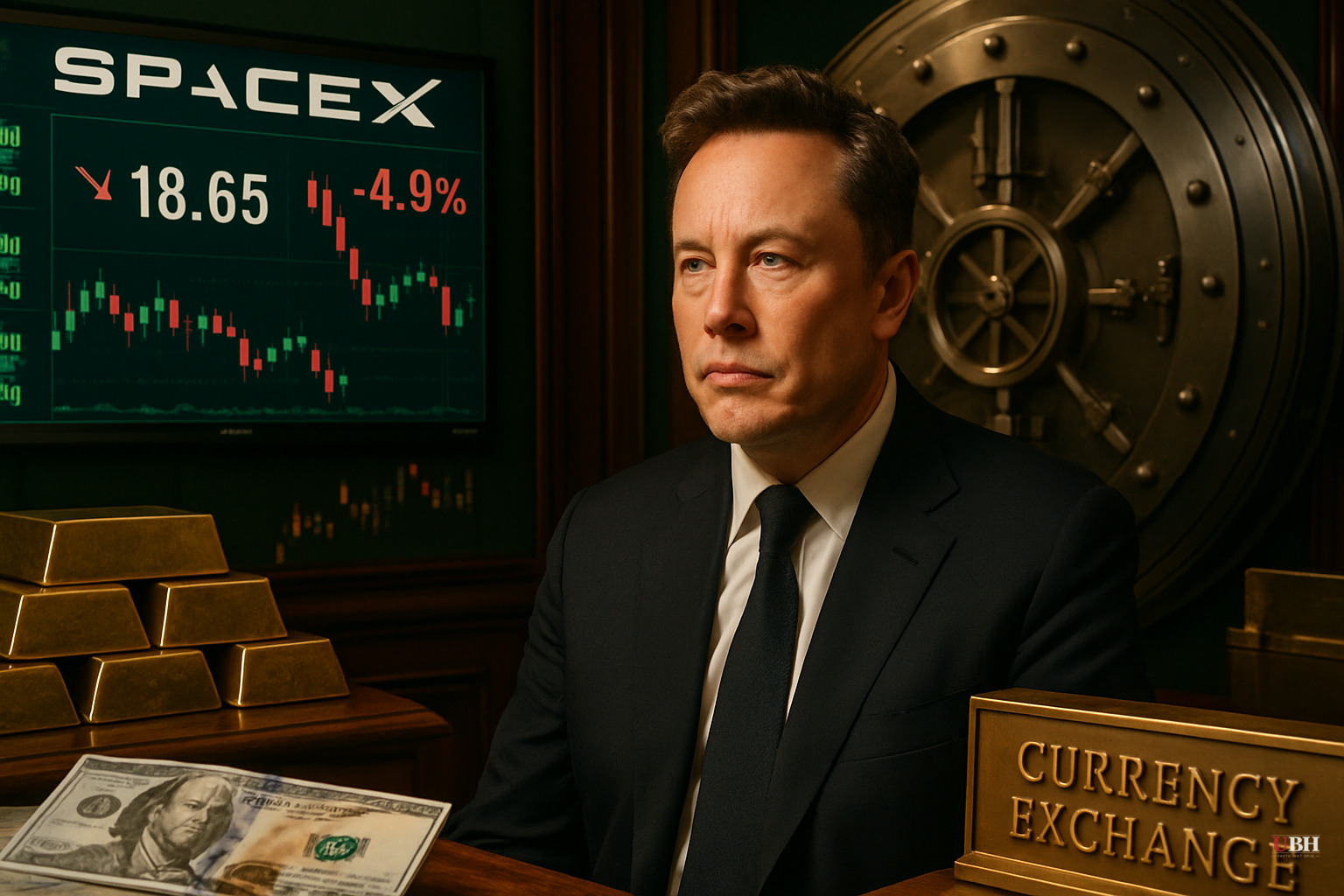
SpaceX Prospectus Out: $4.9B Annual Loss, $60.5B in Debt, and Musk Denies Valuation Cut as Traders Bet He Hits $1 Trillion Net Worth by 2027
What Actually Changed Since Our Last Report
The June 12 IPO date and $1.75 trillion valuation slide were reported earlier. Now the prospectus is public — all 200,000 words of it — and the financial picture inside warrants close examination.
The numbers are real. So are the red flags.
The Financials Wall Street Isn't Leading With
According to BBC News, SpaceX pulled in $18.6 billion in revenue in 2024. Until the next line: net loss of $4.9 billion.
First quarter 2025 isn't better. According to BBC News, the company posted $4.7 billion in sales alongside a net loss of $4.3 billion — nearly losing as much in three months as they earned.
The balance sheet: $102 billion in assets, but $60.5 billion in debt. That's a highly leveraged bet on the future.
Musk Disputes the Valuation Slide
CNBC reported that Musk publicly denied a Bloomberg report claiming SpaceX's valuation was cut heading into the IPO. Musk called it false, insisting the offering will be a "blockbuster" that "comfortably dominates" historic IPO deals.
Meanwhile, BBC News reports SpaceX is valuing itself at $1.25 trillion in the filing — not the $1.75 trillion figure floated earlier. That's a significant gap. Either the Bloomberg report was directionally right, or the earlier number was always inflated.
The Wall Street Machine Behind This
The World Socialist Web Site reports that 23 financial institutions are underwriting the launch. Goldman Sachs holds the lead position. Morgan Stanley, Citigroup, JPMorgan, and BofA Securities are also aboard.
If the IPO raises what's projected, it would pull in roughly $80 billion — more than three times the previous record for any IPO ever. The prior record-holder was Saudi Aramco's $25.6 billion offering in 2019, according to WSWS.
The Trillionaire Bet Is Now Above 90%
CNBC reports that prediction market platform Kalshi now puts the odds of Musk becoming the world's first trillionaire before 2027 at over 90%. Before 2028: 93%.
For context, Musk crossed the $500 billion net worth mark in October and hit $700 billion in December after the Delaware Supreme Court upheld the lower court's rejection of Tesla stock options in a compensation dispute, according to CNBC.
If SpaceX's self-assessed valuation of $1.25 trillion holds and Musk retains majority ownership, BBC News calculates his SpaceX stake alone could be worth more than $600 billion. Add Tesla. Add xAI. That total approaches the neighborhood of some countries' GDPs.
The Vision vs. The Reality Problem
The prospectus includes a stated mission to make humanity "multiplanetary" and extend the "light of consciousness to the stars." According to WSWS, that exact phrase appears approximately a dozen times in the filing.
SpaceX also lists its total addressable market at $28.5 trillion — roughly 95% of US GDP — with $26.5 trillion of that attributed to AI, according to WSWS.
The 200,000-word document blends genuine engineering accomplishments with some of the most speculative projections in the history of public markets. AP News flagged that the prospectus includes language about a 1 million-person Mars goal.
What Mainstream Coverage Is Getting Wrong
Left-leaning outlets are leading with the trillionaire angle as proof of runaway inequality. Right-leaning outlets are treating this as a triumph of American innovation. SpaceX has delivered real rockets and a real satellite internet service, but a company losing $4.3 billion in a single quarter isn't automatically a strong investment just because the founder is prominent.
SpaceX has transformed space launch economics. Starlink is a real business with real revenue. But this IPO is being priced on future promises, not present profits.
What This Means for Regular People
If you're not an institutional investor or a pre-IPO insider, you're buying in AFTER the people who already made their money. The 23 banks underwriting this deal don't lose if the stock drops post-IPO. Retail investors do.
The company is losing billions. The valuation is based on a $28.5 trillion addressable market that includes most of the global AI industry. The founding vision includes colonizing Mars.
That might all work out. Or this might result in years of underperformance for retail buyers. The financials deserve scrutiny before investment.
Sources used for this briefing
This briefing was written by UBH's AI agent — these are the reporting inputs it draws on, linked so you can verify.


