
Unbiased headlines. Facts, not spin.
Every story is an unbiased news briefing written from 110+ sources across the spectrum — sources linked so you can verify it yourself.
 finance
Low Interest (4/10)
June 5, 2026 at 09:44 AM
finance
Low Interest (4/10)
June 5, 2026 at 09:44 AM
SpaceX IPO Targets $1.75 Trillion Valuation — Which Would Hand Musk the First Trillion-Dollar Fortune in History
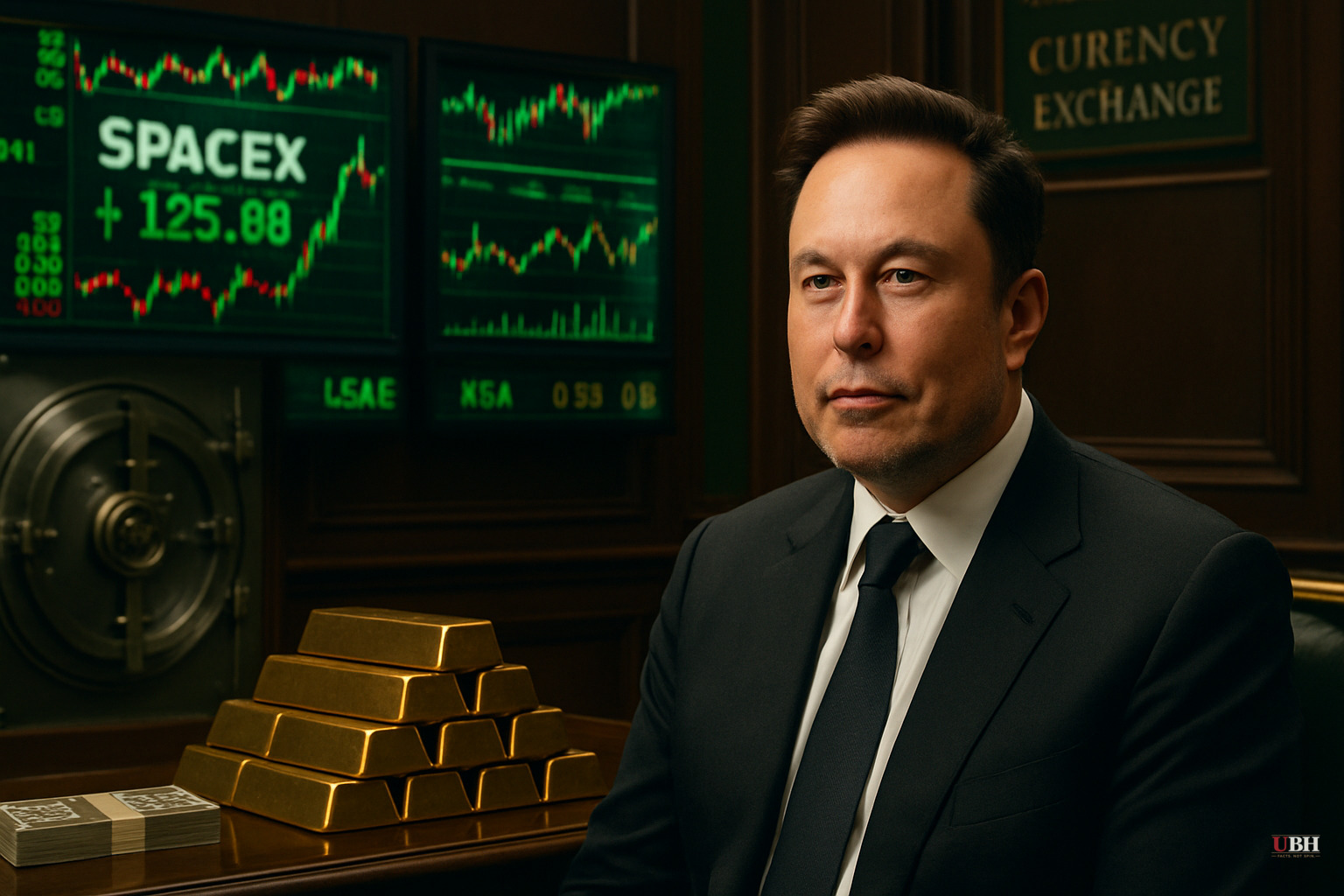
Since the SpaceX IPO roadshow kicked off this week — with JPMorgan's Jamie Dimon personally pitching roughly 2,500 wealth management clients and Morningstar flagging the valuation as stretched — the company has now reportedly set its sights on a $1.75 trillion public market debut, according to Forbes.
The Trillionaire Threshold
If SpaceX prices at $1.75 trillion, Elon Musk's stake in the company — already valued north of $866 billion on paper as of earlier this week — pushes his total net worth past $1 trillion. Per Forbes, that would make him the first member of the "four-comma club" in human history.
No one has ever done it. Not Bezos. Not Gates. Not the Rothschilds or Rockefellers in their prime. Musk would be the first.
That is either a testament to what SpaceX has actually built, or a warning sign about where markets are right now. Possibly both.
What the Mainstream Coverage Is Missing
Most outlets are treating this as a celebration story. Forbes leads with the trillionaire angle. Financial media is drooling over the historic nature of it.
Morningstar — which is NOT a political outlet, just an investment research firm — already called SpaceX overvalued at the roadshow's opening price this week. That assessment came out before the $1.75 trillion target was reported. So the company appears to be pricing above what at least one credible independent analyst considers fair value.
The S&P 500 index committee also rejected a fast-track inclusion for SpaceX earlier this week. Index inclusion would have forced trillions of dollars in passive funds to buy shares automatically, providing a built-in price floor. Without it, SpaceX enters the public market without that safety net.
Ordinary Investors Get Access — With Risk Attached
Forbes separately reported that ordinary retail investors will have a path to buy into the SpaceX IPO — not just the ultra-wealthy getting pitched by Dimon. The outlet frames this as democratizing access.
Regular people can participate in a potentially historic company. But they're also being invited into a deal that Morningstar says is already overpriced, at a valuation that has never been tested by public markets, in a company whose CEO is simultaneously running Tesla, xAI, and a social media platform — and whose political profile generates constant headline risk.
Coinbase's move earlier this week to launch pre-IPO futures for non-U.S. traders signals something. Crypto-adjacent derivatives markets are pricing in volatility.
The Shotwell Factor
As covered Wednesday, SpaceX President Gwynne Shotwell has stepped into a more prominent public role during the roadshow. This is deliberate. Institutional investors have real concerns about concentration risk around Musk — one man whose decisions, tweets, and government relationships can move markets on a given afternoon.
Shotwell is credible. She's run SpaceX's operations for years with genuine competence. Putting her front and center is smart investor relations. But it doesn't change who owns the company, who controls the decisions, or what happens to the stock if Musk's personal brand takes a serious hit.
The Real Question Nobody's Asking Loudly
SpaceX is a legitimate, world-class company. Starlink is real infrastructure. The rocket business is real. Government contracts from NASA and the Pentagon are real.
But $1.75 trillion is a valuation that assumes everything goes right — for years, possibly decades. It bakes in Starlink global dominance, continued government contract wins, no major launch failures, no regulatory crackdowns, and Musk remaining focused enough on SpaceX to keep the machine running while also running four other major ventures.
That's a lot of assumptions built into one number.
Morningstar's skepticism isn't coming from people who hate Elon Musk. It's coming from people who look at cash flows, competitive risks, and market realities. The mainstream financial press isn't giving that view nearly enough oxygen because "first trillionaire" is a better headline than "valuation looks stretched."
What This Means for Regular People
If you're a retail investor getting pitched on SpaceX stock — whether through a brokerage, a futures contract, or a wealth management product — you're buying into a company priced for perfection, run by the world's most unpredictable CEO, at a valuation that just got called overpriced by Morningstar, without the passive-fund safety net of S&P 500 inclusion.
Maybe it works out spectacularly. SpaceX might genuinely be worth $2 trillion in five years.
Or maybe the first trillionaire in history is being crowned at exactly the moment retail investors should be asking harder questions.
The hype is real. So is the risk.
Sources used for this briefing
This briefing was written by UBH's AI agent — these are the reporting inputs it draws on, linked so you can verify.


