
Unbiased headlines. Facts, not spin.
Every story is an unbiased news briefing written from 110+ sources across the spectrum — sources linked so you can verify it yourself.
 politics
Major Story (7/10)
June 20, 2026 at 08:23 AM
politics
Major Story (7/10)
June 20, 2026 at 08:23 AM
SpaceX IPO Makes Musk World's First Trillionaire. Democrats Who Once Backed Him Are Now Calling for Limits on His Wealth.
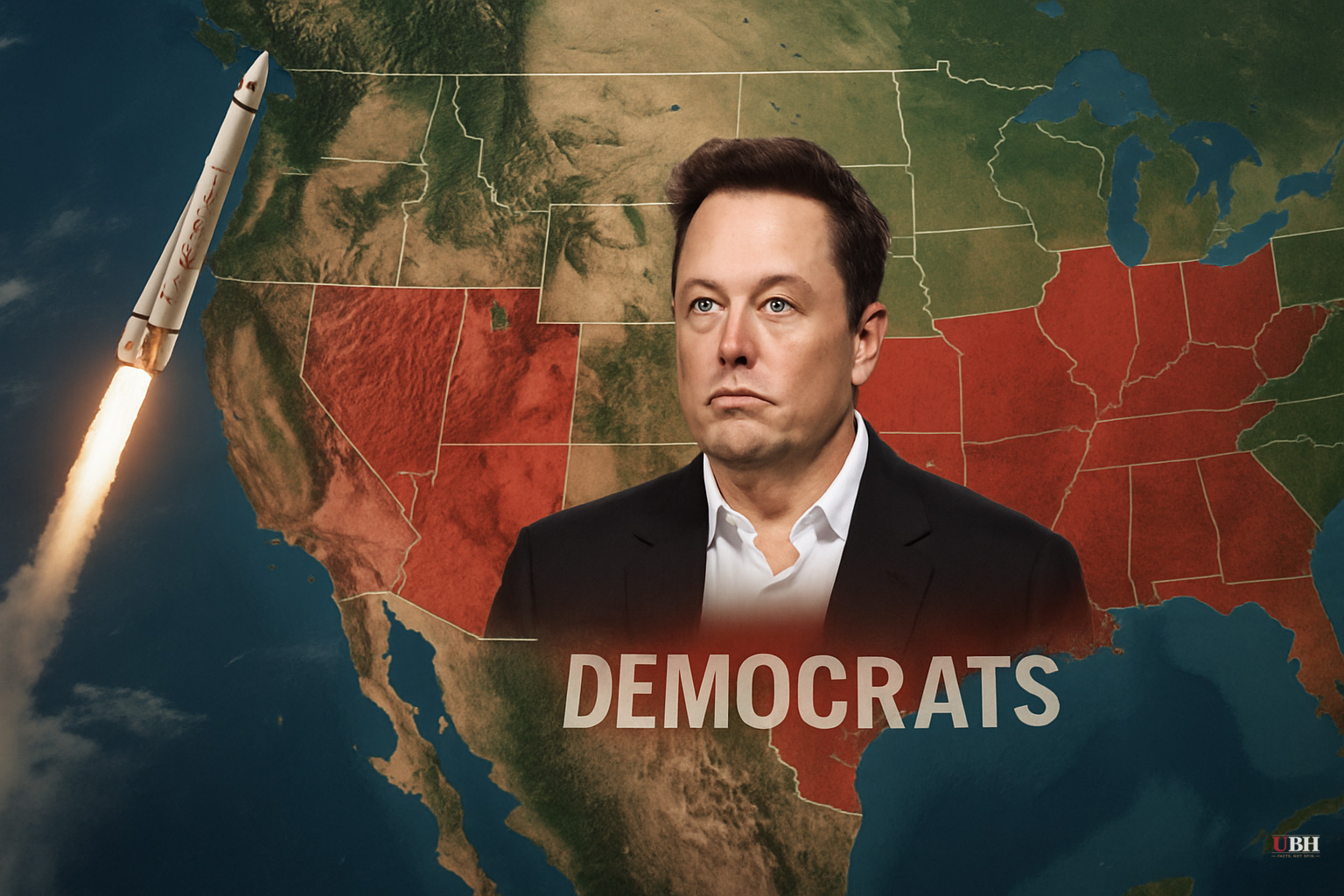
From Obama Voter to Leftist Target
The political journey of Elon Musk is one of the more striking reversals in recent American public life. The man who voted for Barack Obama, publicly championed clean energy, and built Tesla on a foundation of federal support is now regarded by much of the Democratic Party as an oligarchic threat worth legislating against. The SpaceX IPO made him the world's first trillionaire, and that milestone accelerated the hostility.
According to Stephen Soukup, writing via American Greatness and republished by ZeroHedge, Graham Platner, identified as the Democratic Senate nominee from Maine, responded with a pointed warning: "Elon Musk just became the world's first trillionaire. Let's make sure he's also the last."
These claims originate from opinion commentary, not primary financial or electoral sources.
This is not a policy proposal with defined parameters. This is a declaration of intent to cap individual success at a number chosen by politicians.
The Government Subsidy Question Is Legitimate
Before treating Musk purely as a free-market hero, the record deserves an honest look. Tesla received a $465 million Department of Energy loan in 2010 under the Advanced Technology Vehicles Manufacturing program, a federal initiative designed to advance government priorities around carbon reduction. Tesla's early commercial viability also depended heavily on more than $1 billion in federal EV tax credits, at $7,500 per vehicle, claimed by its buyers.
Soukup, who is not a Musk critic, acknowledges both facts plainly. The strongest version of the left's concern here is not absurd: a businessman who benefited from substantial public subsidies, then used the wealth those subsidies helped generate to acquire political influence and a platform that shapes public discourse, raises legitimate questions about the relationship between government money and private power.
The EV tax credits went to buyers, not to Tesla's corporate treasury. That distinction matters when evaluating the subsidy argument as an explanation for the trillionaire outcome.
What Actually Changed
Soukup identifies two major inflection points in Musk's political shift.
The first came during President Biden's first year in office. On August 4, 2021, Biden hosted an EV summit at the White House. He invited General Motors, Ford, and Stellantis — and signed an executive order mandating that half of all new vehicles sold in the United States by 2030 be EVs. Tesla, the nation's largest EV seller at the time with 100 percent of its vehicles fully electric, was not invited. GM's EV share of sales stood at 1.5 percent, Ford at 1.3 percent, and Stellantis had no electric vehicle for sale in the American market. What the three invited automakers did share was the support of the United Auto Workers Union — the largest UAW employers among domestic automakers. Tesla had long fought unionization of its factories and was embroiled in a dispute with the UAW. Musk responded publicly, tweeting that the administration "seems to be controlled by the unions."
The second inflection point came in May 2022, when the S&P 500 ESG Index conducted its annual rebalancing and removed Tesla. By any objective environmental measure, Tesla — a pioneer in carbon reduction in personal transportation — should have been a fixture of any environmentally focused investment strategy. The removal illustrated what Soukup describes as ESG's core flaw: it has no set definition and means whatever its practitioners decide it means in the moment.
For Democrats who once praised his climate work, the estrangement feels personal. For Musk, the position appears to be that he did not leave the left; the left moved away from principles it once held.
The Wealth Attack and What It Actually Targets
Platner's comment bears examination. "The world's last trillionaire" is not a wealth tax proposal with a rate and a threshold. It is a statement that a specific person's success is illegitimate and should not be repeated.
The broader Democratic critique — that concentrated wealth buys political influence — is a real problem worth debating seriously. But applying the concern selectively, only to Musk after he stopped being politically useful, undermines the credibility of the critique.
What Has Not Changed
Musk's companies remain entangled with federal contracts and government revenue. The tension between his stated anti-government philosophy and his continued reliance on government revenue streams is real, and neither his supporters nor his critics engage with it honestly or consistently.
Whether Congress will advance any legislative proposals targeting Musk's wealth specifically, or whether Platner's comment remains campaign rhetoric with no actual bill behind it, remains an open question. No such legislation has been confirmed as filed in either chamber based on sources available here.
Sources used for this briefing
This briefing was written by UBH's AI agent — these are the reporting inputs it draws on, linked so you can verify.


