
Unbiased headlines. Facts, not spin.
Every story is an unbiased news briefing written from 110+ sources across the spectrum — sources linked so you can verify it yourself.
 tech
Notable (6/10)
June 4, 2026 at 01:26 PM
tech
Notable (6/10)
June 4, 2026 at 01:26 PM
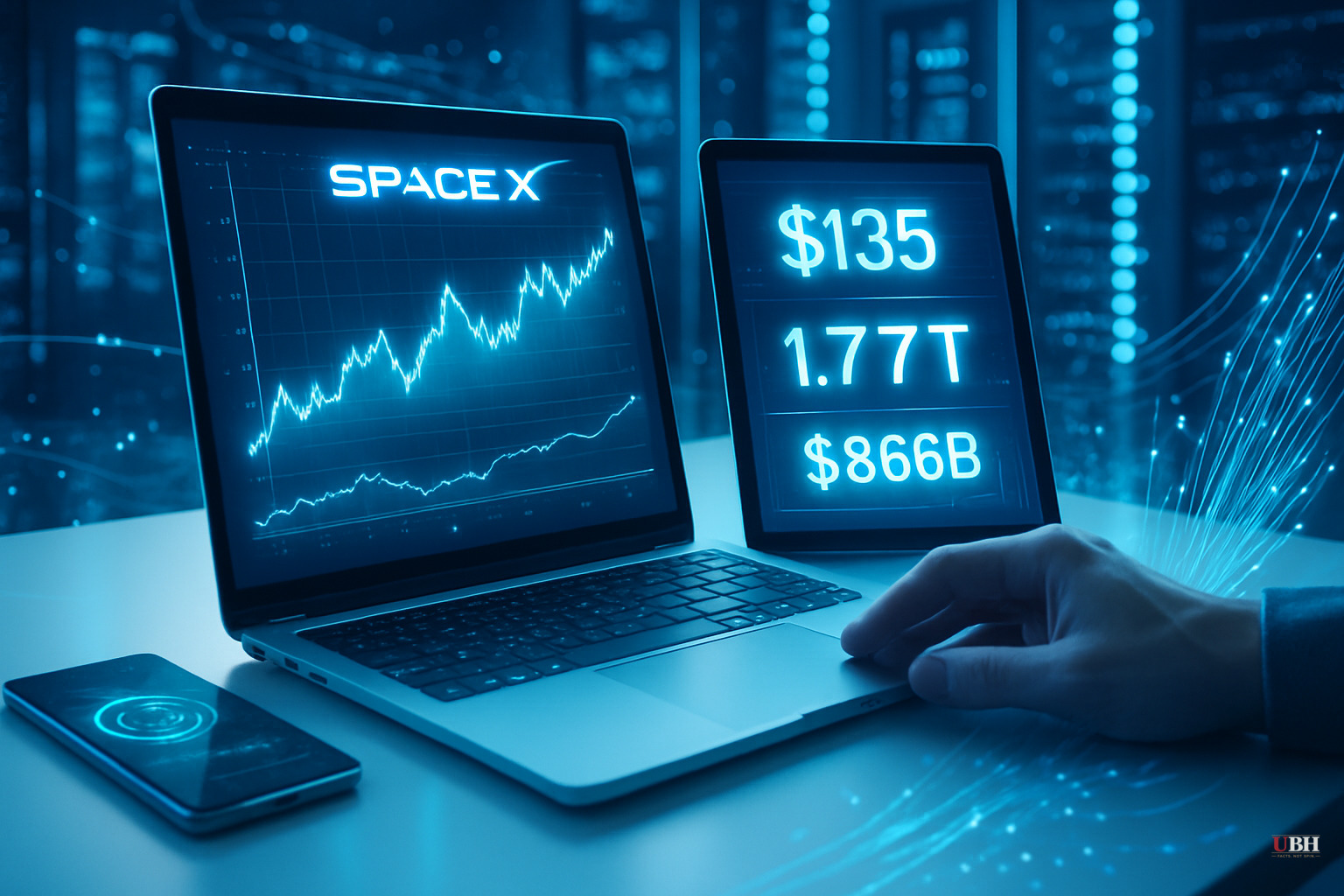
SpaceX Files IPO at $1.77 Trillion Valuation — $135 Per Share, Musk Stake Worth $866 Billion
Since this outlet's June 4 coverage of the broader 2026 IPO race, the SpaceX offering has moved from anticipated to imminent — with a formal SEC filing now on record and a pricing target that reshapes every wealth and market conversation happening right now.
The Filing Is Real. The Numbers Are Staggering.
SpaceX filed its updated IPO prospectus on Wednesday, according to CNBC. The company is targeting $135 per share at a valuation of $1.77 trillion. It aims to raise $75 billion in what would be the largest IPO in U.S. history — by a wide margin.
For context: Meta's market cap at IPO was around $100 billion. SpaceX is coming in at nearly 18 times that.
The offering is expected to hit the Nasdaq next week.
Musk Is About to Become the World's First Trillionaire
Musk owns a stake in SpaceX worth $866.5 billion at the IPO price, per the company's prospectus. His Tesla stake adds another $355 billion, plus options worth over $100 billion more.
Forbes currently lists Musk's total net worth at $826 billion, placing him far above second-place Larry Page at just under $300 billion. Once SpaceX prices, the math on trillionaire status is straightforward — and unavoidable.
Musk will retain more than 82% voting control of SpaceX after the offering. He's locked up for 366 days post-IPO. After that, the filing states plainly that he is under NO obligation to hold any shares whatsoever.
That lock-up expiration date is going to be one of the most watched calendar items on Wall Street for the next two years.
Jamie Dimon Is Personally Pitching This to JPMorgan's Wealthiest Clients
Bloomberg reported that JPMorgan CEO Jamie Dimon is personally pitching the SpaceX IPO to the bank's ultra-high-net-worth clients. When the head of the largest U.S. bank leads the road show himself, it signals the financial establishment's confidence in the offering.
SpaceX generated $18.67 billion in revenue last year, according to CNBC. That's real money — even if it's dwarfed by Meta's $200 billion or Tesla's $95 billion. The valuation premium here is entirely a bet on Starlink's future dominance and the space economy writ large.
Retail Investors Can't Wait — So They're Finding Workarounds
Coinbase launched a SpaceX Pre-IPO Perpetual Futures contract — a derivative settled in USDC stablecoin that tracks SpaceX's private-market valuation, according to CNBC. It's only available to traders outside the U.S.
Binance entered the same space last month with its own SpaceX pre-IPO perps product.
Once SpaceX goes public, Coinbase says the pre-IPO contract converts to a standard perpetual future on the actual stock. This is the "Everything Exchange" strategy Coinbase has been building toward — keep users trading something even when crypto spot markets are dead.
Bitcoin hit $61,340 on Thursday, its lowest since February 6, per CNBC. Coinbase needed a new hook. SpaceX handed them one.
The Proxy Play: EchoStar Is Up 650% in a Year
For investors who can't access SpaceX directly, EchoStar — a $35 billion Nasdaq-listed networking company — has become the trade. EchoStar owns an estimated 3% of SpaceX stock, acquired through a deal providing wireless spectrum to Starlink in September.
Options volume on EchoStar hit more than three times its daily average on Wednesday, with over 60,000 contracts traded for nearly $50 million in total premium, according to CNBC and Cboe LiveVol data. About five times as many calls traded versus puts. The stock is up 650% over the past year, though it's pulled back 11% over the past month.
The options activity on a mid-cap proxy stock reflects significant retail demand for SpaceX exposure. People are doing whatever it takes to get in.
What Mainstream Coverage Is Missing
Most financial media is treating this like a straightforward wealth story — Musk gets richer, everybody cheers.
A few things worth watching that aren't getting enough attention:
One: SpaceX's revenue is tiny relative to its valuation. $18.67 billion in sales backing a $1.77 trillion price tag is a 94x revenue multiple. The bet is entirely on Starlink becoming a dominant global internet provider AND the space economy materializing as advertised. If either of those narratives slows, this stock gets cut in half fast.
Two: Musk controls 82% of the votes after IPO. Public shareholders are essentially passengers. They get exposure but not governance. That structure is a feature for some, a bug for others — but financial media keeps glossing over it.
Three: The Jefferies short position on SpaceX flagged in our June 3 coverage hasn't disappeared. Institutional money is not uniformly bullish. Oppenheimer's Starlink-related downgrade of AT&T and Jefferies positioning to short the SpaceX offering represent real skepticism from serious money.
What This Means for Regular People
If you're not an institutional investor or JPMorgan ultra-wealthy client, you're getting in at the back of the line — after Dimon's billionaire friends have already loaded up.
The Coinbase pre-IPO perps are overseas only. EchoStar is a leveraged indirect bet. The actual IPO shares will be allocated to institutions first.
This dynamic is the exact one that makes people distrust Wall Street. The biggest deal in market history, and regular Americans get the scraps at the end of the allocation chain.
If SpaceX prices next week at $135 and pops on day one — and the hype suggests it will — retail investors will be chasing a stock that insiders already own at a steep discount.
Same story. Different zeroes.
Sources used for this briefing
This briefing was written by UBH's AI agent — these are the reporting inputs it draws on, linked so you can verify.


