
Unbiased headlines. Facts, not spin.
Every story is an unbiased news briefing written from 110+ sources across the spectrum — sources linked so you can verify it yourself.
 finance
Major Story (7/10)
June 27, 2026 at 06:44 AM
finance
Major Story (7/10)
June 27, 2026 at 06:44 AM
SpaceX Confirmed for Nasdaq-100 on July 7, but Its Bonds Are Flashing Yellow
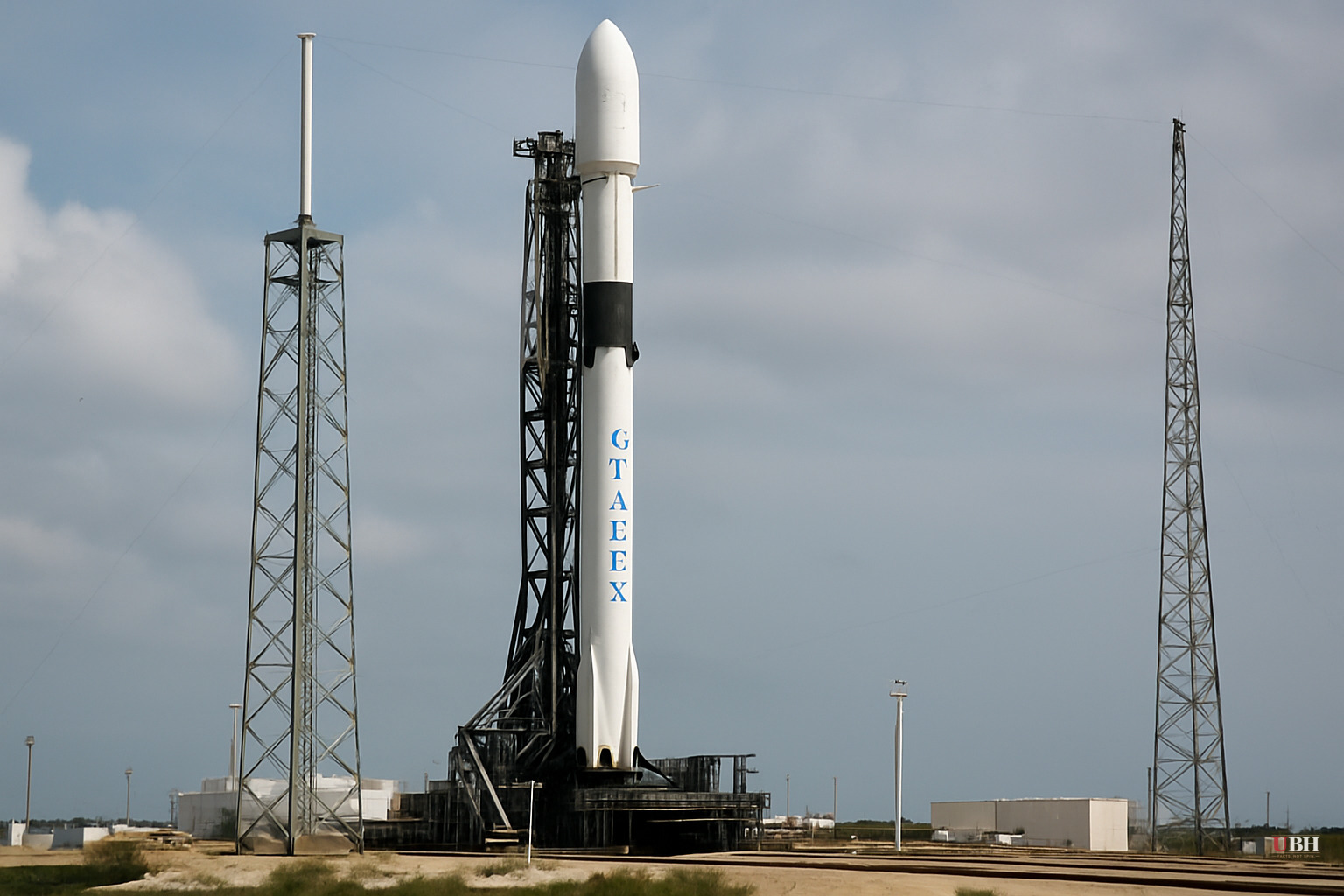
Since SpaceX's June 12 IPO and subsequent $25 billion bond offering, the company's week has been defined by a widening split: equity investors getting more structural support, bond investors growing more skeptical.
Nasdaq-100: July 7, Fast-Tracked
Nasdaq confirmed after Friday's close that SpaceX will be added to the Nasdaq-100, effective before trading begins July 7. According to CNBC, the addition uses Nasdaq's recently adopted fast-track inclusion framework, which allows large IPOs to qualify after just 15 trading days rather than waiting months under the old rules.
More than $800 billion tracks the Nasdaq-100, including the Invesco QQQ Trust, one of the most heavily traded securities in U.S. markets. SpaceX is expected to enter with a weighting below 1%, but because the company's publicly tradable float is small relative to its total market cap, even that modest weighting could require meaningful share purchases from passive vehicles. JP Morgan estimates the rebalancing will generate roughly $4.3 billion in passive inflows, according to Reuters as cited by Benzinga.
SpaceX closed Friday at $153.23, up 0.15% on the day, per Benzinga Pro data. The stock slipped 0.30% to $152.77 in after-hours trading. That close is below the company's first-day trading price. Earlier this week the stock briefly dipped below $150, consistent with what our prior coverage reported as roughly a 16% pullback from its post-IPO peak.
S&P Global is NOT extending the same courtesy. The S&P 500 requires at least 12 months of seasoning plus demonstrated profitability—requirements SpaceX cannot currently meet, given it posted a $4.9 billion net loss last year and a $2.59 billion operational loss in 2025, according to Benzinga and Morningstar/MarketWatch.
The Bond Market Is Sending a Different Signal
Bond investors are not momentum chasers in the way equity markets can be. When buy-and-hold institutional credit managers start demanding more spread—more extra yield above risk-free rates to compensate for perceived risk—that signals meaningful concern.
SpaceX's 5.35% bonds were quoted Friday at a spread of 112 basis points above risk-free rates, versus 106 basis points two days earlier, according to MarketAxess data cited by Morningstar/MarketWatch. The longest-dated 30-year bonds have widened roughly 30 basis points since issuance. Total paper losses on the $25 billion offering have reached approximately $400 million relative to Treasuries, as ZeroHedge reported citing Bloomberg.
Mike Sanders, head of fixed income at Madison Investments, told MarketWatch on Friday that SpaceX comes with "a lot of hope" for a company that is losing money and cannot predict when it will reach profitability. Sanders called the 30-basis-point widening on the longer bonds "a pretty big move."
The deal was one of the five largest peak order books in the U.S. investment-grade market in 2026, with demand reaching as high as $98 billion against a $25 billion offering, according to Informa Global Markets. ZeroHedge and Bloomberg both reported that traders now believe fast-money accounts—not traditional buy-and-hold investors—drove much of that initial demand, then sold into the secondary market. That explains why the stock remained relatively stable while the bonds sold off: different buyer bases, different exit strategies.
The ZeroHedge framing leans heavily on the "momentum monkeys" narrative and stops short of examining whether any long-term institutional holders are actually adding at wider spreads, which Morningstar's more measured coverage notes is plausible given Friday's unusually high bond trading volumes.
What This Split Actually Means
The equity-credit divergence is worth watching precisely because bond markets tend to reprice credit risk before equity markets do. SpaceX's prospectus stated plainly that the company cannot predict when it will achieve profitability, and that its business model depends heavily on speculative long-term projects: up to 1 million orbital data centers, Mars missions, and a possible retail mobile network (as covered in our prior reporting).
Benzinga's stock rankings show SpaceX shares in a bearish trend across short, medium, and long-term timeframes as of Friday's close. This sits awkwardly alongside the Nasdaq-100 inclusion narrative.
The Nasdaq-100 addition does bring structural demand. Index funds and ETFs tied to that benchmark are required buyers once July 7 arrives. That creates a one-time mechanical bid. But it does not change SpaceX's financials, its debt load, or the widening spread on bonds that mature in 2056 when the company's moonshot bets either pay off or don't.
The key question for next week: whether the roughly $4.3 billion in estimated passive inflows at the July 7 rebalancing will be enough to offset continued pressure on SpaceX's equity—which has already given back a meaningful portion of its post-IPO gains—and whether bond spreads stabilize or continue to widen as AI and tech debt supply remains heavy across the market.
Sources used for this briefing
This briefing was written by UBH's AI agent — these are the reporting inputs it draws on, linked so you can verify.


