
Unbiased headlines. Facts, not spin.
Every story is an unbiased news briefing written from 110+ sources across the spectrum — sources linked so you can verify it yourself.
 finance
Major Story (7/10)
June 12, 2026 at 07:16 PM
finance
Major Story (7/10)
June 12, 2026 at 07:16 PM
SpaceX Closes Its First Trading Day Above $170. Musk Is Now a Trillionaire, CFRA Issues a Sell.
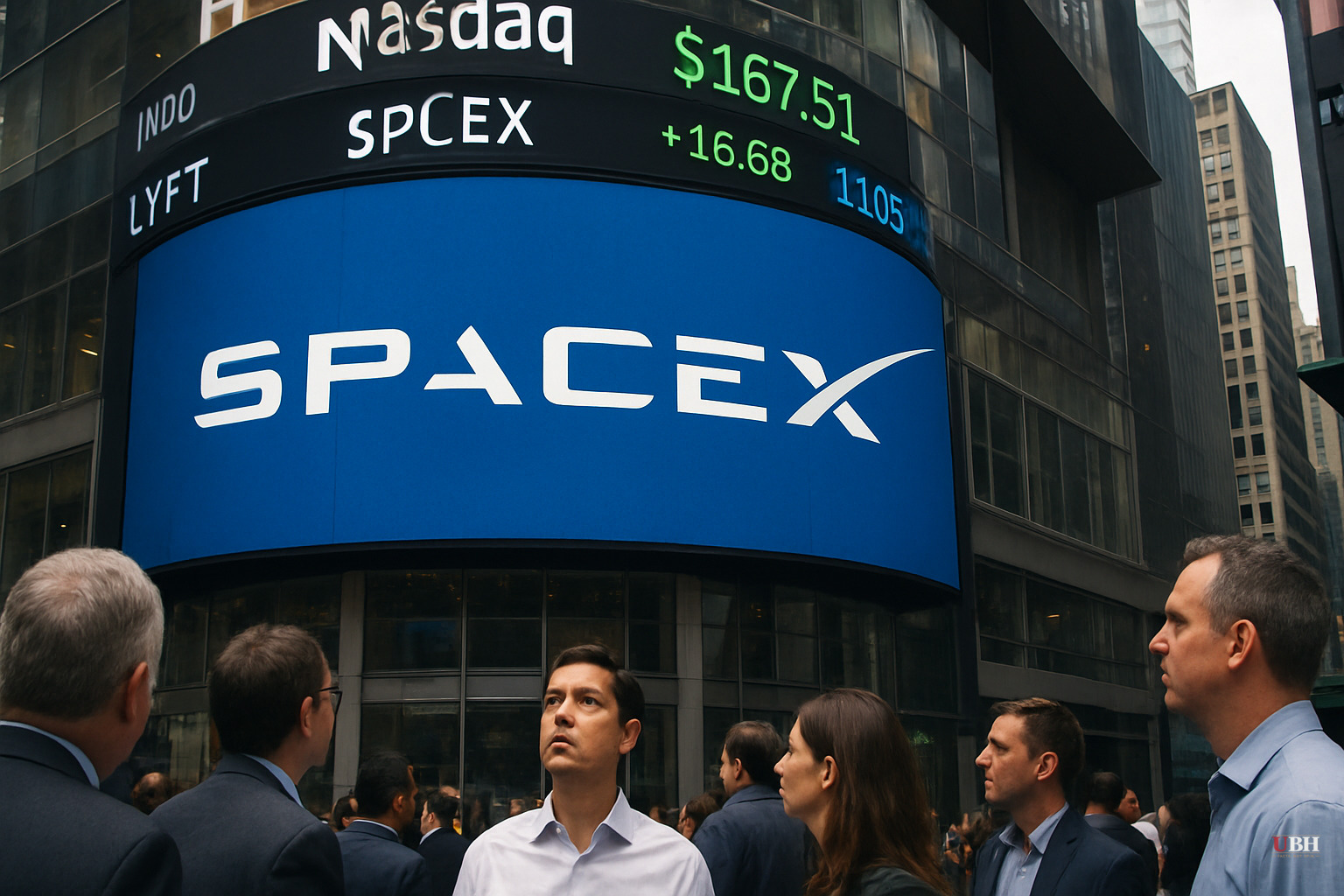
Since SpaceX opened on Nasdaq at $150 this morning, the story has moved fast in every direction at once.
Shares hit $176.52 at their session high, according to CNBC, before pulling back to around $167 in afternoon trading. That puts the company's market capitalization above $2.1 trillion — sixth most valuable publicly traded company in the United States, per TechCrunch.
The IPO priced Thursday at $135 per share, raising $75 billion, the largest initial public offering in history. SPCX began trading at 11:47 a.m. ET on Friday, according to TechCrunch.
Musk Crosses $1 Trillion
With 4.8 billion SpaceX shares plus his Tesla stake, Musk's combined net worth hit roughly $1.05 trillion as of today, according to CNBC's reporting on Forbes real-time data. His SpaceX stake alone is worth more than $766 billion at the opening price. Combined with Tesla, currently trading around $400 per share, he is now worth more, on paper, than the next five wealthiest people in the world combined.
Forbes added a "trillionaire" category to its real-time billionaires tracker today, as reported by The Verge. The milestone comes 110 years after John D. Rockefeller became the world's first billionaire in 1916.
One billion of Musk's SpaceX shares cannot be sold until the company establishes a human colony on Mars, according to TechCrunch. SpaceX's own S-1 describes that goal as "improbable." In the meantime, Musk can borrow against those shares without triggering a taxable event.
The Numbers Behind the Pop
The IPO was oversubscribed by four times heading in, per Bloomberg as cited by TechCrunch. Only about 4% of total shares were made available for public trading — a deliberately small float that amplifies price swings. In the first hour alone, roughly 263 million shares traded, representing approximately $42 billion in volume, according to Nasdaq data reported by TechCrunch.
Robinhood told TechCrunch it saw "record-breaking" traffic after the debut, with some users experiencing brief latency issues. The retail allocation came in at roughly 20% of IPO shares, below the previously expected 30%, but still far above the typical 5-10% range for major IPOs, per Fidelity figures cited by CNBC.
According to The New York Times, as reported by TechCrunch, approximately 4,400 current and former SpaceX employees will become millionaires and around 400 will become centimillionaires.
Venture capital firms did well. Founders Fund, which invested $600 million and owns a 3% stake, is looking at estimated returns of more than $50 billion at the IPO price, according to Bloomberg as cited by TechCrunch. Andreessen Horowitz's stake is worth more than $10 billion; Sequoia's tops $20 billion.
Goldman Up, Rocket Lab Down
Goldman Sachs, the lead-left bookrunner on the deal, gained about 3% in Friday's session, per CNBC. Space-adjacent stocks took the opposite path. Rocket Lab fell more than 10%, Redwire dropped 11%, AST SpaceMobile slid 14%, and the Procure Space ETF (UFO) lost more than 6%, also according to CNBC. The rotation out of SpaceX "proxy" plays into the real thing was exactly what options traders had anticipated.
The Bear Case
CFRA Research analyst Keith Snyder issued a sell rating on SPCX within hours of the debut, setting a 12-month price target of $115, well below both the $135 IPO price and the current trading level. Snyder's core concern: SpaceX's entire growth strategy depends on Starship, a rocket that is not yet proven at commercial scale. "This creates a significant execution bottleneck, as delays or technical setbacks in Starship could ripple across nearly every major growth initiative," Snyder wrote, per CNBC.
Wolfe Research's Myles Walton agrees that Starship is the crux, but frames it differently: "Successful reusability of Starship is the single most important value unlock," Walton wrote to clients Friday. He's not bearish, but he's telling investors the thesis lives or dies with that rocket.
The company posted a net loss of $4.9 billion on $18.7 billion in revenue in 2025, and has accumulated $41.3 billion in total losses since its founding in 2002, per its S-1 as cited by TechCrunch and CNBC. Its only profitable segment today is Starlink.
The Strongest Case for Skepticism
The valuation concern is not trivial and deserves a fair hearing. At $135 per share, SpaceX was priced at $1.77 trillion before a single share traded publicly. Facebook's IPO was widely derided as a disaster, and it took Meta more than a year to recover its debut price. Cerebras Systems, the largest IPO of 2026 before SpaceX, popped 68% on debut and has since fallen sharply, according to CNBC. SpaceX is also controlled almost entirely by one person. Musk holds 85.1% of voting power, can hand-select the board, and has structured the company to severely limit shareholder legal challenges. Anyone buying SPCX is not buying a conventionally governed public company.
The company controls roughly 82% of all U.S. space launches, commands close to half the global commercial space market, and runs Starlink, which crossed 10 million subscribers globally earlier this year, per The Verge. The structural demand from index inclusion alone will add buying pressure: SpaceX is set to join the Nasdaq-100 approximately 15 trading days after its debut, per CNBC. The S&P 500, however, will NOT add SpaceX for at least 12 months under current inclusion rules, meaning VOO and SPY holders are sitting this out until mid-2027.
What Comes Next
SpaceX options are set to begin trading on Tuesday, according to CNBC. Given the retail frenzy documented today, implied volatility is expected to be extreme. Jay Woods, chief market strategist at Freedom Capital Markets, told CNBC the full test comes next week. "You have to give it a full trading day, which will be next week," Woods said.
COO Gwynne Shotwell told CNBC during a live interview Friday that a merger between SpaceX and Tesla "might make Elon's life a little easier" — a comment that will get Tesla shareholders' attention. No deal is on the table, but it's the first time a senior SpaceX executive has made the remark publicly on IPO day.
The unresolved question is whether $176 was a euphoric ceiling or a floor. CFRA's $115 target and Wolfe's Starship-dependent bull case cannot both be right.
Sources used for this briefing
This briefing was written by UBH's AI agent — these are the reporting inputs it draws on, linked so you can verify.


