
Unbiased headlines. Facts, not spin.
Every story is an unbiased news briefing written from 110+ sources across the spectrum — sources linked so you can verify it yourself.
 finance
Major Story (7/10)
June 13, 2026 at 08:34 PM
finance
Major Story (7/10)
June 13, 2026 at 08:34 PM
SpaceX Closed Its First Trading Day at $160.95. Here Is What Comes Next for Investors.
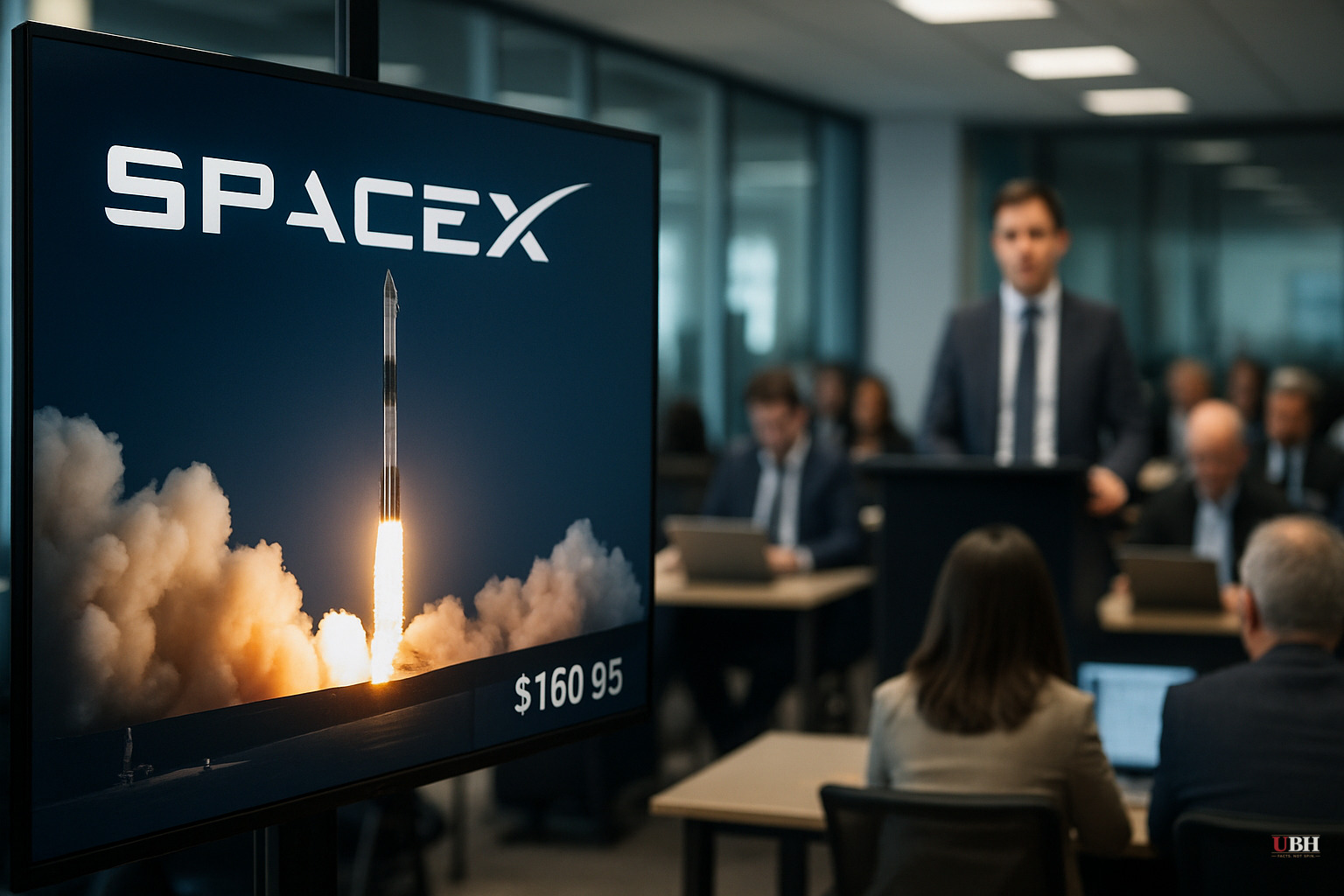
Since SpaceX began trading on the Nasdaq on June 12, the story has shifted from whether the IPO would land to whether the stock can justify what investors paid for it.
The facts of the debut are settled. SpaceX opened at $150, hit an intraday high of $176.52, pulled back toward $158 in the afternoon, and settled at $160.95, according to CNBC. After-hours trading pushed shares to $166.85 by Friday evening. Volume exceeded 500 million shares. The company raised $75 billion at $135 per share, and with underwriters at Goldman Sachs and Morgan Stanley holding options on an additional 83 million shares, total proceeds could reach $86 billion, according to the Los Angeles Times.
The Valuation Problem Is Real
SpaceX posted a $4.9 billion operating loss in 2025 and has accumulated more than $41 billion in total losses since its 2002 founding, according to CNBC. At Friday's close, the stock trades at 112 times last year's revenue. No other U.S. company in the S&P 500 carries a comparable revenue multiple at this scale.
CFRA issued a sell rating on the stock shortly after the IPO, per prior coverage. Wolfe Research took the other side, arguing SpaceX's rocket launch infrastructure constitutes a durable competitive moat. TD Securities' Peter Haynes told CNBC that the IPO itself is a secondary event. The bigger price catalysts come later, when index funds are forced to buy.
The Index Inclusion Calendar
Haynes is specific about the dates. He told CNBC's ETF Edge that Day 15 after SpaceX's debut, which falls on July 6, is when Nasdaq rebalances the Nasdaq 100 to reflect SpaceX's IPO shares. The Russell and MSCI Global indexes follow on their own schedules.
The S&P 500 is a different story. In what Haynes called a "controversial decision," the S&P 500 Index Committee ruled SpaceX will NOT be fast-tracked into the index. The company must trade on public markets for at least one year before it becomes eligible. That means no forced buying from the roughly $10 trillion benchmarked to the S&P 500 until mid-2027 at the earliest.
That ruling matters for passive investors. If you own an S&P 500 index fund, you do not own SpaceX. The Nasdaq 100 inclusion in July is the first forced-buying event, and it's a smaller pool.
Who Priced This Deal, and How
The IPO structure itself drew pointed commentary. Lloyd Greif, CEO of investment bank Greif & Co., told CNBC plainly: "This was not a deal that was priced based on market forces. This was a deal based on what one man wanted. And when one man wants it, one man gets it, if that one man is Elon Musk."
SpaceX set a fixed $135 price with no range, no price discovery process, and a compressed roadshow. Retail investors received up to 30% of the allocation, an unusually large slice that Wall Street had flagged as a volatility risk. Dan Alpert, founder of Westwood Capital, told CNBC that retail buyers are less predictable than institutional holders, and the afternoon selloff from $176 to $158 was consistent with retail profit-taking.
The concern that a heavy retail allocation could produce destabilizing price swings on day one did not materialize into a crisis. But it remains a legitimate structural question for the weeks ahead, when retail holders who bought at or above $160 face a paper loss if the stock retraces.
The Governance Concern Is Worth Stating Fairly
Sen. Elizabeth Warren wrote a 12-page letter to SEC Chair Paul Atkins on June 10 requesting a delay to the IPO, citing SpaceX's governance structure and valuation opacity. Her core concern: Musk controls 85% of SpaceX's shareholder voting power, meaning public investors own an economic interest but have virtually no governance voice. According to Forbes, Warren argued investors would have "no meaningful say" over major corporate decisions.
This is a real structural feature of the deal. Dual-class and super-voting share structures are increasingly common in tech IPOs, from Google to Meta to Snap. Investors who accepted those terms in prior offerings have sometimes done well and sometimes gotten burned. The question is whether SpaceX's specific concentration of voting control, at 85%, goes further than comparable precedents. No investigation was opened and the SEC did not delay the IPO.
What the Wealth Effect Looks Like on the Ground
Baird analyst coverage, reported by CNBC, flagged an indirect beneficiary of the IPO: wealth advisory firm Andersen Group, which ended Friday's session up 8% and is up 46% year-to-date. Baird's thesis is that SpaceX's IPO minted thousands of new millionaires concentrated in California and Texas, and that ANDG is positioned to capture that client base. Real estate agents in California told Baird that interest in luxury homes has increased among SpaceX employees in their mid-30s to early-40s.
TD Securities' Haynes put a finer point on the infrastructure test. In a note to CNBC after Friday's close: "We take for granted that the infrastructure that supports the equity trading business always works. Today was a test of that infrastructure and in my opinion the industry passed the test."
The more consequential test comes on July 6, when Nasdaq rebalances the 100 Index. That's the first date on which index-tracking funds must buy SPCX regardless of price conviction, and it's the first structural demand event that doesn't depend on sentiment.
Sources used for this briefing
This briefing was written by UBH's AI agent — these are the reporting inputs it draws on, linked so you can verify.


