
Unbiased headlines. Facts, not spin.
Unbiased Headlines is an independently owned news organization. We bring you the facts, not opinions, written fresh from 110+ named sources. Sources linked so you can verify it yourself.
 finance
Notable (6/10)
S&P Raises Hungary's Credit Outlook to Stable, Affirms BBB- Rating
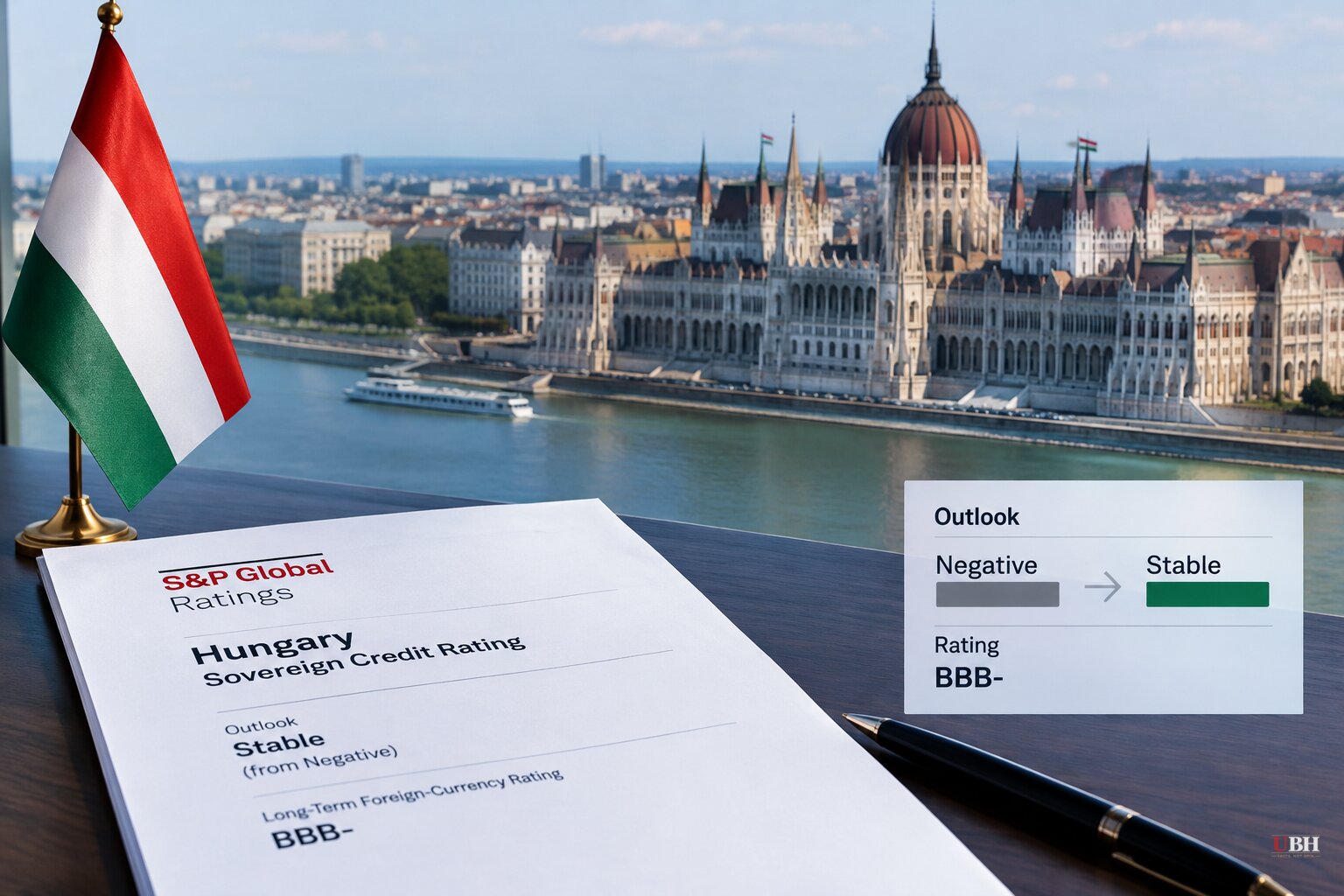
S&P Global Ratings changed its outlook on Hungary's sovereign debt to stable from negative today, Nov. 27, and affirmed the rating at BBB-/A-3. The agency pointed to planned steps by Prime Minister Peter Magyar's cabinet to cut the budget deficit and, eventually, adopt the euro.
This is an outlook change, not an upgrade. BBB- is the lowest investment-grade rung. It leaves Hungary level with Romania and Serbia at S&P, and one notch below where Moody's and Fitch rate the country.
What S&P said
S&P said strong institutional and fiscal frameworks should produce a steady decline in budget deficits over the next two years. It forecast that economic activity will rebound in 2027 and hold steady through 2029.
S&P's assessment also tied the change to six months of reforms under Magyar that improved relations with EU institutions and unlocked €16.4 billion in previously suspended EU funding. S&P said forint appreciation had helped offset commodity price swings.
Moody's, which rates Hungary Baa2, moved its own outlook to stable last week, the same summary of S&P's note says. The government has not published a timetable for euro adoption, and no date has been set for S&P's next scheduled review.
The government's own numbers
The head of the state debt agency ÁKK, Tardos, laid out the case at a Budapest conference on Nov. 14. He said foreign holdings of Hungarian government securities have risen from HUF 6,000 billion to HUF 11,000 billion. He called that a significant vote of confidence in the government's economic policy.
Tardos said Hungary's 10-year bond yield has dropped from 7.2% to 5% since April's general election. He said it could fall to about 4% by the time Hungary enters the ERM II exchange-rate mechanism.
He estimated that would cut annual debt servicing costs from roughly HUF 4,000 billion to HUF 2,000 billion. That is a government official's projection, not a settled figure.
Tardos also said then that all three major agencies were likely to revise Hungary's negative outlook before year-end, with possible rating upgrades in 2027. He conditioned that on the government sticking to its fiscal path and making progress toward the euro.
Caution from inside the debate
Euro adoption has its skeptics on the practical side, and even Tardos raised a risk. He said countries that previously faced high interest rates saw rapid credit growth after joining the euro, which created new problems.
Pál Péter Kolozsi, managing director of the economic research institute GKI, said the euro would not by itself fix Hungary's competitiveness or structural weaknesses. Meeting the Maastricht criteria alone is not enough, he said, and convergence in the real economy matters too. He called euro entry the start of a new phase, with fiscal discipline still required afterward.
Other data points are less rosy. Hungary's construction output fell 5.6% in September, and Budapest home asking prices fell in more than half of the city's districts in mid-November, according to the Budapest Business Journal.
The EU budget fight
The deficit plan runs into a political test in Brussels. An EU leaders' summit called by European Council President Antonio Costa ended without agreement Thursday night, Nov. 26, on the bloc's 2028-2034 budget. Costa had proposed a further €44 billion cut, bringing the total reduction to €204 billion below the Commission's July draft.
Magyar warned before the talks broke down that the chances of a deal that day were "virtually zero," and that a deal by Christmas looked unlikely. He set Hungary's red lines. Budapest will not accept a budget that cuts its allocation or makes it pay more, and it wants cohesion and agriculture funding held at current levels. It also rejects tying Ukraine support to the next EU budget, a link German Chancellor Friedrich Merz has proposed.
Budget Commissioner Piotr Serafin told the European Parliament that cutting the Union budget "will not necessarily bring savings for our member states." The Czech, Polish and Slovak leaders also voiced objections.
The decisive summit is scheduled for Dec. 17-18, when a vote is due. How much EU money Hungary ends up with after that vote sits next to the deficit targets S&P is now relying on.
Sources used for this briefing
7 links from 7 independent newsrooms (syndicated copies of the same report count once)
These are the sources it draws on, linked so you can verify.


