
Unbiased headlines. Facts, not spin.
Unbiased Headlines is an independently owned news organization. We bring you the facts, not opinions, written fresh from 110+ named sources. Sources linked so you can verify it yourself.
 finance
Major Story (7/10)
S&P 500 Gains 5.6% in Best Thanksgiving Week Since 2008 but Is Still Down 3.7% for November
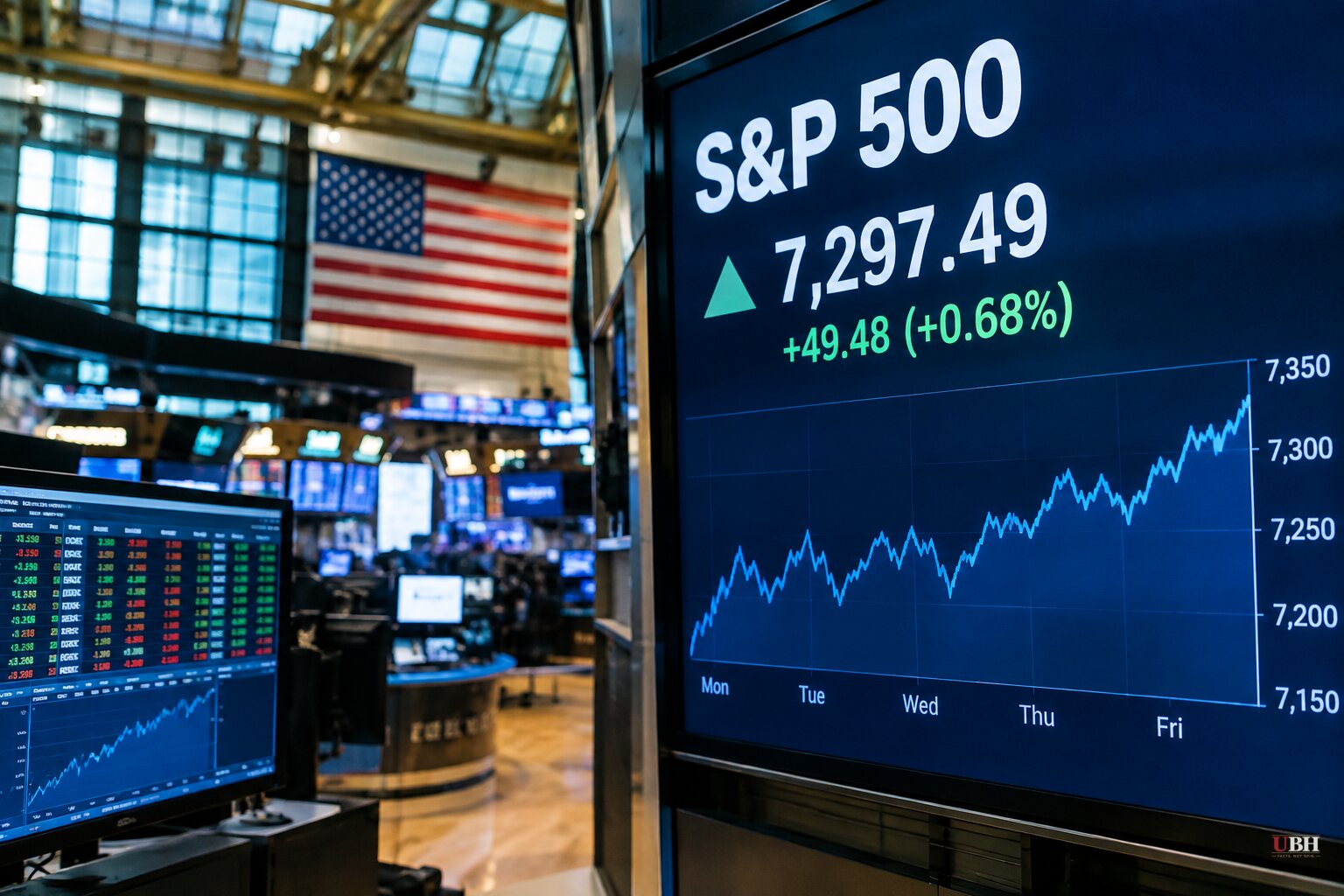
Since the S&P 500 set its record close of 7,818.93 on Oct. 6, the index has gone through a correction that pushed it 11.6% below that peak, and this week it clawed back a good part of the damage.
The S&P 500 gained 5.6% for the holiday-shortened week, closing Friday, Nov. 27, at 7,297.49. That is its best Thanksgiving week since 2008, when it rose about 12%, and its strongest weekly showing since April 2025.
Friday's half-day session added to the gains. The S&P rose 1.6%, the Nasdaq Composite rose 2.3% to 24,129, and the Nasdaq 100 climbed 2.6% to 26,726, for a weekly gain of approximately 6.7%. The Dow gained 5.5% for the week, its strongest performance since 2022.
The rebound follows a rout
The week before Thanksgiving was brutal. The S&P 500 fell 8.61%, the Dow fell 8.02% and the Nasdaq Composite fell 10.02%. The VIX volatility gauge peaked at 35.89 on Nov. 20 and was at 26.36 on Nov. 24, still in elevated territory.
The math is unforgiving. An 8.6% drop followed by a 5.6% gain leaves an index lower than where it started, because the rebound works from a smaller base.
The S&P 500 and Nasdaq are still down 3.7% and 5.1% for November. They are on course for their worst November since 2008, according to Reuters. All three major indexes entered a technical correction this month. For comparison, the S&P closed at 7,561 on Nov. 13, about 3.5% above Friday's level.
Chips and AI led the bounce
The Philadelphia Semiconductor Index climbed 4.7% Friday, led by memory and storage names. SanDisk surged nearly 16%, Micron rose 7.6%, Marvell gained 7.3% and Broadcom added 3.8%.
Nvidia closed up 0.8% at $150.49 after recovering from earlier losses. Its week began with a gain of more than 31% on Monday, Nov. 23, when it reinstated Jensen Huang as CEO. Huang had resigned 12 days earlier amid a personal scandal and federal investigations into chip exports, according to UPI. Reuters said the stock was still more than 37% below its October record high based on Thursday's close.
Tesla led the Magnificent Seven on Friday with a 5.2% gain, followed by Amazon at 4% and Meta at 3.1%. Neocloud firms CoreWeave and Nebius remained under pressure over the week amid worries about AI infrastructure spending and rising financing costs.
A Reuters poll projecting South Korean exports to grow at their fastest pace in more than 50 years on AI memory chip demand coincided with the chip rally.
Why the all-clear has not been sounded
Deutsche Bank analysts said in a note that "there have been some signs that the tech selloff has stabilised for now, and that risk appetite is returning to markets." Yorkville Ives partner Dan Ives was less settled. "They can't figure out which way is up. So we are going to see volatility," he told Yahoo Finance.
The pressures behind the selloff are still in place. Investors are weighing whether companies are overspending on AI data centers and chips, and whether AI stock prices have outrun earnings. Reuters also cited concern over tougher AI regulation following the Democrats' midterm election victory.
Monetary policy is the other drag. Traders are almost fully pricing in a Federal Reserve rate hike in December after data this week showed the US economy grew much faster than initially estimated in the third quarter and inflation accelerated further in October. The 10-year Treasury yield was about 4.89% Friday, down from 5.15% on Nov. 13.
The Trump administration's proposed new tariffs on imports from 14 trading partners, announced Wednesday, add another variable.
Oil is a further wildcard. Brent crude rose to about $91 a barrel and West Texas Intermediate to about $84 amid escalating attacks on Middle East energy infrastructure, ahead of OPEC's meeting on Sunday.
Crypto lagged
Bitcoin retreated below $60,000 Friday after trading above $61,600 earlier in the session, and was near $59,800. It is down approximately 20% in November but entered Friday on course to end seven consecutive weeks of losses. Ethereum fell 1.8% to $1,667.
What comes next
Holiday-thin volume can exaggerate moves, and 24/7 Wall St. noted that a rebound "suggests selling went too far, but it doesn't confirm the decline is over." The S&P 500 is up only 4.9% for the year and the Dow 4.4%.
The next tests come with the OPEC meeting on Sunday and then the Fed's December decision, where a hike is the market's near-certain expectation.
Sources used for this briefing
7 links from 7 independent newsrooms (syndicated copies of the same report count once)
These are the sources it draws on, linked so you can verify.


