
Unbiased headlines. Facts, not spin.
Unbiased Headlines is an independently owned news organization. We bring you the facts, not opinions, written fresh from 110+ named sources. Sources linked so you can verify it yourself.
 finance
Notable (5/10)
Event date: November 26, 2026 ·
California Fines Afterpay $2.68 Million for Skipping Ability-to-Repay Checks on New Borrowers
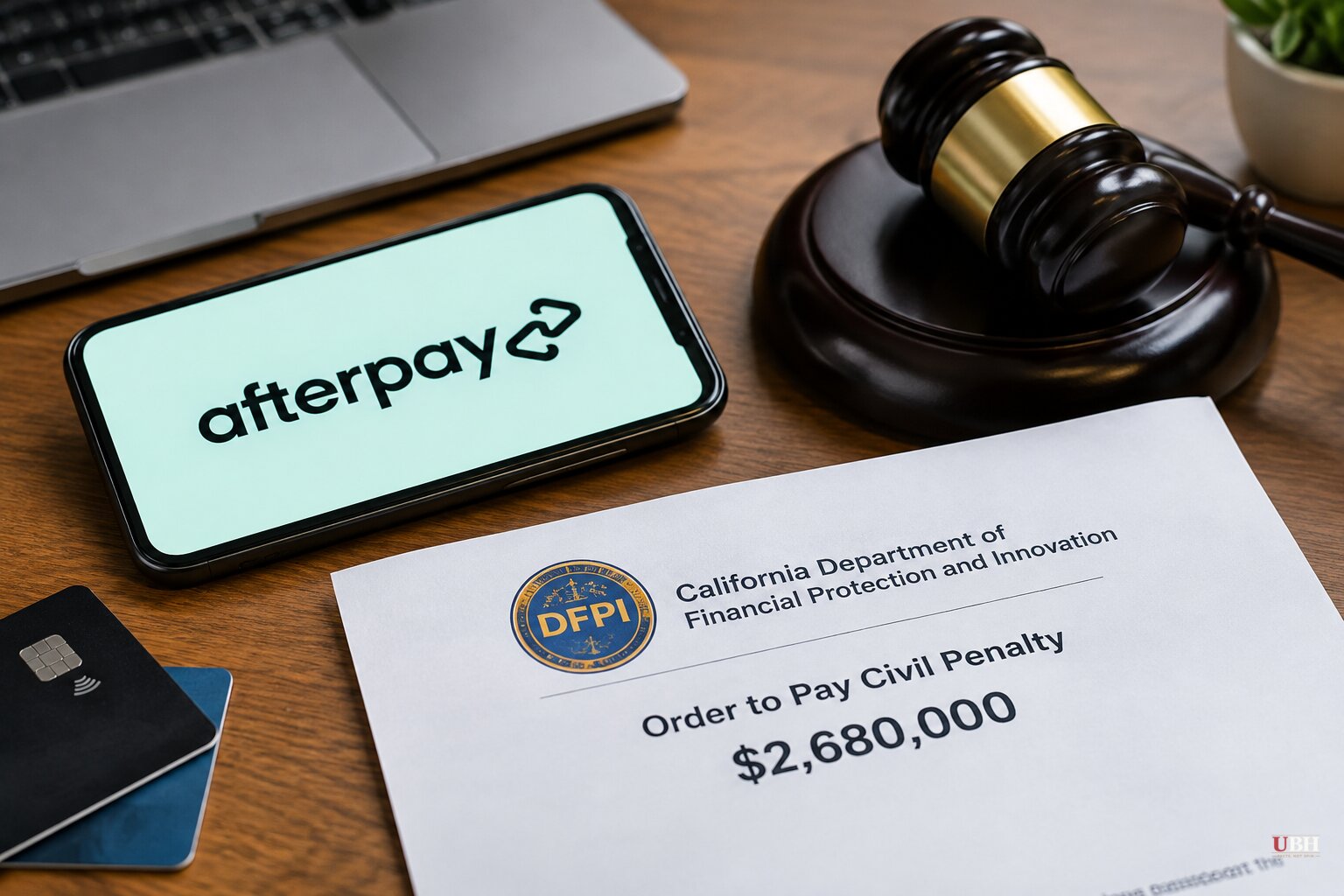
California's financial regulator has ordered Afterpay US Services to pay a $2.68 million penalty for lending to new customers without first checking whether they could pay the money back.
The California Department of Financial Protection and Innovation (DFPI) concluded that between January 2020 and March 2022, Afterpay extended credit to new borrowers without ability-to-repay underwriting. That violated the California Financing Law.
Afterpay consented to the penalty to resolve the violations.
What the regulator found
Under California law, a lender has to establish that a borrower can actually repay. That normally means reviewing income and existing debts. Comparable federal rules already cover mortgages, credit cards and other forms of credit.
DFPI says skipping that step raised the likelihood of default. Its examination found elevated default rates and significant unpaid balances among a portion of Afterpay's customers. The agency has not published the default figures in the order's public summary.
After the examination, Afterpay introduced new underwriting procedures to gauge whether borrowers can meet their obligations.
DFPI also offered a reason such lending can go wrong. Buy-now-pay-later firms earn commissions and kickbacks from merchants, the regulator warned, so they may have an incentive to push credit onto people who cannot afford it.
The company and the market
Afterpay lets shoppers borrow for purchases online and in stores. Its parent, Block, also runs Cash App, Square and other businesses.
Use of BNPL for everyday essentials is growing. According to the regulator, consumers are increasingly turning to it for groceries as prices climb.
Research the federal Consumer Financial Protection Bureau (CFPB) published in January 2025 found that more than 60% of BNPL users held several loans at once. It also found they carried larger balances on other credit products, and that most BNPL loans went to people with subprime or weaker credit scores. Younger users held a larger share of their total consumer debt in BNPL.
Washington steps back, Sacramento steps in
The CFPB issued an interpretive rule in 2024 to bring BNPL lenders under core consumer protections. New agency leadership withdrew it in April 2025 and later confirmed that no replacement rule is planned.
That leaves state regulators to carry the load. California business and consumer secretary Rohit Chopra put it bluntly: "California's financial watchdog is taking action against Afterpay for illegal lending practices that set borrowers up to fail. While federal regulators are turning a blind eye, California will continue to enforce the law to guard against consumer abuses."
That is Chopra's characterization of the federal government's posture. The CFPB's withdrawal of the 2024 rule is documented. The agency's reasoning is not laid out in the DFPI announcement.
The case does not rest on a new theory. California applied an existing state lending statute to a product that, by DFPI's account, was operating without the underwriting step the law requires. Afterpay did not fight the order.
Holiday borrowing
The order lands as the 2026 holiday shopping period opens. One Payment Plan Inc., a debt-relief comparison platform, put out a release Nov. 27 saying seasonal purchases financed through credit cards, personal loans and BNPL can add to existing unsecured debt. CEO Elias Ervill said holiday purchases "can add another layer of borrowing to obligations that are already in place." The company sells a service connecting consumers with debt-relief providers, so it has a commercial interest in the topic.
The advice is practical. Credit cards, personal loans and BNPL products can all fund the same purchase, but they do not carry identical repayment obligations. Borrowers who stack them are the ones the CFPB's 2025 research flagged.
What comes next
DFPI says further measures are on the way to confirm that BNPL providers are obeying current law. The agency has not named other companies or set a timeline. It is unclear whether other BNPL lenders operating in California face similar findings.
The $2.68 million penalty covers a period that ended more than four years ago.
Sources used for this briefing
2 links from 2 independent newsrooms (syndicated copies of the same report count once)
These are the sources it draws on, linked so you can verify.


