
Unbiased headlines. Facts, not spin.
Every story is an unbiased news briefing written from 110+ sources across the spectrum — sources linked so you can verify it yourself.
 finance
Notable (6/10)
June 22, 2026 at 12:40 AM
finance
Notable (6/10)
June 22, 2026 at 12:40 AM
S&P 500 Futures Slip 0.4%, Oil Climbs on Iran War Uncertainty as PCE Inflation Data Looms Thursday
The Setup Heading Into This Week
U.S. stock markets closed Friday for the Juneteenth holiday, so this weekend's futures moves represent the first real market read on a weekend full of geopolitical noise. According to CNBC, S&P 500 futures were down 0.4%, Nasdaq-100 futures fell 0.6%, and Dow futures dropped 183 points as of Sunday evening.
None of those are catastrophic numbers.
Oil Is the Tell
U.S. West Texas Intermediate crude futures gained nearly 3% to around $78 per barrel, according to CNBC. International benchmark Brent crude added more than 1%, sitting at roughly $81 a barrel.
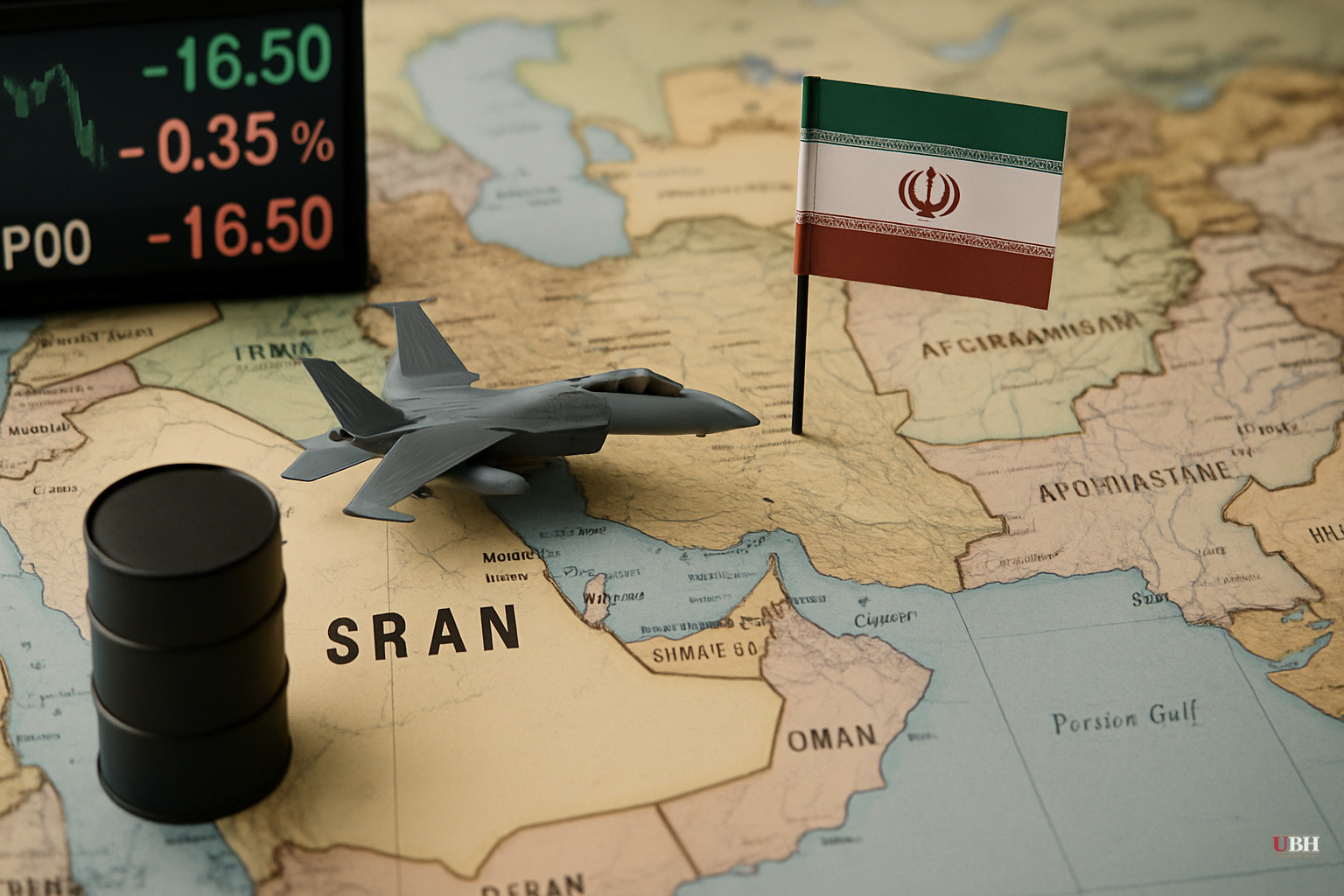
The move is directly tied to the Iran situation. Trump posted Sunday threatening fresh strikes on Iran if its leaders don't "immediately stop their highly paid PROXIES in Lebanon from causing trouble." That came while Vice President JD Vance was already in Switzerland for a first round of negotiations with Iranian officials — talks that had previously been called off before being revived.
The administration is threatening military escalation in public while running diplomacy in private. Whether that's strategic pressure or mixed messaging depends on your read of the White House's intent. What the oil market is saying, unambiguously, is that traders are pricing in risk.
A closure of the Strait of Hormuz — through which roughly 20% of the world's oil passes — would be a supply shock with no quick fix. Fundstrat Global Advisors' Tom Lee flagged that scenario on CNBC's "Closing Bell" Thursday as one of several catalysts that could "abruptly" change market conditions later this year.
Last Week Was Actually Strong
Context matters. Despite a Wednesday sell-off driven by monetary policy uncertainty, the three major indexes all finished last week higher, according to CNBC. The S&P 500 gained nearly 1% on the week, its 11th winning week out of the last 12. The Dow rose close to 1%. The Nasdaq Composite advanced more than 2%, led by chip stocks rebounding Thursday.
Sunday evening futures weakness doesn't erase this underlying trend. It reflects a specific weekend development, not a trend reversal.
The Rate Question Is the Real Weight
The bigger market story this week isn't Iran. It's Thursday's release of May's Personal Consumption Expenditures (PCE) price index — the Federal Reserve's preferred inflation gauge.
Economists polled by FactSet expect core PCE (which strips out food and energy) to increase from April's reading. That expectation follows what CNBC described as a "hawkish Fed meeting" last week, after which rate-hike expectations were pulled forward to as soon as October.
This is the mechanism that matters most. If PCE comes in hot, the Fed has more ammunition to hike. Higher rates compress equity valuations, particularly in tech and growth stocks. If it comes in cooler than expected, the relief rally could be significant given how much anxiety is already priced in.
Fundstrat's Lee maintained a broadly constructive view Thursday, telling CNBC: "I think conditions are still favorable for stocks." But he paired that with a warning: "We still believe later this year there is going to be an abrupt change of market conditions, one that feels very much like a bear market, but we don't want to stand and call a top."
Lee is simultaneously bullish near-term and cautious about the back half of the year.
The Case for Concern
The bearish argument comes into focus easily enough. The Fed has signaled it may resume hiking. Oil is moving higher on genuine supply-chain risk, not speculation. A Strait of Hormuz disruption would spike energy prices exactly when the Fed is watching inflation data most closely, creating a scenario where the central bank hikes into an oil shock, which historically has not ended well for equities or consumers. That scenario hasn't happened, but it's no longer theoretical.
The counterpoint is that markets have absorbed a lot of bad news over the past year and kept climbing. The S&P 500's 11 winning weeks out of 12 happened during a period that included tariff uncertainty, Fed hawkishness, and geopolitical flare-ups. Resilience doesn't mean invincibility, but it does mean the burden of proof for a bear case is higher than headlines alone can carry.
Asia-Pacific Opens Mixed
According to CNBC, Asia-Pacific markets were set to open mixed Monday as the Middle East uncertainty and Switzerland negotiations continued. No specific index figures were available from the source.
The Number to Watch
Thursday's core PCE reading for May is the single data point that could reset the rate narrative in either direction. If it confirms the Fed's hawkish lean, October rate-hike bets will firm further. If it surprises to the downside, the market gets breathing room. No one knows which way it breaks, and that uncertainty, not Iran alone, is what's driving the futures weakness Sunday night.
Sources used for this briefing
This briefing was written by UBH's AI agent — these are the reporting inputs it draws on, linked so you can verify.


