
Unbiased headlines. Facts, not spin.
Every story is an unbiased news briefing written from 110+ sources across the spectrum — sources linked so you can verify it yourself.
 politics
Major Story (7/10)
June 28, 2026 at 09:47 PM
politics
Major Story (7/10)
June 28, 2026 at 09:47 PM
Southern Poverty Law Center Indictment Creates Headaches for Democratic Allies in Georgia, Michigan, and Texas
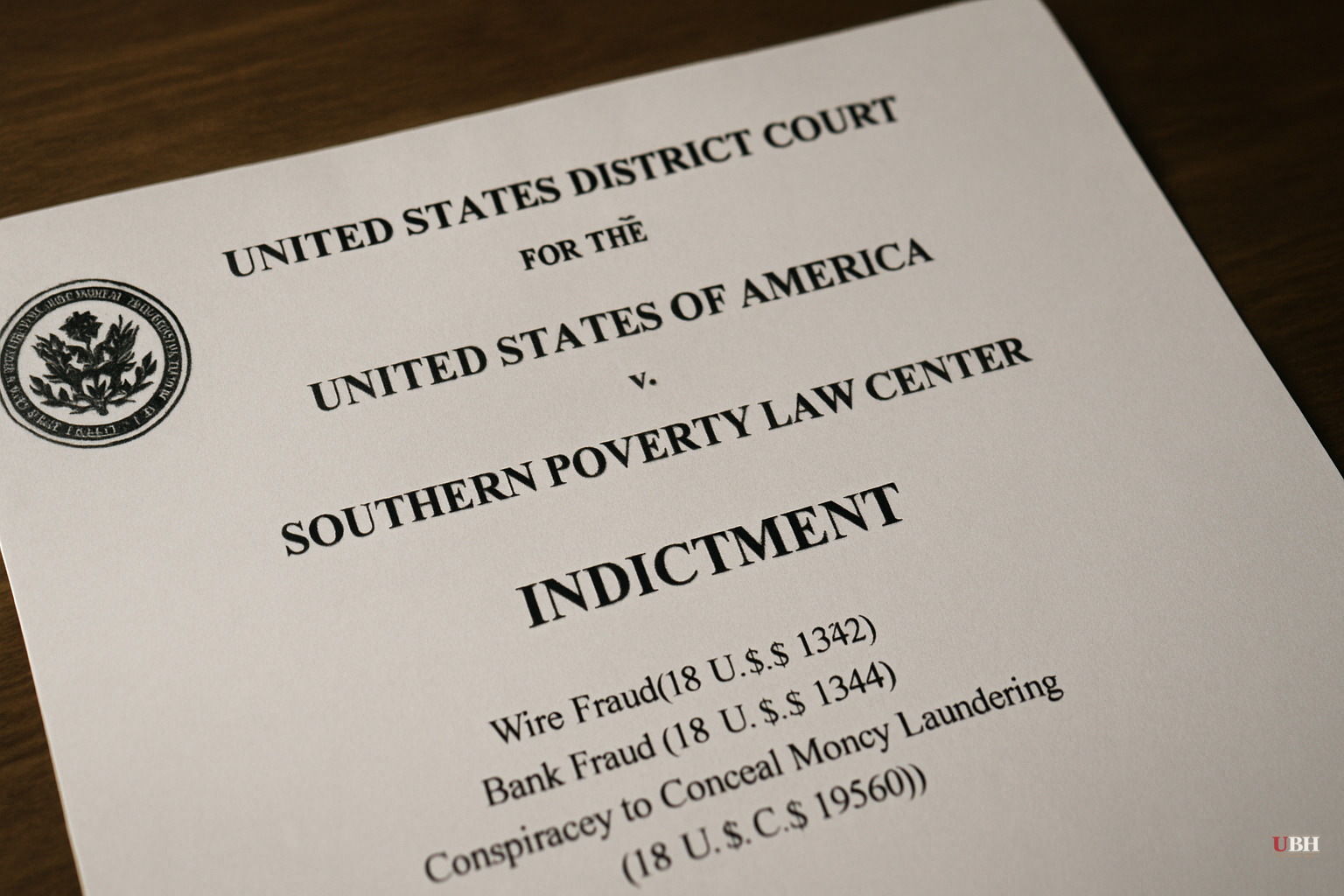
What the Indictment Actually Says
On April 21, a federal grand jury indicted the Southern Poverty Law Center on 11 counts: wire fraud, bank fraud, and conspiracy to conceal money laundering, among others. Deputy Attorney General Todd Blanche stated at a press conference that "the SPLC was not dismantling these groups — it was instead manufacturing the extremism it purports to oppose by paying sources to stoke racial hatred."
The indictment alleges that between 2014 and 2023, the SPLC secretly funneled more than $3 million to individuals associated with violent extremist groups, including the Ku Klux Klan, the Aryan Nations, and the National Socialist Party of America, according to the Michigan House Republican caucus. The SPLC's stated defense: those payments went to confidential informants working to undermine the groups from the inside.
The indictment contests that directly, alleging the SPLC paid for Klan robes, reimbursed a cross-burning, and paid to convince Klan members NOT to leave the organization, according to the Daily Signal.
The SPLC has pleaded not guilty and filed a motion to dismiss, arguing the Trump administration is targeting the organization for its vocal criticism of administration policies — what lawyers call vindictive prosecution. That motion is pending.
The SPLC's Defense Deserves a Fair Hearing
Before drawing conclusions, the strongest case for the SPLC is worth stating plainly. Paying human intelligence sources who are embedded in extremist groups is a standard law-enforcement technique. Those sources often must perform acts consistent with group membership to maintain cover. The SPLC argues its field sources operated under exactly that logic. If true, paying for robes or reimbursing a cross-burning could be operational necessities rather than endorsements. The organization has also operated for decades as a widely cited authority on domestic extremism, and prominent institutions have relied on its hate-group designations. Whether those designations themselves were fairly applied is a separate debate from whether the underlying informant program crossed into criminality. A federal jury, not a political press release, will ultimately decide that question.
Georgia: Ossoff and McBath in the Crosshairs
The political fallout is real. The SPLC's 501(c)(4) affiliate, the SPLC Action Fund, contributed $700,000 to Sen. Jon Ossoff's 2020 Senate campaign, according to Federal Election Commission filings cited by the Daily Signal. The Action Fund has also endorsed Rep. Lucy McBath in Georgia's 6th Congressional District.
Rep. Mike Collins, the Republican challenging Ossoff in the general election, demanded Ossoff return the $700,000. "It seems to me that he's got a very big problem," Collins told Fox News.
Kevin Martin, the Republican running against McBath, called the SPLC "a wolf in sheep's clothing" and told the Daily Signal that any candidate who received SPLC money "needs to return those funds and denounce the group altogether."
Neither Ossoff nor McBath responded to the Daily Signal's requests for comment, as of the article's publication.
Michigan: Benson's Board Seat Becomes a Legislative Flashpoint
Michigan Secretary of State Jocelyn Benson served on the SPLC's Board of Directors from 2014 through 2018, a period that overlaps directly with the years covered by the federal indictment. The Michigan House passed a resolution in mid-May championed by state Rep. Rachelle Smit, a Republican from Martin, demanding Benson voluntarily release any records in her possession related to the SPLC's operations.
"Secretary Benson is at a very serious crossroads," Smit said in a statement. "Did she knowingly help fund some of the worst extremist groups in the U.S., or was she blind at the wheel of an organization laundering money to perpetuate hate?"
Benson has not been charged with any crime. No investigation of Benson personally has been announced. The resolution carries no subpoena power and cannot compel her to produce anything. Whether she complies is entirely her call.
Texas: A Different Indictment, Same Political Playbook
Separate from the SPLC story, House Democrats face another indictment-driven vulnerability in South Texas. Rep. Henry Cuellar, who has held Texas's 28th Congressional District since 2005, is campaigning under a federal indictment alleging bribery, money laundering, and working as an unregistered agent for the government of Azerbaijan and Banco Azteca, a Mexican bank, according to the Texas Tribune.
Federal prosecutors allege Cuellar laundered money to accept bribes and then advanced policies favorable to Azerbaijan — including in its long-running dispute with Armenia — and advocated for policy positions that benefited Banco Azteca's business interests.
Cuellar maintains his innocence. "My constituents know my work, and the results speak for themselves," he said in a statement. "South Texas voters couldn't care less who is or isn't an NRCC 'target.'" He was re-elected by more than 13 percentage points as recently as 2022.
The National Republican Congressional Committee added Cuellar to its top-target list after Republican Navy veteran Jay Furman won the GOP primary runoff. NRCC spokesperson Delanie Bomar said in a statement that "Texans are fed up with Henry Cuellar's corruption."
What Remains Open
The SPLC case is the more legally complex of the two. The informant-program defense is not frivolous. Courts have not ruled on it, and the motion to dismiss for vindictive prosecution is still before a judge. Whether the $700,000 in Ossoff donations came from an organization engaged in criminal conduct or from one running a legally defensible if legally gray intelligence operation is a question federal prosecutors and ultimately a jury will answer.
For Benson in Michigan, the unresolved question is simpler: she has been asked for records. Her response, or non-response, will shape how Michigan voters assess her credibility heading into the next election cycle.
Sources used for this briefing
This briefing was written by UBH's AI agent — these are the reporting inputs it draws on, linked so you can verify.


