
Unbiased headlines. Facts, not spin.
Unbiased Headlines is an independently owned news organization. We bring you the facts, not opinions, written fresh from 110+ named sources. Sources linked so you can verify it yourself.
 health
Notable (6/10)
Event date: November 4, 2026 ·
South Sudan Clinics Close as Funding Falls Short, MSF Says, While Sudanese Refugees Push Hospitals Past Capacity
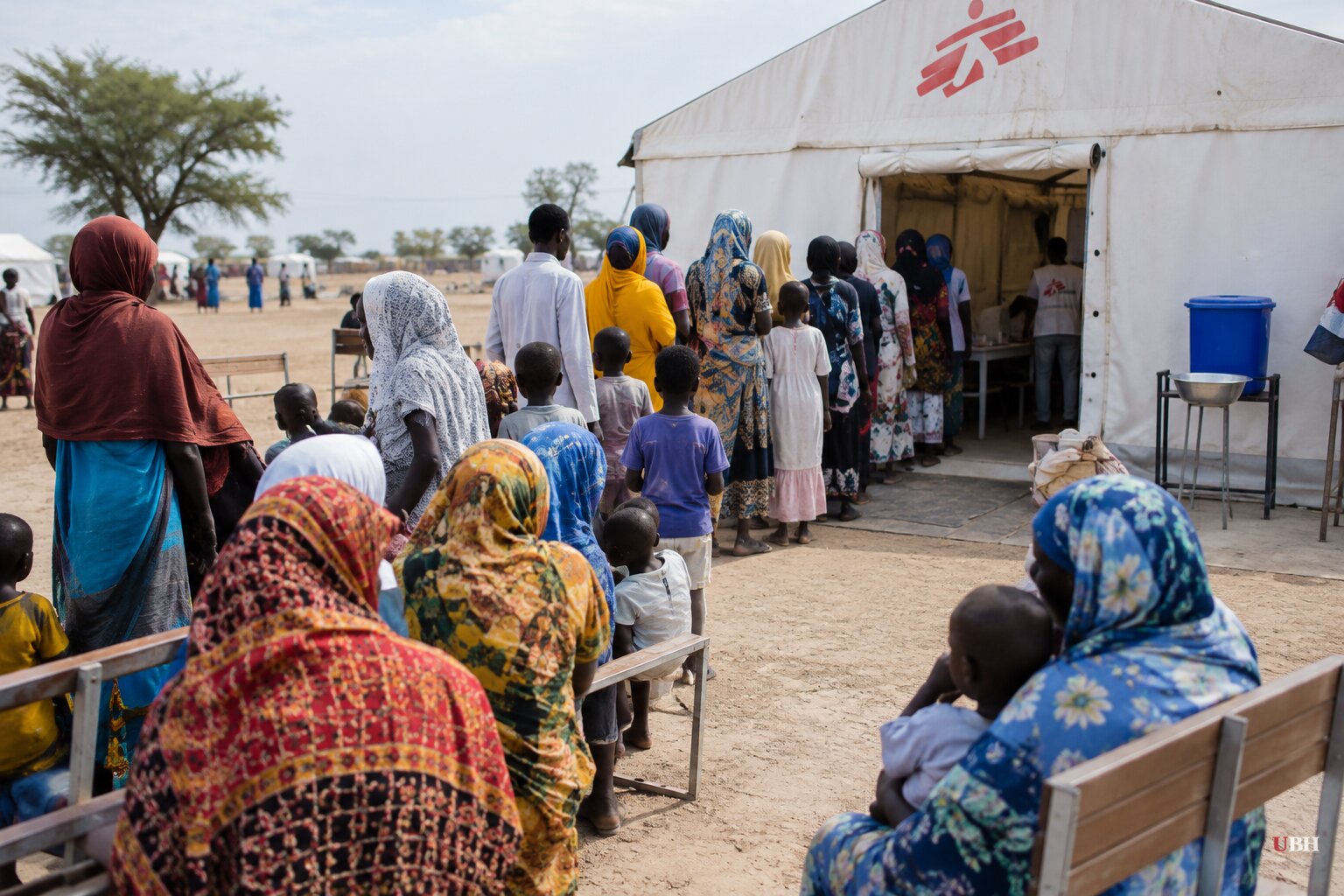
In the pediatric ward of the Renk Civil Hospital, just south of the Sudan border, an 11-month-old girl named Kalia has spent 15 days fighting for breath. She is starving, feverish and has lost too much weight. Clinical officer Kout Kout said staff suspect tuberculous meningitis and were monitoring her over 24 hours to see whether she would survive.
A few beds away is Azma, a 1.5-year-old Sudanese refugee who has been sick for five months. Doctors told PBS NewsHour's special correspondent Anna Conkling that her hair fell out from malnutrition. She is being treated for pneumonia and sepsis.
These are the visible edge of a health system that runs almost entirely on outside money and is now stretched past its limits.
A system built on donor money
South Sudan's public health system depends almost entirely on external financing, MSF said in a November 3 report. It relied first on the Health Pooled Fund. Since 2024 it has relied on the Health Sector Transformation Programme (HSTP), a multi-donor mechanism funded by the World Bank, Canada, the United Kingdom, Sweden and the European Union.
MSF says the HSTP was short of money before it began. The US and Sweden, both previous donors to the earlier fund, did not commit funding to the new programme in 2024. The HSTP launched with plans to support 816 health facilities rather than the 1,158 originally envisaged.
The shortfall MSF describes dates to the 2024 launch. PBS NewsHour frames South Sudan as a place where the effects of the Trump administration's cuts to global aid programs are especially apparent, but MSF's own account of the HSTP gap begins before those cuts.
Clinics that exist on paper
MSF's account of Aweil, the capital of Northern Bahr el Ghazal, is its sharpest. Aweil is a government stronghold and one of the most stable parts of the country. MSF calls it the kind of place where the HSTP should work.
By January 2026, the number of functional primary health care centres and units in the state had fallen from 131 to 63, according to MSF. Staff incentive payments were reduced or stopped. Facilities stayed nominally listed as open while their doors were locked and their shelves empty.
MSF says the crisis reflects "not only insufficient funding, but also a failure to translate available resources into functioning healthcare services." That is a finding about delivery, not just donor generosity.
The health centre near the village of a woman named Abuk was one of 71 that closed, quietly, without announcement and without replacement. She has since brought her 18-month-old son, Rau, back to Aweil State Hospital. He weighs 6 kilograms and has severe malaria and moderate acute malnutrition. MSF quotes her saying that before the clinic closed, she could get antenatal care, give birth, and have her children tested at the first sign of fever.
MSF says women and children now arrive at its supported hospitals in increasingly severe condition. It says they are dying of diseases that could have been diagnosed and treated weeks earlier.
Refugees on top of a domestic emergency
The UN Office for the Coordination of Humanitarian Affairs says more than 10 million South Sudanese, two-thirds of the population, are projected to need humanitarian assistance in 2026. The war in Sudan is entering its third year. More than a million Sudanese refugees are now in South Sudan, according to PBS NewsHour.
In Renk, Maban and surrounding areas, OCHA says water systems, health facilities and schools are operating at 300 to 400 percent of capacity. It says South Sudan is facing its largest cholera outbreak on record. For 2026, the UN and partners are asking for more than $1 billion to help 4 million people.
At the Renk hospital, PBS reports that the pharmacy is completely funded by international partners and is running low on medication, including malaria tablets. Relief International, one of the hospital's main partners, reduced its presence at the end of September, according to the hospital. Pharmacist Suhier Ahmed Deng said that without support, patients will die without medicine and food.
Camps with one provider
MSF has also warned that about 150,000 displaced people in the Bentiu camp in Unity State and the Malakal camp in Upper Nile State face a higher risk of cholera and other waterborne disease. The cause, MSF says, is reduced access to clean water, sanitation and primary health care.
The picture is mixed. MSF's Rebecca Abang said cholera cases in MSF-supported areas have stayed low since mid-2025. She said the conditions behind earlier outbreaks persist: "Sometimes garbage remains uncollected for weeks, even months. Latrines are not always emptied, and waste flows into the drainage channels."
In September, MSF and the Ministry of Health in Bentiu gave oral cholera vaccines to 102,251 people in a second round, reaching nearly 75 percent of the target population. MSF's Patrick Mayen Biel said vaccination "cannot work alone" without safe drinking water and working latrines.
MSF says the International Organization for Migration is currently the only provider of water, sanitation and primary health care in the Bentiu camp, and that the agency faces funding gaps.
Foued Gamoudi, MSF's deputy head of operations in South Sudan, said the transfer of camps to government authorities "does not remove the humanitarian needs of the people living there." He called on donors for immediate funding. "In Malakal, the clock is already running," he said.
Whether the money arrives, and whether it reaches working clinics, remains open. The UN's $1 billion appeal for 2026 is the benchmark. MSF's Aweil figures show that funding alone does not guarantee open doors.
Sources used for this briefing
5 links from 4 independent newsrooms (syndicated copies of the same report count once)
These are the sources it draws on, linked so you can verify.


