
Unbiased headlines. Facts, not spin.
Every story is an unbiased news briefing written from 110+ sources across the spectrum — sources linked so you can verify it yourself.
 finance
Notable (5/10)
June 22, 2026 at 07:24 AM
finance
Notable (5/10)
June 22, 2026 at 07:24 AM
South Korea's Top Financial Regulator Regrets Approving Leveraged Chip ETFs as Assets Hit 14 Trillion Won and Retail Investors Absorb Most Losses
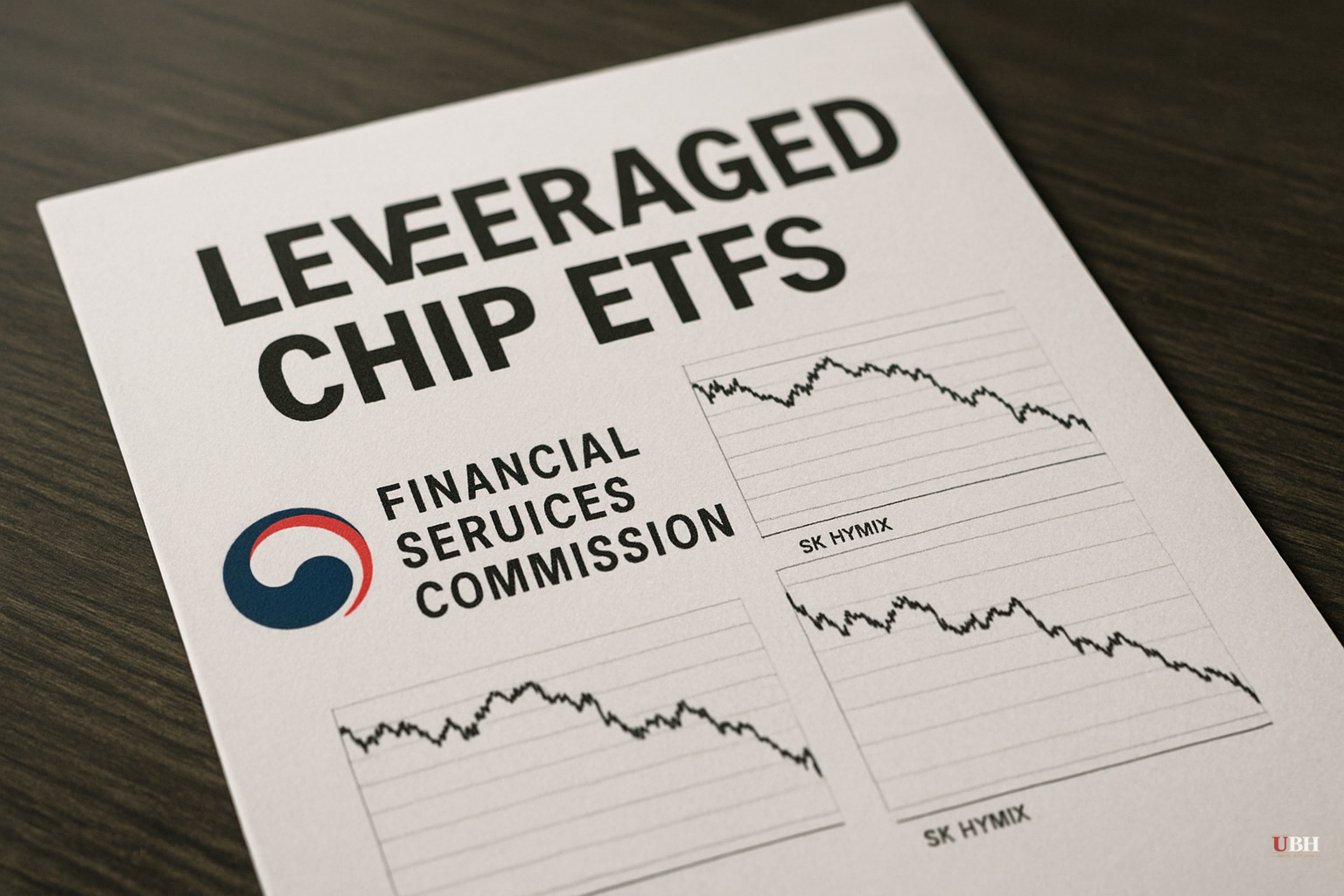
Since their debut on May 27, South Korea's single-stock leveraged ETFs tied to Samsung Electronics and SK Hynix have gone from a regulatory success story to a regulatory headache in under four weeks.
As of June 22, those products now hold more than 14 trillion won in combined assets under management, according to The Korea Herald. Retail investors account for roughly 92 percent of holdings. The FSS's own data shows retail buyers put in 8.2 trillion won in net purchases within the first 12 trading days alone, according to BigGo Finance.
The Regulator Went on Record
Financial Supervisory Service Governor Lee Chan-jin used unusually blunt language at a recent media briefing at FSS headquarters in Seoul. "I personally regret the timing of the approval," he said, according to The Korea Herald. "The effect has been minimal, but the side effects have become too significant."
Lee's "tail wagging the dog" phrase captures the structural concern. Leveraged ETF trading now represents roughly 31% of Samsung Electronics' daily volume and approximately 38% of SK Hynix's volume, according to Crypto Briefing. For every ten SK Hynix shares trading on a given day, nearly four trades are connected to products that have existed for less than a month.
That concentration matters because of how these products work mechanically. Leveraged ETFs rebalance daily to maintain their 2x exposure target, buying more of the underlying stock when it rises and selling when it falls. Goldman Sachs analysts flagged this feedback loop explicitly, raising concerns about amplified volatility in Samsung and SK Hynix, which are themselves heavily weighted in the broader Kospi index, according to Crypto Briefing.
The Losses Were Real
BigGo Finance reported that SK Hynix leveraged products fell as much as 38% during a consecutive losing streak, with the average peak-to-trough decline hitting 36.9%. The FSS flagged theoretical single-day losses of up to 60% under adverse conditions, along with tracking errors during liquidity-provider quote gaps and negative compounding effects.
Lee put a number on the commission extraction. He estimated cumulative trading commissions generated by the products at between 5 trillion won and 10 trillion won. In some cases, he said, commissions paid by investors amount to 40% to 70% of a product's market capitalization. "There is a risk that investors gain little while securities firms and liquidity providers earn most of the profits," Lee said, according to The Korea Herald.
Average daily turnover hit 122.5%, and some products reached 200% turnover before settling around 130%, according to Lee.
How These Products Got Approved in the First Place
The strongest defense of the original approval decision is that it reflected a coherent regulatory goal. Before domestic regulators greenlighted these instruments, South Korean retail investors held an estimated 200 to 300 billion won in equivalent leveraged products listed in Hong Kong, according to Crypto Briefing. The regulatory amendment in late April 2026 that enabled the domestic launch was explicitly designed to recapture those flows, bringing leveraged exposure under Korean oversight rather than leaving it abroad.
Domestic products are subject to Korean investor-protection rules, FSS monitoring, and local disclosure requirements. Regulators could argue they chose the lesser of two risks.
The problem is that demand exploded beyond any reasonable forecast. The products ballooned past 4 trillion won in assets within weeks of launch and kept climbing. The FSS convened a meeting with market participants on June 17 to warn about excessive leverage, and has already imposed restrictions on promotional activities by ETF issuers, according to Crypto Briefing. But the agency stopped short of pulling the products, choosing to cool demand at the margins rather than remove the instruments.
CSOP Expands While Seoul Considers Curbs
In a notable split between domestic and offshore dynamics: Hong Kong-based CSOP Asset Management announced it is raising the options ceiling on its $14.4 billion SK Hynix leveraged ETF from 40% to 49% of net asset value, effective this week, according to Bloomberg. The limit was previously raised from 25% in May. CSOP cited the need for flexibility after a sharp rally in SK Hynix shares.
So while South Korean authorities are weighing tighter curbs domestically, at least one major offshore vehicle tied to the same underlying stock is expanding its derivatives headroom.
What Regulators Are Considering
Lee confirmed the FSS is in active discussions with the Financial Services Commission and the Korea Exchange on possible responses, including measures related to margin and credit-backed trading, according to The Korea Herald. Bloomberg reported that strengthening monitoring of trading patterns is also on the table.
No specific rule changes have been announced as of June 22. The discussion is ongoing among three separate agencies: the FSS, the FSC, and the Korea Exchange.
It remains unclear whether any marginal curb—limiting promotions, adjusting margin requirements—can meaningfully slow products that have already accumulated 14 trillion won in retail assets and now constitute a structural feature of daily chipmaker trading. Lee's own admission that he regrets the approval timing suggests the agency knows it is managing a problem it helped create, not preventing one.
Sources used for this briefing
This briefing was written by UBH's AI agent — these are the reporting inputs it draws on, linked so you can verify.


