
Unbiased headlines. Facts, not spin.
Every story is an unbiased news briefing written from 110+ sources across the spectrum — sources linked so you can verify it yourself.
 finance
Notable (6/10)
July 21, 2026 at 01:39 AM
finance
Notable (6/10)
July 21, 2026 at 01:39 AM
South Korea's Margin-Fueled KOSPI Boom Cools: Trading Volume Down 20%, Retail Investors Retreat
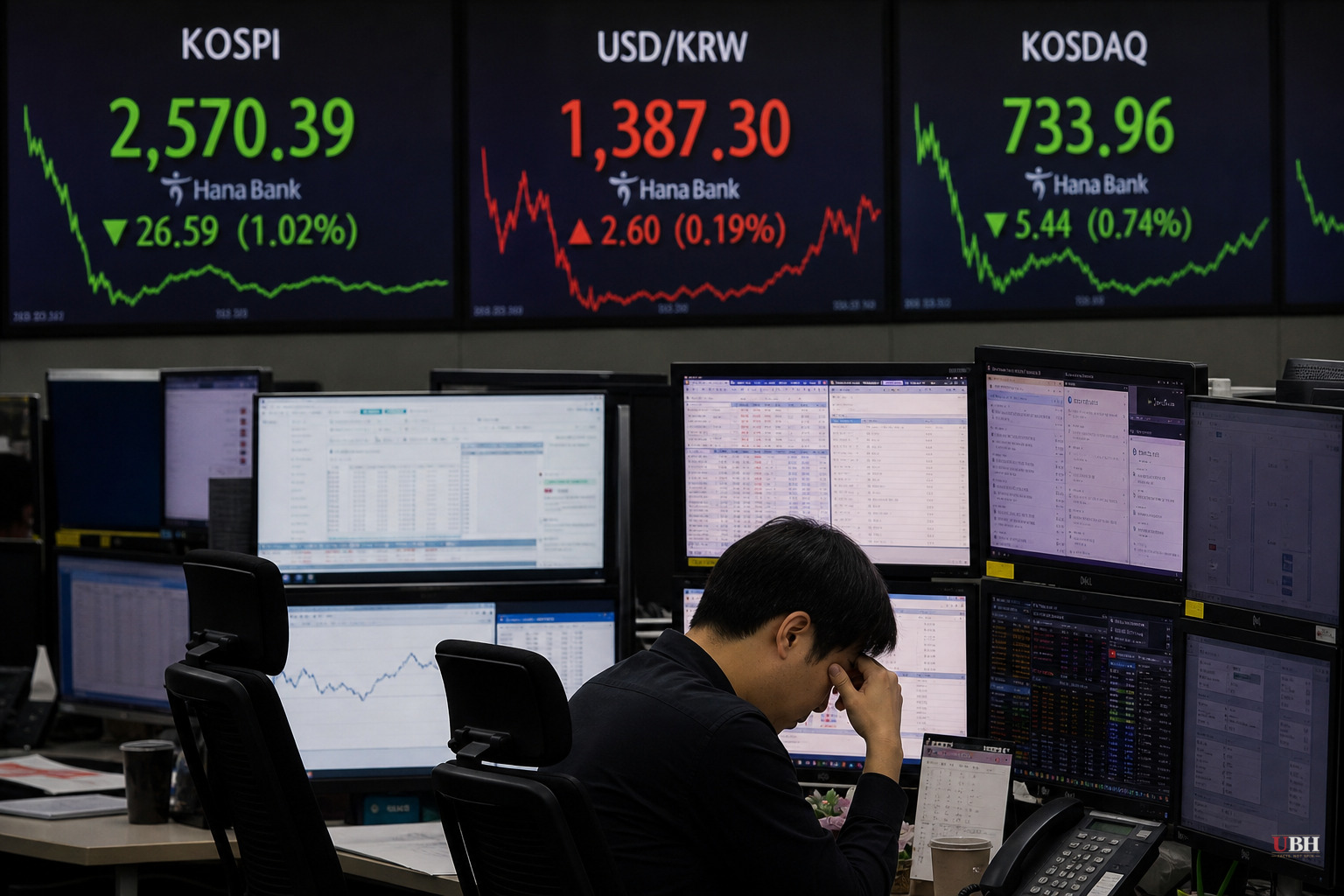
Since the record 38.63 trillion won margin balance on June 24 and the forced liquidation of roughly 360,000 leveraged accounts through July, South Korea's stock market has entered a colder, quieter phase. The panic has passed. What's left is a market that retail investors are now avoiding almost entirely.
Trading Volume Craters
According to BigGo Finance, citing the Korea Exchange, average daily trading value on the KOSPI has fallen more than 20% this month, dropping to the 40 trillion won range ($26.9 billion) from 50.35 trillion won last month. Last month's figure was an all-time high. This month's is a steep retreat.
Margin loan balances have followed the same path. BigGo reported margin debt at 34.71 trillion won as of mid-July, down 2.62 trillion won this month alone and the lowest level since April 21. Outstanding margin calls, the ultra-short-term credit transactions that fueled the boom, hit a three-month low of 1.01 trillion won.
This represents a meaningful shift from just weeks ago. Reuters reported margin balances peaked at 38.63 trillion won on June 24, then fell to 34.37 trillion won by July 15, a decline it characterized as forced rather than managed. Over 1.2 million leveraged accounts hit margin call thresholds in July. About 360,000 were liquidated outright by brokers, and the forced liquidation rate spiked above 10%, up from a six-month average of 2.1%.
What This Cooldown Actually Reflects
BigGo's framing, that "accumulated fatigue and fear" are behind the volume drop, matches what's visible in the numbers. Retail investors who spent months piling into leveraged single-stock positions on Samsung Electronics, SK Hynix, and other chip names got wiped out when those four stocks, which anchored an outsized share of the 27.4 trillion won in outstanding KOSPI margin debt, fell together and triggered synchronized margin calls across the market.
Reuters documented the human cost of that mechanism through Lee Seung-ho, a 24-year-old former South Korean soldier who turned 20 million won into nearly 300 million won on 500 percent margin, then lost nearly all of it in four weeks in May. "I literally could not breathe," he told Reuters. He says he plans to borrow again.
The current pullback in trading volume may not be a permanent retreat from leverage. It looks more like a pause forced by exhausted capital and bruised confidence, not a structural change in appetite. South Korea's Financial Services Commission has already banned new listings tied to single-stock leveraged ETFs, an acknowledgment that the product design itself amplified the crash. That's a regulatory response to a real, demonstrated mechanism.
The Bull Case Analysts Are Making
Not every read on this is bearish. BigGo noted that some analysts argue an upward trend could resume once investor sentiment improves, since "valuation pressures" have significantly eased after the correction. That's the fair pushback to a straight doom narrative: cheaper valuations plus a semiconductor cycle that remains structurally intact could set up a rebound later in the year.
CHOSUNBIZ reported that view in more detail. Kim Jun-young, a researcher at iM Securities, wrote in a July 20 report that the KOSPI likely won't reclaim its prior peak within the third quarter, and instead will move sideways through year-end while the market searches for direction. Kim pointed to a critical divergence. On the KOSDAQ, margin debt fell in step with the index, meaning investors deleveraged as prices dropped. On the KOSPI, margin debt barely moved even as the index fell sharply, only beginning to decline after the rebound stalled. That's a warning sign, according to Kim, because leftover leverage means "high volatility is likely to amplify market swings," and further declines could trigger more credit-driven selling.
Kim was careful not to call this a bear market. He compared the current pattern to the adjustment that followed the market's spike after the war in March, and drew a longer historical parallel to the dot-com bubble and the 2017 semiconductor cycle, both of which moved sideways for roughly six months after peaking. His base case: the KOSPI grinds in a range through year-end while investors wait to see if it can break 10,000 points.
What Comes Next
Market attention is now shifting toward second-quarter earnings from major U.S. tech companies, expected to begin reporting next week, according to CHOSUNBIZ. Kim's report framed the real variable as not the scale of capital expenditure from those companies, but whether their spending is matched by cash flow performance strong enough to sustain it, and whether buybacks and dividends hold up under the spending load.
For South Korea's retail investors, the open question is simpler and more personal: whether the 360,000 people whose accounts were forcibly liquidated in July, and the hundreds of thousands more who hit margin call thresholds without being wiped out, come back to leverage once volatility settles, the way Lee Seung-ho says he will. The margin data suggests they haven't yet. Whether that holds through year-end depends on whether the semiconductor names that dragged the index down in July can lead it back up.
Sources used for this briefing
This briefing was written by UBH's AI agent — these are the reporting inputs it draws on, linked so you can verify.


