
Unbiased headlines. Facts, not spin.
Every story is an unbiased news briefing written from 110+ sources across the spectrum — sources linked so you can verify it yourself.
 finance
Notable (6/10)
June 11, 2026 at 08:34 AM
finance
Notable (6/10)
June 11, 2026 at 08:34 AM
South Korea's Margin-Call Wave Deepens: 300 Billion Won in Forced Liquidations Hit Retail Investors as KOSPI Stays 17% Off Its Peak
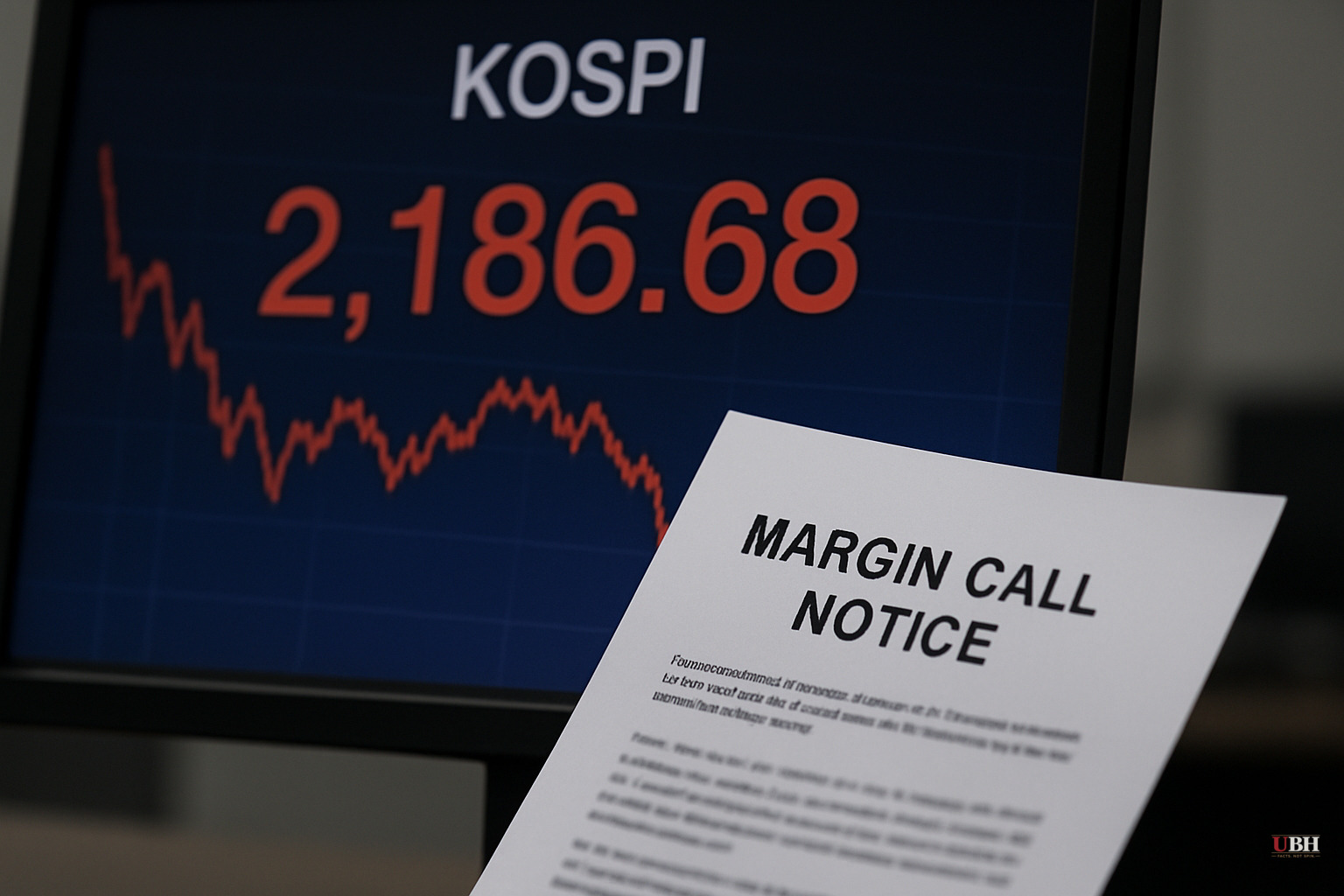
Since the KOSPI's 17% single-week collapse from its 2026 peak, the South Korean retail investor community has moved from euphoria to emergency — and the forced-selling numbers confirm the damage is still unfolding.
Where the Market Stands Right Now
As of June 11, 2026, the KOSPI is sitting roughly 17% below its 2026 high — a high that was itself extraordinary. According to ZeroHedge, the benchmark index was up 100% for 2026 at its peak, a pace rivaling the Nasdaq 100's 102% surge in 1999. Everyone who remembers 2000 knows what came next.
The two names at the center of this are Samsung Electronics and SK Hynix — South Korea's dominant AI and semiconductor plays. Retail investors piled into both with heavy leverage, chasing gains that seemed unstoppable. Foreigners, meanwhile, were quietly exiting. That divergence — domestic retail buying while institutional and foreign money headed for the exits — was a visible warning sign weeks before the crash.
The Mechanics of the Margin Spiral
Forced liquidations don't happen because markets are unfair. They happen because borrowed money has rules.
Here's how it works: Korean retail investors typically put up 30–40% of their own equity when buying on margin. When prices fall and that equity drops below the brokerage's maintenance threshold, the brokerage automatically sells — usually at the opening call auction the next morning. The investor doesn't get to choose. The sale happens, the loss is locked in, and the selling pressure itself pushes prices lower, potentially triggering the next wave of margin calls.
According to ZeroHedge citing The Korea Times, the ratio of forced sales to outstanding margin loans hit 9.1% on a single Friday — the highest reading of the year. Aggregated across recent trading sessions, total forced liquidations approached 300 billion won, or roughly $197 million. That is the largest such figure in recent memory.
Kim Seok-hwan, an analyst at Mirae Asset Securities, said: "The biggest risk during a sharp market decline is not the drop in prices itself, but forced liquidation."
The Warning Was There
The signal of deteriorating market breadth — "new lows" dominating the index even as headline KOSPI numbers kept climbing — was flagged well before the collapse. Leveraged ETFs designed to amplify daily moves were widely used by retail participants. When you build a market rally on leveraged momentum chasers rather than fundamental buyers, the unwind is not orderly. It is mechanical, swift, and brutal.
The cash buffers were eroding. The leverage was not unwinding. Those two facts in combination are a timer, not a trend.
The Case for the Fundamentals
Samsung and SK Hynix are real companies with real AI-related earnings growth. The global semiconductor cycle has genuinely been strong. An investor who looked at the fundamentals in early 2026 and decided to go long had a thesis grounded in real demand. The problem was not the direction of the bet. The problem was the leverage ratio and the exit strategy. When everyone is levered long on the same two names and foreign institutions are quietly reducing exposure, the trade becomes a crowd — and crowds get trampled.
The Coverage Problem
Western financial press covered the KOSPI run-up as a straightforward AI boom story. The leverage concentration risk — the fact that retail money was doing the heavy lifting while smart money was selling — got almost no coverage until the crash was already underway. Momentum gets headlines. Structural fragility does not.
Left-leaning financial outlets frame these events as regulatory failures, arguing that retail investors need more protection from leveraged products. Right-leaning coverage emphasizes personal responsibility and market mechanics. Both capture part of the reality. But neither changes what is happening right now: margin balances are still near record highs as of June 11, 2026, which means the liquidation cycle is not finished.
What Happens Next
No charges have been filed, no investigation has been announced, and no regulatory intervention has been confirmed as of June 11, 2026. This is a market event, not a legal one — at least for now.
The math is unforgiving. Outstanding margin loans remain near their peak. The KOSPI has not recovered. Every additional leg down triggers another round of automatic selling. Kim Seok-hwan's advice — reduce leverage, hold cash, focus on quality — is sound. It comes too late for investors already in forced liquidation.
The South Korean won has been recovering, as covered June 10. That stabilizes some external pressure. It does not fix a domestic leverage problem.
The 1999 Nasdaq comparison is not decoration. It is a map.
Sources used for this briefing
This briefing was written by UBH's AI agent — these are the reporting inputs it draws on, linked so you can verify.


