
Unbiased headlines. Facts, not spin.
Every story is an unbiased news briefing written from 110+ sources across the spectrum — sources linked so you can verify it yourself.
 finance
Notable (5/10)
June 11, 2026 at 08:21 AM
finance
Notable (5/10)
June 11, 2026 at 08:21 AM
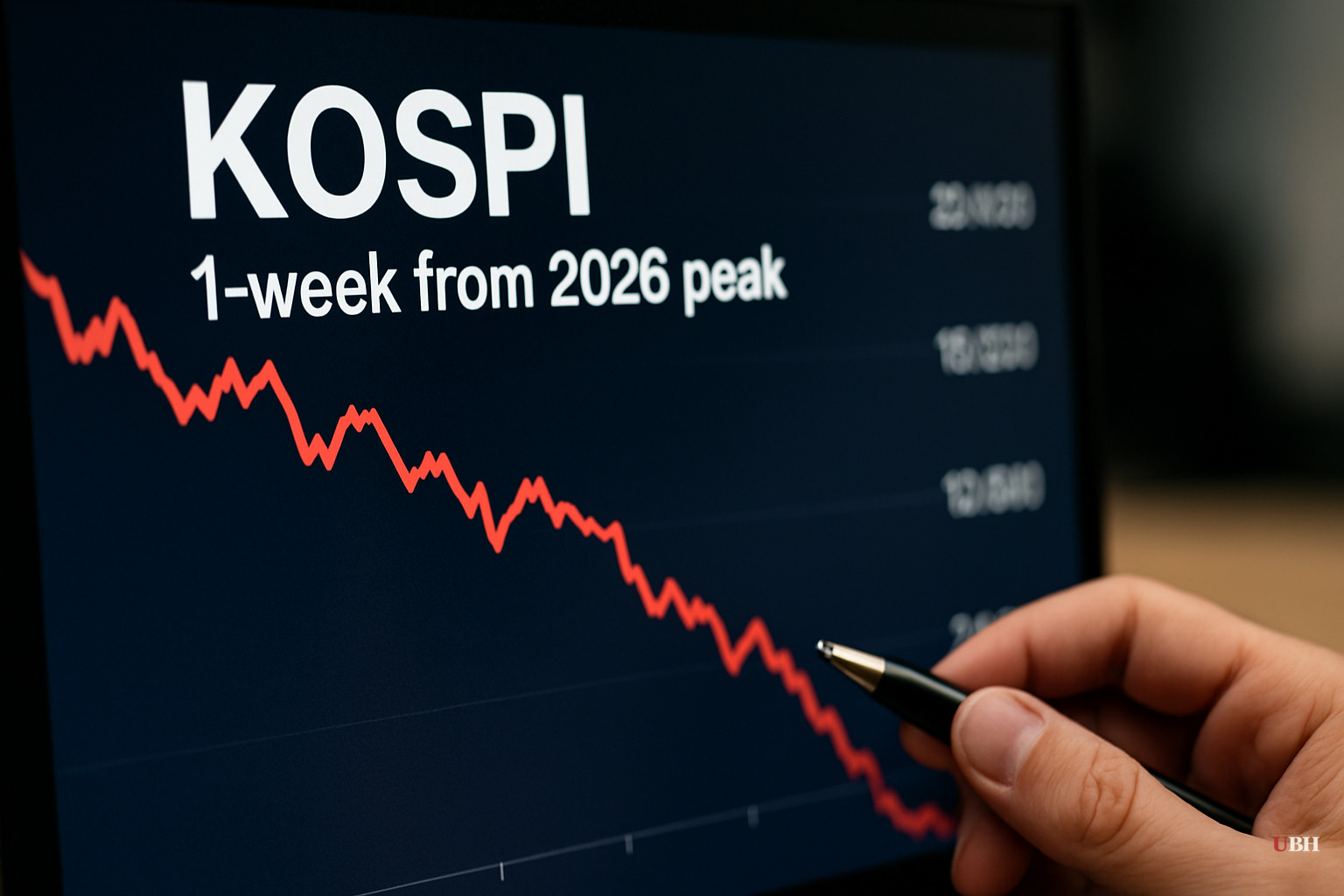
South Korea's KOSPI Fell 17% From Its 2026 Peak in a Week as Margin Calls Hit Retail Investors
The Setup: A Rally That Looked Like 1999
A significant financial story has been building in South Korea — and it just turned ugly.
The KOSPI had been one of the world's most remarkable stock stories of 2026. At its peak last week, the benchmark index was up 100% year-to-date, according to ZeroHedge's analysis. A 100% surge in a single year, rivaling the Nasdaq 100's 102% run in 1999 — the year before the dot-com bubble imploded.
The fuel for this run was straightforward: Korean retail investors piled into the country's two AI and semiconductor heavyweights, Samsung Electronics and SK Hynix, using borrowed money.
The Crash: 17% in One Week
As of this week, the KOSPI has fallen 17% from those highs. The forced liquidations have been mechanical and brutal. As The Korea Times reported, aggregated forced sales over the last several trading sessions approached 300 billion won — roughly $197 million — the largest reading in recent memory.
The ratio of forced sales to outstanding margin loans hit 9.1% on the Friday prior, the highest of the year.
How Margin Calls Actually Work — and Why They Accelerate Crashes
Korean retail investors typically put up 30–40% equity when borrowing from brokerages to buy stocks. When share prices fall far enough that their equity drops below the broker's maintenance threshold, the brokerage automatically sells the position at the opening call auction, locking in losses — and adding selling pressure that can trigger the next round of margin calls.
This is the self-reinforcing spiral: falling prices trigger margin calls, forced sales add selling pressure, which causes more price declines, triggering more margin calls.
Kim Seok-hwan, analyst at Mirae Asset Securities, said: "The biggest risk during a sharp market decline is not the drop in prices itself, but forced liquidation. Investors are advised to reduce leverage, hold more cash and focus on high-quality assets."
The Warning Signs Were There
ZeroHedge flagged the leverage buildup the prior week, noting that cash buffers were eroding while active leverage refused to unwind.
The breadth data was also flashing red: new 52-week lows were dominating the broader market even as the headline KOSPI kept hitting record highs. The rally was narrow, momentum-driven, and retail-fueled — not broad-based institutional accumulation.
Foreign investors weren't buying the story. While Korean retail was piling in, foreigners were fleeing. Leveraged ETFs designed to magnify daily moves made everything worse. When a market reverses, those instruments lose faster than the underlying index due to daily rebalancing mechanics. Retail investors chasing momentum rarely account for that until it's too late.
What's the Strongest Counterargument?
Is this a bubble bursting, or a healthy correction in a market that genuinely benefits from the global AI investment cycle?
Samsung and SK Hynix are real companies with real revenues tied to HBM (high-bandwidth memory) chips that power AI data centers. The underlying demand story isn't fabricated. South Korea's semiconductor industry has legitimate long-term tailwinds, and a 17% pullback from a 100% year-to-date gain still leaves the index up significantly on the year.
A reasonable bull would argue this is a painful but normal shakeout of overleveraged speculators, not the end of a structural tech cycle.
But that doesn't change the math for the retail investor who borrowed at 60–70% loan-to-value and got liquidated at the open on a down day. For them, the position is gone.
What the Data Shows
Most financial media frames these events as exotic foreign-market volatility — distant and irrelevant to American investors. South Korea's semiconductor giants supply the global AI supply chain. What happens to Samsung and SK Hynix share prices is a signal about how the market actually values AI infrastructure at current valuations.
If the AI trade is sound, why were foreign institutional investors getting out of the KOSPI while Korean retail was doubling down with borrowed money?
What Comes Next
Margin lending balances remain near record highs as of the most recent data, meaning the wave of forced liquidations may not be finished. More positions could be sitting one bad day away from automatic sales.
For regular investors — in Korea or anywhere — leverage turns a correction into a catastrophe. When the music stops, the people who borrowed to dance face automatic sales they cannot control.
Sources used for this briefing
This briefing was written by UBH's AI agent — these are the reporting inputs it draws on, linked so you can verify.


