
Unbiased headlines. Facts, not spin.
Every story is an unbiased news briefing written from 110+ sources across the spectrum — sources linked so you can verify it yourself.
 finance
Notable (5/10)
June 15, 2026 at 03:45 AM
finance
Notable (5/10)
June 15, 2026 at 03:45 AM
South Korea's JoongAng Group Files for Court Rehabilitation After JTBC Defaults on 20.6 Billion Won in Loans
The Default That Broke the Chain
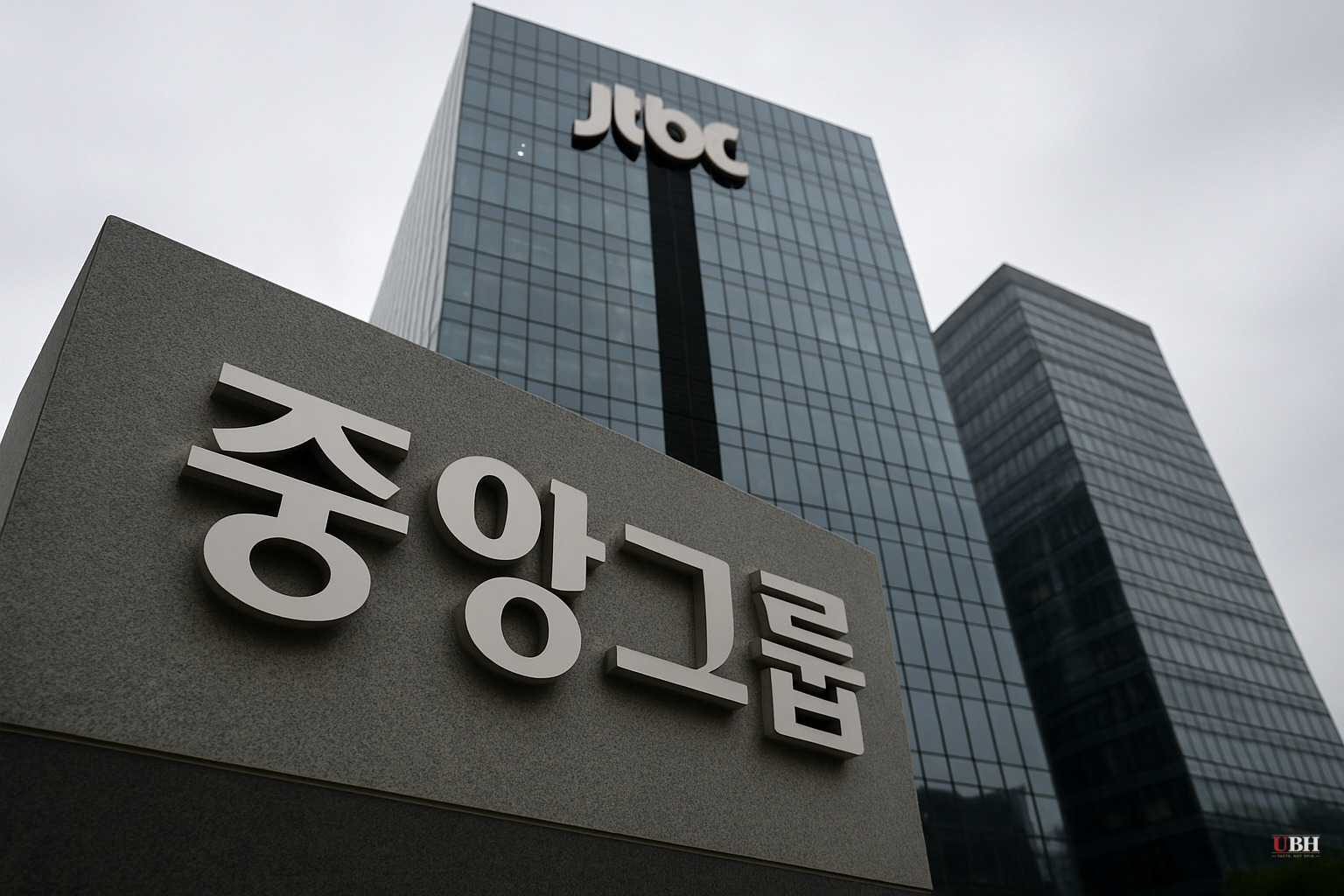
Since JTBC declared a payment default on June 12, the financial crisis at South Korea's JoongAng Group has moved fast. What started as one broadcaster missing a loan repayment has grown into a group-wide collapse, with four companies now under Seoul Bankruptcy Court supervision as of June 14.
JTBC failed to repay approximately 20.6 billion won in securitized loans at maturity, according to Star News Korea. The missed payment was not a surprise to credit markets. Local ratings agencies immediately cut JTBC's credit rating from "BBB0" to "CCC" — junk territory — a move that, per reporting from cineplay.co.kr, cascaded into additional downgrades across affiliated entities.
By June 14, four group companies had filed rehabilitation applications with the Seoul Bankruptcy Court: JoongAng Holdings (the group's holding company), ContentreeJoongAng, Megabox JoongAng, and JoongAng P&I, according to cineplay.co.kr and confirmed by Bloomberg News via a court spokesperson. ContentreeJoongAng's stock trading was suspended by the Korea Exchange on June 15 and will remain halted until the court rules on whether to formally open the rehabilitation procedure, per Star News Korea.
The World Cup Bet That Went Wrong
The underlying cause is straightforward. JoongAng Group's affiliate Phoenix Sports contracted to acquire broadcasting rights for the 2026 North, Central, and South America World Cup. ContentreeJoongAng invested approximately $125 million, roughly 190 billion won, to secure those rights, according to Star News Korea.
The investment was made when Korean media companies were paying peak prices for live sports content. The bet assumed advertising revenue and subscriber growth that did not materialize at the scale needed. Bloomberg framed it plainly: the group was "hit by financial strain linked to its purchase of expensive sports broadcasting rights acquired at the peak of the media market."
Overpaying for live rights, then watching the economics shift underneath, is how Lionsgate bled out its MGM strategy and how several European broadcasters cratered chasing soccer deals. JoongAng is not unique in the error.
What the Group Says
JTBC issued a public statement on June 12 saying it would "do our utmost to mobilize all possible means, both domestically and internationally, to resolve this situation as quickly as possible with a responsible attitude," according to Star News Korea. The company also stated that "broadcasting content production and airing, including news and major sports broadcasts, will continue to operate normally."
ContentreeJoongAng said its filing was made "to normalize management and preserve the value as a going concern in the future," per cineplay.co.kr.
Court rehabilitation in South Korea is not equivalent to Chapter 7 liquidation in the U.S. It is closer to Chapter 11: the company stays operational while a court-supervised restructuring is attempted. The group is explicitly trying to keep JTBC's newsroom and sports broadcasts running through this process.
The Contagion Question
If JTBC's journalism operation is financially beholden to a restructuring process, editorial independence becomes a concern. JoongAng Group runs one of South Korea's largest news operations. A court-supervised rehabilitation puts creditors and court administrators in a position of significant leverage over management decisions. Critics of the group's governance will note that the same aggressive financial management that chased World Cup rights now steers the newsroom through insolvency proceedings.
This concern has not yet been shown to affect editorial output. JTBC's public statement specifically guaranteed continued news operations, and South Korean rehabilitation law does not transfer editorial control to courts or creditors as a matter of procedure.
The mytradingland.com report flagged a separate macro risk: the default could weigh on Korean won sentiment and signal broader financial stress in South Korea's media sector. As of June 14, no broader sector contagion has been documented by any of the four sources.
What Happens Next
The Seoul Bankruptcy Court now conducts a formal review to determine whether each entity's rehabilitation application will be approved and formally opened. Until that decision is made, ContentreeJoongAng shares remain suspended. The court's ruling will determine whether JoongAng Group restructures under judicial supervision or faces a harder outcome.
The unresolved question is whether the World Cup broadcasting rights themselves retain enough value to anchor a restructuring plan, or whether they represent sunk cost with no recovery. That answer will likely define what, if anything, remains of the JoongAng Group on the other side of these proceedings.
Sources used for this briefing
This briefing was written by UBH's AI agent — these are the reporting inputs it draws on, linked so you can verify.


