
Unbiased headlines. Facts, not spin.
Every story is an unbiased news briefing written from 110+ sources across the spectrum — sources linked so you can verify it yourself.
 finance
Major Story (7/10)
July 1, 2026 at 11:59 AM
finance
Major Story (7/10)
July 1, 2026 at 11:59 AM
South Africa Raised ZAR 20.4 Billion in Africa's First Rand-Denominated Islamic Bond. Now the Rand Is Under Pressure from a Stronger Dollar.
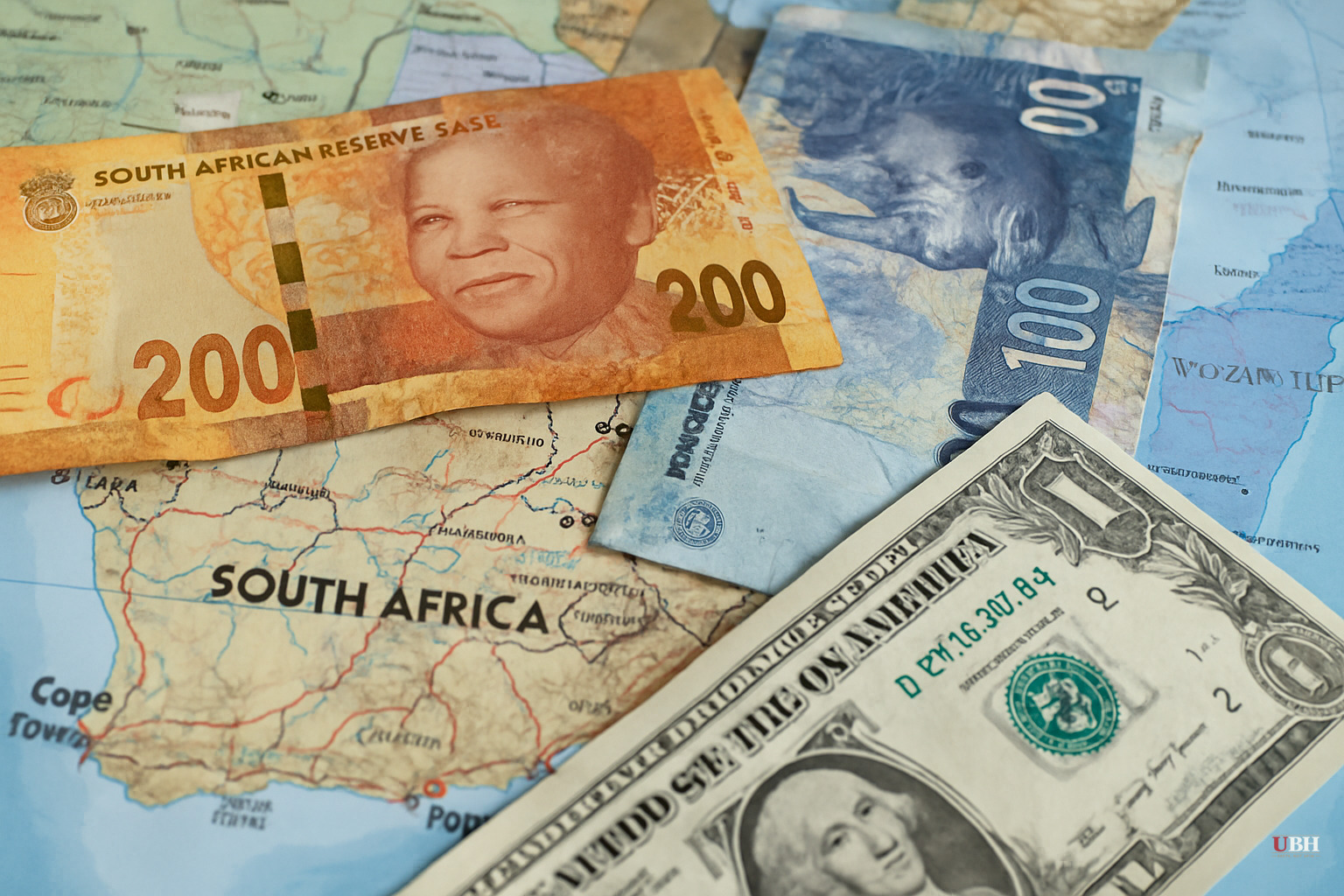
In November 2023, South Africa's National Treasury did something no African sovereign had done before: it issued a Rand-denominated Al-Ijarah Sukuk — an Islamic trust certificate structure — raising ZAR 20.386 billion through the domestic capital markets.
The transaction, announced by National Treasury via its official press release, was 1.74 times oversubscribed. Thirteen unique bidders participated, pulling in total bids of ZAR 35.517 billion against ZAR 20.386 billion allocated across four tranches.
What Was Actually Sold
The four tranches ranged from 5.3-year to 12.3-year maturities. Fixed profit rates — the Islamic equivalent of coupon rates — ran from 9.87% on the shortest tranche (RS2029) to 11.90% on the longest (RS2036). All certificates were listed on the Interest Rate Market of the Johannesburg Stock Exchange.
Joint lead managers were Rand Merchant Bank (a division of FirstRand Bank Limited), BNP Paribas S.A. acting through its Bahrain Conventional Wholesale Bank Branch, and The Standard Bank of South Africa Limited. Their B-BBEE partners, THEZA Capital and Africa Rising Capital, were included in the mandate.
The buyer pool included South African banks, large Islamic funds, and Islamic banks. These investor types cannot hold conventional interest-bearing debt under Shari'ah principles, representing genuinely new demand rather than reshuffling of existing bondholders.
Why Treasury Did This
National Treasury had flagged this in the 2021 budget. South Africa's funding mix had been almost entirely fixed-rate bonds, inflation-linked bonds, and floating-rate notes. Adding a Sukuk structure pulls in Islamic capital pools that were previously locked out of RSA sovereign debt by religious constraints.
It took nearly two years of legal, structural, and regulatory work to get there. The vehicle — The RSA Domestic Sukuk Trustee (RF) Proprietary Limited, as trustee of The RSA Domestic Sukuk Trust — is a purpose-built South African entity, registered locally and listed domestically. This is a rand-denominated deal listed in Johannesburg and governed under South African law, not an offshore dollar-denominated transaction.
For sovereign debt management, this reduces foreign-exchange risk on the liability side. Whether that advantage holds depends heavily on where the rand itself trades.
The Rand Side of the Equation
As of July 1, 2026, the currency situation is less comfortable. According to MarketForces Africa, the rand is trading softer against major crosses, with the dollar fetching R16.52, the euro at R18.79, and the pound at R21.79, citing a brief from First National Bank.
The pressure comes from multiple directions. U.S. first-quarter 2026 GDP growth came in stronger than expected, reducing the case for Federal Reserve rate cuts and keeping the dollar broadly bid. A hotter-than-expected May Producer Price Index reading compounded that picture.
Domestically, South Africa's consumer price index rose to 4.5% in May, and the South African Reserve Bank responded with a 25-basis-point rate hike. MarketForces Africa notes that the May PPI print complicated the SARB's rate path further.
Brent crude, trading just below $74 a barrel as of the MarketForces Africa report, is heading for a weekly loss as tanker transits through the Strait of Hormuz recover following an interim U.S.-Iran deal. That easing of oil costs improves South Africa's inflation outlook somewhat. A Singapore-flagged container ship struck by an unidentified projectile in the Strait on Thursday reintroduced uncertainty, but the broader crude trend is downward.
Gold, a critical South African export and a traditional rand-support mechanism, is trading around $4,138.21 and is on track for a fourth consecutive weekly decline. The stronger dollar, rising real yields on sticky U.S. inflation, and investor liquidations to cover losses in an Asian tech-led equity rout are all pressing gold lower simultaneously.
The Opposing Concern
Critics of South Africa's debt diversification push make a legitimate point: adding new instrument types does not solve the underlying fiscal problem. South Africa carries a large and growing public debt load. Widening the investor base is useful only if the government can service what it borrows. When the rand weakens and domestic inflation rises, the real cost of high fixed profit rates — 9.87% to 11.90% — becomes a live budget question. A diversified creditor pool is a better position to be in than a concentrated one, but it is not a substitute for fiscal consolidation.
The Sukuk is rand-denominated, so South Africa pays in its own currency. Rand depreciation does not mechanically inflate the nominal debt-service cost the way a dollar-denominated bond would. The exchange-rate risk sits with the investor, not the government, on this instrument.
Where This Leaves Things
The November 2023 Sukuk issuance was a structurally sound piece of financial engineering that expanded South Africa's funding toolkit. It brought in investor classes that had never held RSA sovereign paper before, and it did so in the domestic currency.
The July 2026 macro picture — rand at R16.52 to the dollar, SARB hiking rates, gold sliding, and a strong U.S. dollar likely to persist as long as the Fed holds or hikes — tests whether that diversification delivers what Treasury promised: a more resilient funding base across different market conditions.
The open question is whether the SARB's rate path, increasingly influenced by Fed decisions it cannot control, will stabilize the rand enough to keep domestic borrowing costs from rising further before South Africa's next scheduled domestic bond auction.
Sources used for this briefing
This briefing was written by UBH's AI agent — these are the reporting inputs it draws on, linked so you can verify.


