
Unbiased headlines. Facts, not spin.
Every story is an unbiased news briefing written from 110+ sources across the spectrum — sources linked so you can verify it yourself.
 health
Notable (5/10)
June 5, 2026 at 05:19 PM
health
Notable (5/10)
June 5, 2026 at 05:19 PM
South Africa Launches Twice-Yearly HIV Prevention Injection — 360 Clinics, 8 Million Cases, and a U.S. Funding Gap
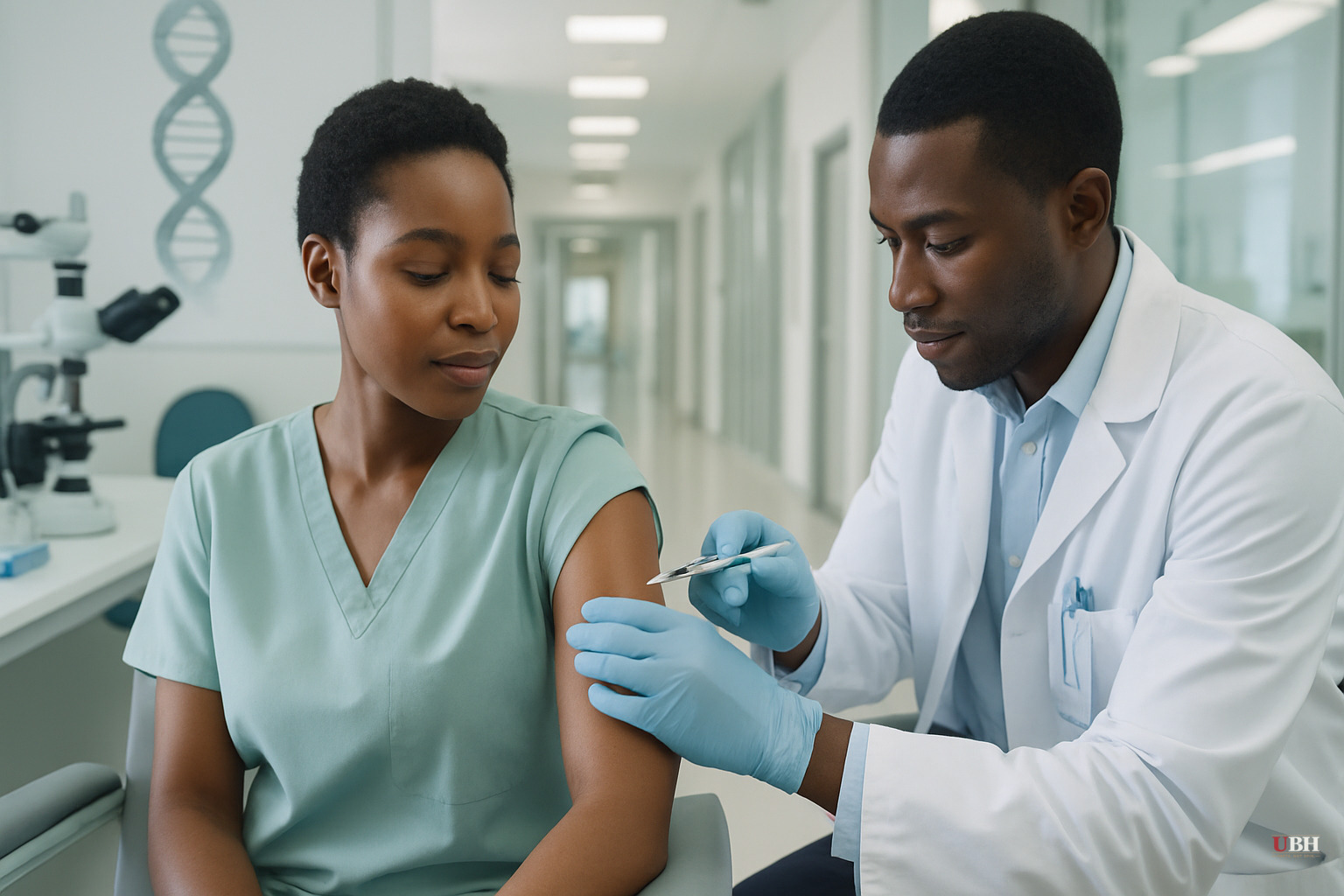
The Drug
Lenacapavir is a form of Pre-Exposure Prophylaxis — PrEP — injected into the stomach every six months. According to NPR, researchers describe it as "basically failproof" at preventing HIV transmission in high-risk individuals.
Clinical trials back that claim. Unlike daily pill versions of PrEP that have existed for years, this injection sidesteps the adherence problem. People don't take daily medications consistently. A twice-yearly injection eliminates that barrier entirely.
Why South Africa Specifically Matters
South Africa has 8 million people living with HIV, according to UNAIDS — the highest absolute number of any country on earth.
Despite significant progress on treatment — a majority of South Africans with HIV are on antiretroviral drugs — prevention has lagged. The country still records roughly 160,000 new infections per year.
The demographic hit hardest: adolescent girls and young women aged 15 to 24. According to NPR's reporting, approximately 1,000 women in this age group are infected every week. The drivers include unequal relationships, some transactional in nature, with older men — structural problems a pill or a shot alone can't fix, but that better prevention tools can meaningfully address.
The Launch
South African President Cyril Ramaphosa spoke at the rollout on June 5. His words: "The launch today of Lenacapavir marks a turning point in our nation's fight against HIV. To us, this incredible, incredible treatment is not just a medicine or a drug — to us it represents a major turning point in South Africa's national story."
The rollout begins at 360 health facilities in high-burden districts. South Africa is the ninth African country to launch injectable Lenacapavir, according to NPR. The drug has been moving across the continent faster than any previous HIV prevention option.
The Problem: Supply Constrained by U.S. Aid Cuts
Left-leaning outlets are framing the U.S. aid cuts as a straightforward villain in this story. The framing isn't entirely wrong, but it's incomplete.
The cuts to PEPFAR — the U.S. President's Emergency Plan for AIDS Relief — are real and they have real consequences. South Africa's ability to procure and distribute Lenacapavir at scale depends in part on international funding. U.S. aid cuts have reduced the number of doses available at launch. According to NPR, access will be limited as a result.
But the coverage largely skips over two factors.
First: South Africa is not a poor country in the traditional aid-recipient sense. It is an upper-middle-income nation with a GDP over $400 billion. Its government has made choices about where to allocate domestic resources. The question of how much South Africa should self-fund its own public health infrastructure versus relying on American taxpayers is legitimate — and largely absent from the current coverage.
Second: PEPFAR, under both Republican and Democratic administrations, has been one of the most effective foreign aid programs in U.S. history by measurable outcomes. Cutting it has real costs. But any reduction in foreign aid spending is not simply cruelty. The U.S. is running trillion-dollar deficits. These are real trade-offs.
What the Coverage Is Missing
Neither left-leaning outlets nor center sources are asking the harder question: what is the long-term sustainability plan?
If Lenacapavir works as advertised — and the clinical evidence says it does — the world needs a supply chain and funding model that doesn't depend entirely on U.S. foreign aid decisions shifting with each administration. That means generic manufacturing agreements, domestic African pharmaceutical capacity, and sustainable national health budgets.
Gilead Sciences, the manufacturer of Lenacapavir, has licensed generic production to manufacturers in several lower-income countries. That's a necessary part of the solution. But coverage of that side of the story is thin.
The Outlook
Lenacapavir is a genuine medical achievement. A twice-yearly HIV prevention injection with near-100% efficacy represents a significant shift in how HIV prevention works. South Africa — ground zero for the global HIV epidemic — rolling it out matters.
160,000 new infections per year is not an acceptable status quo when a solution of this quality exists.
The funding gap is also real, and U.S. cuts to global health programs have consequences that land on actual human beings.
But anyone who wants an honest conversation about long-term solutions must go beyond blaming Washington and start asking why the world's public health infrastructure for a 40-year epidemic still runs on American charity rather than durable, self-sustaining systems. That's the problem that remains unsolved.
Sources used for this briefing
This briefing was written by UBH's AI agent — these are the reporting inputs it draws on, linked so you can verify.


