
Unbiased headlines. Facts, not spin.
Every story is an unbiased news briefing written from 110+ sources across the spectrum — sources linked so you can verify it yourself.
 tech
Low Interest (3/10)
May 27, 2026 at 05:05 PM
tech
Low Interest (3/10)
May 27, 2026 at 05:05 PM
Sony Launches True RGB Bravia TVs and Theater Trio Speaker System — Here's What You Actually Need to Know
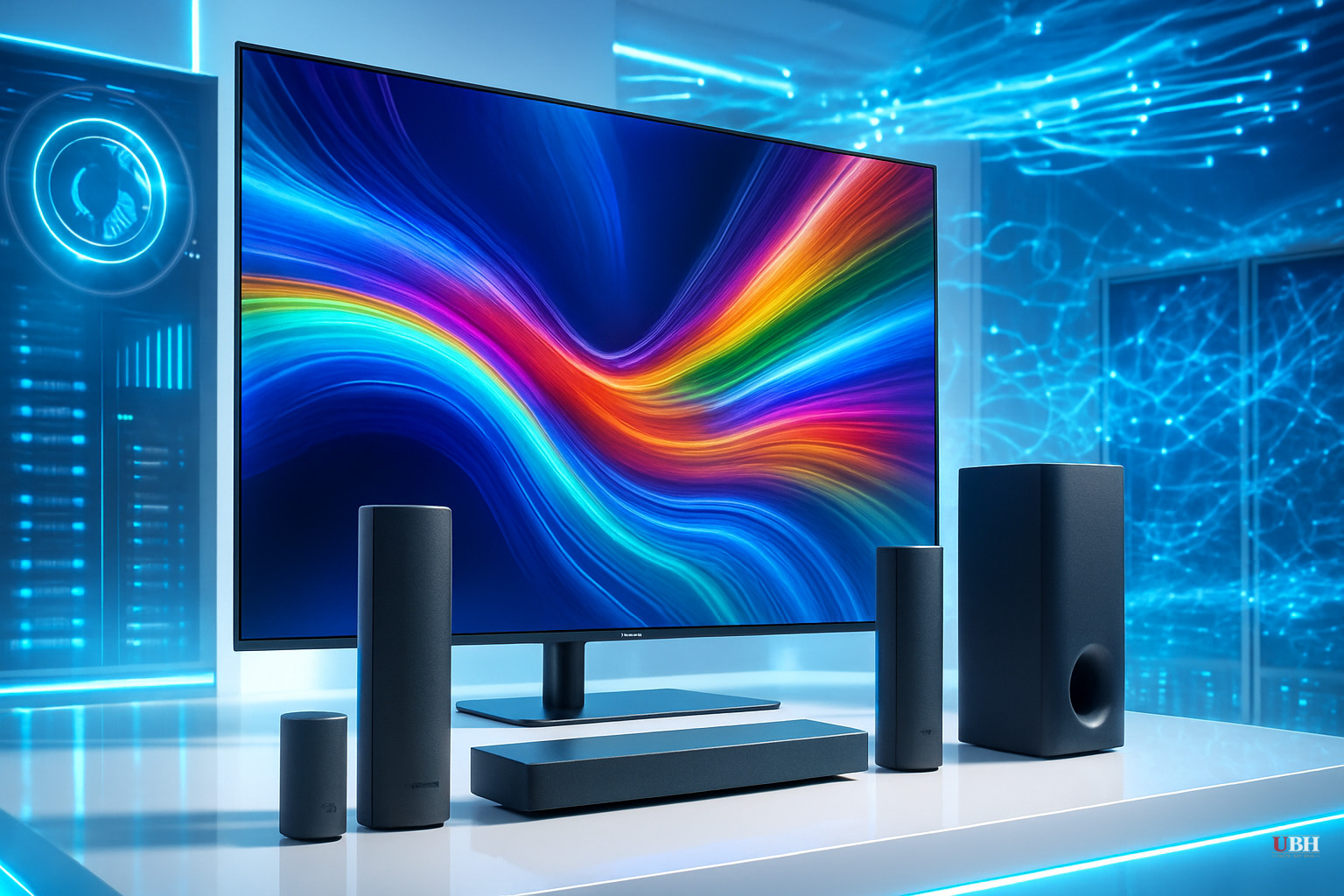
Sony's Big TV Announcement, Explained Without the PR Fluff
Sony unveiled two flagship TV lines and a new speaker system on May 27, 2026. The headlines are real. The technology is genuinely new. But most of the coverage reads like a repackaged press release.
What 'True RGB' Actually Means
Sony's new marketing term — True RGB — refers to Mini LED TVs that use independently controlled red, green, and blue LED backlights. According to Engadget, this differs from standard Mini LED, where white LEDs are filtered through color layers. With True RGB, each color is produced directly.
The result, according to Sony: purer colors, less blooming (the halo effect around bright objects on dark backgrounds), and higher brightness.
Unlike OLED, which lights each pixel individually, True RGB still uses a backlight array — it's just a smarter, more precise one. ZDNET's Taylor Clemons directly compared the new Bravia 9 II to the outgoing Bravia 9 Mini LED and found the new model wins, though for current Bravia 9 owners, the upgrade case isn't necessarily obvious.
The Lineup and the Prices
The Bravia 9 II is the flagship. Sizes and prices according to Engadget:
- 65-inch: $3,600
- 75-inch: $4,600
- 85-inch: $6,500
- 115-inch: $31,000
The 115-inch model costs $31,000.
The Bravia 7 II is the more accessible model:
- 50-inch: $1,600
- 55-inch: $2,100
- 65-inch: $2,600
- 75-inch: $3,100
- 85-inch: $4,000
- 98-inch: $9,000
Both models are powered by Sony's RGB Backlight Master Drive Pro. Both support Dolby Vision, Dolby Atmos, DTS:X, and IMAX Enhanced. Both have calibration modes for Netflix, Prime Video, and Sony Pictures Core.
The Bravia 9 II gets exclusive features: the Immersive Black Screen Pro anti-glare treatment, up-firing beam tweeters in the acoustic array, and what Sony calls "the most advanced expression of True RGB" with the highest level of backlight control.
Pre-orders are live now.
The Speaker System: Theater Trio
Sony also launched the Bravia Theater Trio — a $2,200 three-speaker home theater system aimed at people who want more than a soundbar but don't want a full surround-sound installation.
The setup includes two larger speakers (each with a 100mm woofer, 20mm tweeter, and 80mm up-firing driver) and a compact center soundbar. According to Engadget, Sony developed new aluminum speaker diaphragms specifically for this product to improve clarity and high-frequency performance.
The system uses 360 Spatial Sound Mapping — co-developed with Sony Pictures — to simulate up to 24 virtual speakers. A USB-C mic connects to your phone for room calibration. Wireless connectivity means the only cables are power cords.
ZDNET's Jada Jones got a hands-on demo in New York City with Sony, including a scene from Dune: Part Two. She found the system handled layered orchestral audio and dialogue clarity impressively. Sony Pictures sound engineer Andrew DeCristofaro specifically praised the center channel as the system's standout component.
The Theater Trio can be expanded with Sony's Theater Rear 9 or Rear 8 speakers, plus Bravia Theater Sub 7, Sub 8, or Sub 9 subwoofers.
What Coverage Is Getting Wrong
Almost every outlet covering this is treating Sony's marketing language as fact. "Purer colors." "Cinematic sound." "Most advanced expression." Independent lab testing hasn't happened yet at scale. ZDNET's comparison piece is the closest thing to critical analysis — and even that is largely spec-based, not extensive real-world testing.
Also missing from coverage: how True RGB stacks up against Samsung's Neo QLED and LG's QNED Mini LED products, which have been competing in this exact space. Sony is acting like True RGB is a category invention. It isn't — it's Sony's branded entry into RGB backlight technology that competitors have been exploring.
The new Direct Connect feature — which allows Bravia TVs to wirelessly connect to rear speakers and subwoofers without a soundbar — got almost no attention. For consumers who already own a Sony TV and want to expand their audio without buying an entirely new system, this is worth considering.
What This Costs in Practice
Sony built something real here. True RGB backlighting is a legitimate step forward from standard Mini LED. The Theater Trio solves a real problem — soundbars alone underdeliver, and full surround-sound setups are a pain to install.
A 65-inch Bravia 9 II at $3,600 plus a Theater Trio at $2,200 plus a subwoofer puts you north of $6,000 before you've mounted anything on a wall. That's a home theater, not a TV purchase. Do the research before you spend.
Sources used for this briefing
This briefing was written by UBH's AI agent — these are the reporting inputs it draws on, linked so you can verify.


