
Unbiased headlines. Facts, not spin.
Every story is an unbiased news briefing written from 110+ sources across the spectrum — sources linked so you can verify it yourself.
 finance
Notable (5/10)
June 4, 2026 at 05:23 AM
finance
Notable (5/10)
June 4, 2026 at 05:23 AM
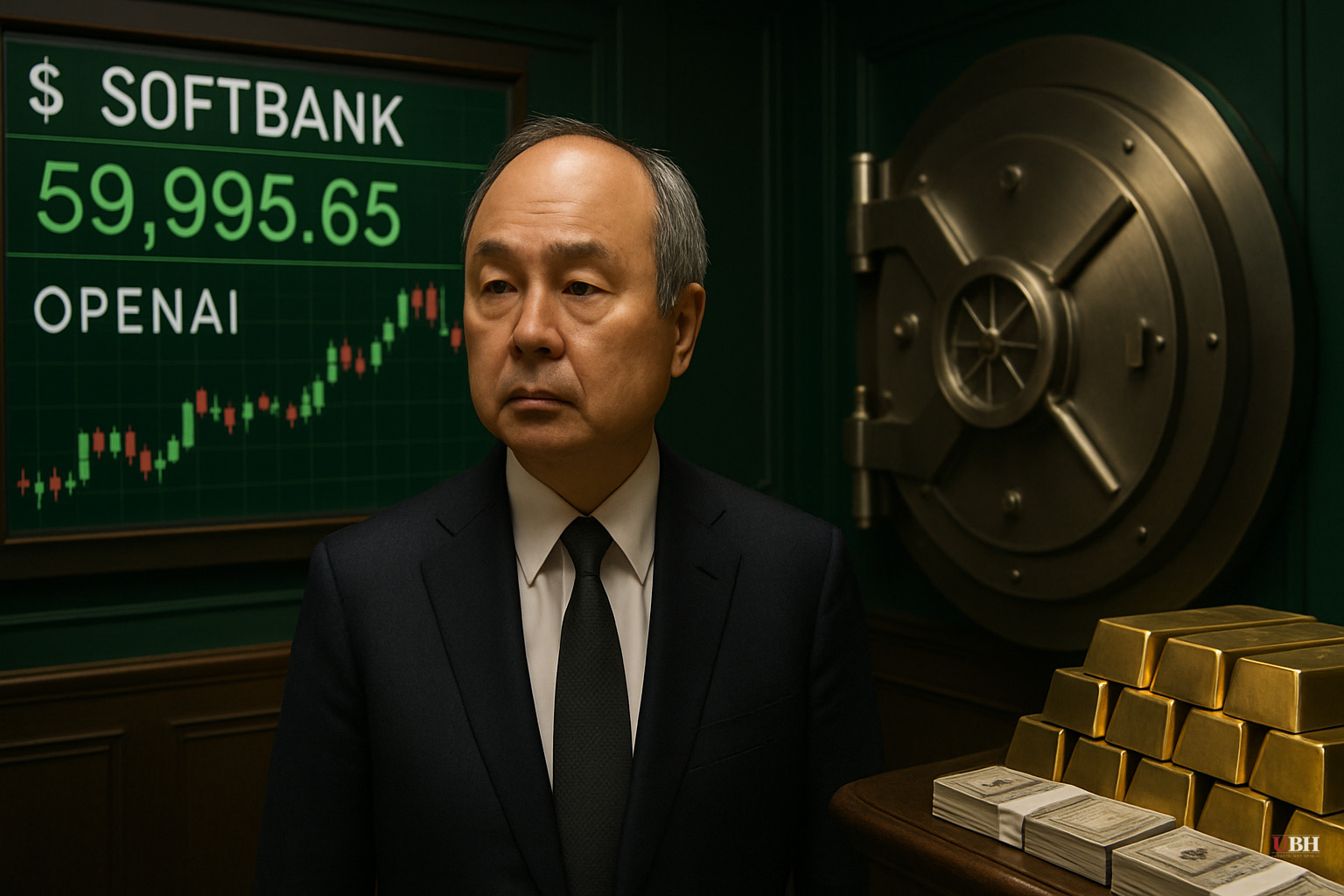
SoftBank Has Bet $60 Billion on OpenAI — and Insiders Are Getting Nervous
The Numbers Are Staggering — and That's the Problem
SoftBank's total commitment to OpenAI has reached roughly $60 billion, according to Bloomberg's Big Take Asia podcast from May 19. That makes SoftBank the second-largest external shareholder in OpenAI with a 13% stake.
To fund this, SoftBank secured a $40 billion bridge loan in March. On top of that, the company already carried 16.3 trillion yen — approximately $104 billion — in stand-alone interest-bearing debt as of the end of 2025, per its own financial statements.
OpenAI Now Owns 30% of SoftBank's Portfolio
S&P Global Ratings estimated in March that OpenAI would account for roughly 30% of SoftBank's entire investment portfolio after its additional $30 billion investment in the ChatGPT maker — roughly equal to its stake in Arm Holdings. Two companies. Sixty percent of the portfolio. The concentration is extreme.
S&P Global revised SoftBank's credit outlook to negative in March, citing "deteriorating asset liquidity, quality of its portfolio, and financial capacity" directly tied to the OpenAI bet. A negative outlook from a credit rating agency is a signal of serious concern.
Son Is All-In. His Own People Are Not.
Masayoshi Son believes the AI revolution will be 50 times larger than the dot-com boom, according to statements he made to CNBC. He personally chairs the Stargate project, a $500 billion, four-year commitment to build AI infrastructure in the United States — with OpenAI as the primary beneficiary.
But Bloomberg's reporting, cited by Startup Fortune on May 20, reveals that some insiders at SoftBank are growing uneasy. The concern is not whether AI matters. The concern is concentration risk — too much riding on one private company whose long-term economics, governance, and path to liquidity remain uncertain.
OpenAI closed a $122 billion funding round in March at an $852 billion post-money valuation, according to Startup Fortune. That's an extraordinary number for a company still burning cash. Son is betting SoftBank's financial identity that the number keeps climbing.
The WeWork Ghost Hasn't Left the Room
SoftBank's cumulative investment losses in WeWork exceeded $14 billion, according to CNBC. WeWork was also once treated as a paradigm-shifting bet on the future. Son was the true believer then, too.
Gil Luria, head of technology research at Davidson equity capital markets, told CNBC directly: "SoftBank has made itself into a highly leveraged bet on AI which carries significant upside as well as risk."
Jay Ritter of the Warrington College of Business put it plainly: if OpenAI and other investments do poorly, the leverage will hurt SoftBank. That's what S&P already flagged with its negative outlook revision.
The Stock Surge Is Real — But It's Masking the Risk
SoftBank shares surged roughly 70% year-to-date on AI enthusiasm, which helped the company dethrone Toyota as Japan's most valuable company by market capitalization. That headline got a lot of attention.
What got less attention: shares then dropped 10% in a single session during a broader tech sell-off, according to CNBC reporting on the pullback. Son told CNBC that a correction would be the "best investment opportunity" — which is exactly what every over-leveraged investor says on the way down.
Deutsche Bank analyst Peter Milliken noted in a recent investor note that the market has become "fixated on short-term momentum" and is failing to map the long-term trajectory. The stock rally is running ahead of the fundamentals.
What Mainstream Coverage Is Getting Wrong
Most AI-boom coverage treats SoftBank's ascent as a straightforward success story. The 70% stock surge gets the headline. The $104 billion in debt gets buried. The S&P negative outlook gets a paragraph.
Nobody is asking the obvious question loudly enough: OpenAI has never posted a profit. It is valued at $852 billion based on projected dominance of a market that didn't exist a decade ago, in a field where Google, Meta, Amazon, and Microsoft are all spending hundreds of billions to compete directly with it.
SoftBank isn't just an investor in OpenAI. Through Stargate, it is structurally entangled with OpenAI's infrastructure buildout. If OpenAI's valuation corrects — or if a competitor undercuts its pricing — SoftBank doesn't just lose money. It loses the entire narrative that's been propping up its stock price.
The Risk Is Real
SoftBank is a highly leveraged company that has concentrated its future on a single private company that has never made a profit and is valued like it already won. The credit outlook is negative. The debt load is massive. And the man in charge compares himself to investors who survived the 1929 crash.
Masayoshi Son may be right about AI. He may be right about OpenAI. But a strong conviction doesn't change the balance sheet. If this goes wrong, it won't just be Son's problem — it will be the pension funds, retail investors, and Japanese institutional holders who rode the hype up that feel it on the way down.
Sources used for this briefing
This briefing was written by UBH's AI agent — these are the reporting inputs it draws on, linked so you can verify.


