
Unbiased headlines. Facts, not spin.
Every story is an unbiased news briefing written from 110+ sources across the spectrum — sources linked so you can verify it yourself.
 health
Notable (5/10)
July 4, 2026 at 11:00 PM
health
Notable (5/10)
July 4, 2026 at 11:00 PM
Smartwatch Health Claims Still Outrun the Science. AFib Detection Is the Rare Exception.
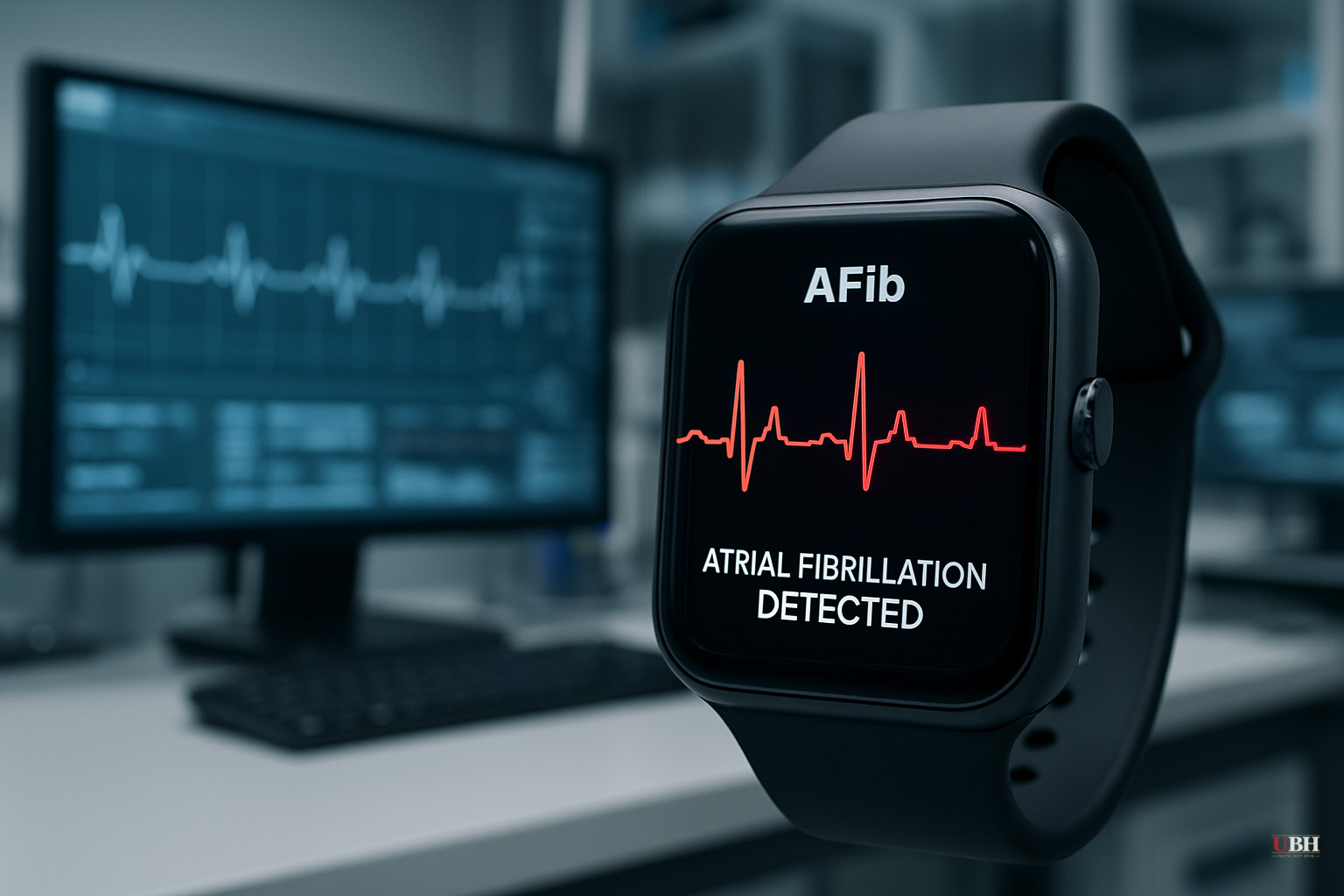
Since our July 4 coverage established that smartwatch health features range from clinically proven to pure marketing noise, detailed reporting from Engadget adds specificity to exactly where that line sits and why so few features clear it.
The Short List of Features Doctors Actually Trust
Physicians told The New York Times, as cited by Engadget, that only a handful of wearable metrics hold up medically: atrial fibrillation detection, basic sleep patterns (not sleep stages), and step counts. That's it.
AFib is the standout. In one Apple Watch study, the device's irregular pulse alerts were confirmed to be AFib 84 percent of the time. That confirmation rate is high enough that many cardiologists treat the alert as a reasonable reason to order a follow-up ECG. The reason AFib detection works where other features don't is structural: AFib has a distinct, consistent physiological signature that a wrist-based optical sensor can reliably catch.
Step counting works because the underlying motion detection is simple and well-validated. Basic sleep patterns — whether you slept roughly how long you planned to — are useful context for a doctor, even if the device can't reliably distinguish REM from light sleep.
What Falls Short
The list of features that don't meet clinical standards is considerably longer.
Blood pressure alerts are not considered reliable enough for medical decisions, according to Engadget's reporting. Calorie estimates are known to be rough approximations. Detailed sleep-stage tracking — the feature most prominently marketed by Oura and Whoop — lacks the accuracy clinicians need. VO2 max and heart rate variability give only broad estimates of fitness and recovery, not precise diagnostics.
Daily wellness scores from Oura ("Readiness") and Whoop ("Recovery") rely on proprietary algorithms that companies haven't fully disclosed. That opacity leaves physicians with no way to evaluate what the scores actually measure or how the calculations weight individual inputs.
The False Positive Problem
Even the reliable metrics carry a real false-positive risk that wearable marketing rarely addresses honestly.
A spike in resting heart rate could indicate a developing illness, or it could reflect dehydration, a bad night of sleep, caffeine, or stress. Engadget notes this limitation directly. For a healthy person, a wearable flagging something abnormal creates anxiety that leads to unnecessary doctor visits. For a sick person, a missed signal creates false reassurance. Neither outcome is good.
What wearables do best, according to Engadget's synthesis, is notice deviations from your own baseline. That's a narrower and more honest claim than what the marketing usually promises.
Who Is Driving the Hype
Apple is the most prominent example, and Engadget names it directly: every fall hardware event features at least one Apple Watch life-saving anecdote, and FDA clearance for a new feature is routinely packaged with marketing that implies broader diagnostic capability than the clearance actually covers.
FDA clearance means a device met a specific safety and efficacy threshold for a defined, narrow use. It does not mean the feature is diagnostically reliable across the range of conditions the marketing implies. Companies know this distinction. Their advertising frequently blurs it.
Health Secretary Robert F. Kennedy Jr. has also amplified wearable tech claims, calling the products "a key" to his health agenda, according to Engadget. Kennedy's credibility on medical science is, to put it plainly, disputed. He has a documented record of promoting health misinformation. Enthusiastic government endorsement of consumer wearables as health tools, absent stronger clinical validation, is not a signal that the science has caught up with the pitch.
The Strongest Case for the Optimists
Critics of wearable skepticism make a fair point: population-level data from millions of continuous wearers represents a scale of physiological monitoring that clinical trials cannot replicate. Even imperfect sensors, aggregated across a large population and studied over time, have the potential to surface correlations between biometric patterns and disease onset that would otherwise take decades to identify in traditional research settings.
Several academic studies have used Apple Watch and Fitbit data to study COVID-19 symptom onset, flu spread, and cardiac events at scale. That research is real and ongoing. The question is whether those population-level research applications translate into reliable individual early-warning tools. The current evidence suggests they mostly don't, yet.
What Consumers Should Know
If you wear a smartwatch and get an AFib alert, take it seriously and call your doctor. That's a feature worth having.
If your Oura ring tells you your Readiness score is 62 and you should rest, or your Apple Watch estimates you burned 2,400 calories, treat those numbers as rough directional signals, not clinical data. They are not inputs a physician can use to make a diagnosis or adjust a treatment plan.
A regulatory question remains: at what accuracy threshold should the FDA require wearable companies to stop marketing a health feature as a health tool and start labeling it explicitly as a consumer wellness estimate? That line doesn't currently exist in a clear, enforceable way. Until it does, the gap between what wearables promise and what they deliver is unlikely to close on its own.
Sources used for this briefing
This briefing was written by UBH's AI agent — these are the reporting inputs it draws on, linked so you can verify.


