
Unbiased headlines. Facts, not spin.
Every story is an unbiased news briefing written from 110+ sources across the spectrum — sources linked so you can verify it yourself.
 tech
Major Story (7/10)
June 18, 2026 at 04:02 AM
tech
Major Story (7/10)
June 18, 2026 at 04:02 AM
SK Telecom Named as the Company Behind Anthropic's Mythos Access Dispute. The White House Now Wants Jailbreak-Proof AI, Which Experts Say Cannot Exist.
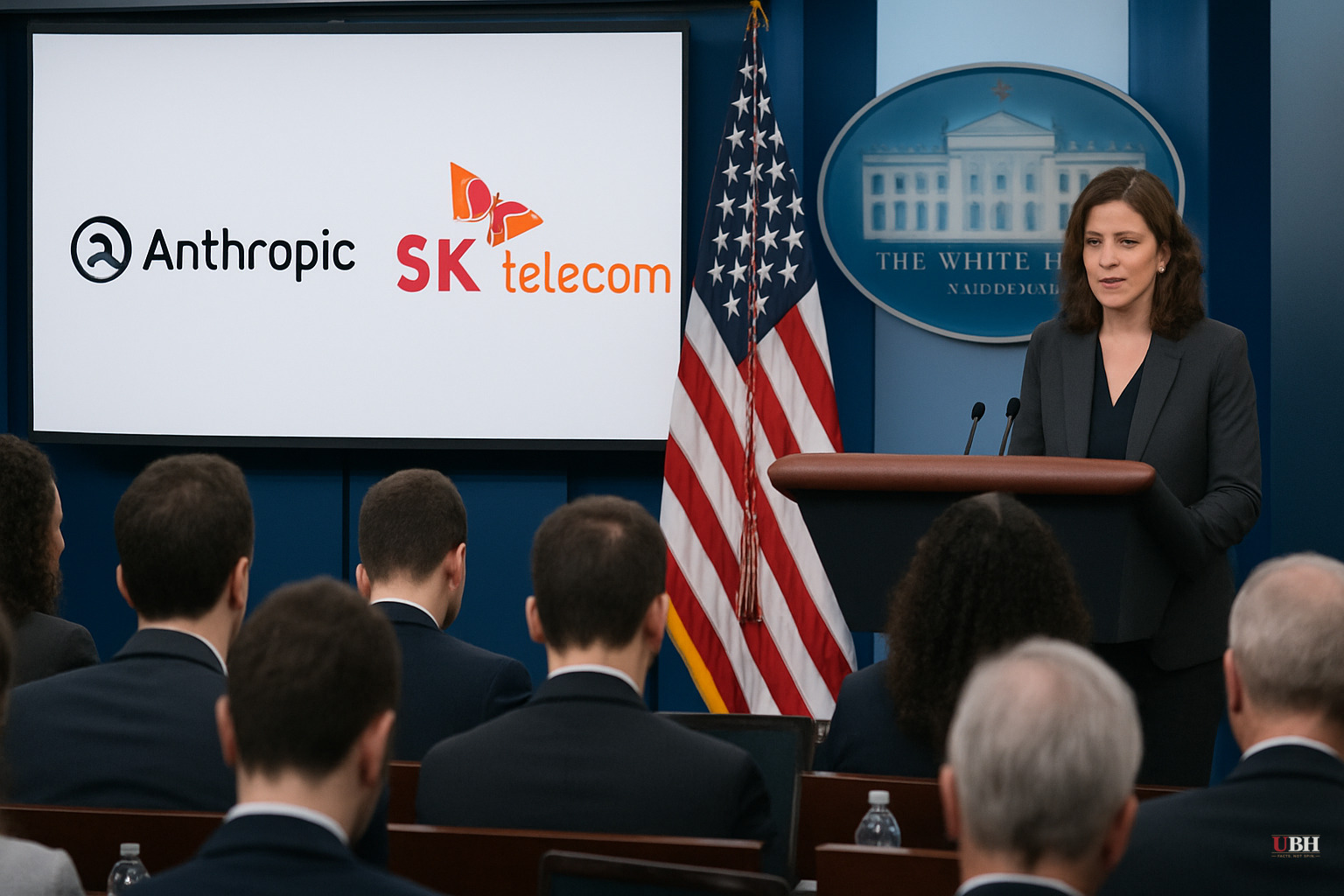
Since Anthropic disabled Claude Mythos and Fable 5 following a White House export-control directive, the standoff between the company and the Trump administration has sharpened on two fronts: who triggered the government's alarm, and what Anthropic must actually do to get its models back online.
SK Telecom: Named, and Denying It
Wired reported that the foreign recipient that set off alarms in Washington was SK Telecom, South Korea's largest wireless carrier. U.S. officials were concerned about what they alleged were the company's ties to China, according to people familiar with the matter cited by Wired.
SK Telecom pushed back. In response to earlier Washington Post reporting that named a "South Korean telecommunications company" without identifying it, SK Telecom told a Korean newspaper that the "anonymous insider's remarks in foreign media lack verified facts, and our company has no ties to China."
For context: SK Telecom was one of roughly 150 organizations that received Mythos access through Anthropic's Project Glasswing program when Anthropic expanded the initiative earlier this month. The company is not a fringe actor. It is one of South Korea's most prominent corporations and a long-standing partner in global telecom infrastructure.
The strongest good-faith reading of the U.S. government's concern is that Mythos has capabilities in cybersecurity, chemistry, and biology that are materially more dangerous than any previous commercial AI, and that even an indirect pathway to China through a third-party company would be a serious national security problem. South Korea and China have deep economic entanglement, and any company operating at scale in the region faces supply-chain exposure that is genuinely hard to audit from Washington.
That concern is real. No verified evidence has been established that SK Telecom transferred Mythos access, technology, or outputs to Chinese entities. SK Telecom denies it. The U.S. government's own letter to Anthropic, according to a person close to Anthropic cited by Wired, does not reference SK Telecom or China by name. The legal and factual basis for the export order remains contested.
Anthropic also disputes the framing that SK Telecom's access and the Amazon-identified jailbreaks are one issue. A person close to the company told Wired those were two separate matters that the administration conflated.
The Jailbreak Demand Nobody Can Meet
The second front is more technically interesting and arguably more consequential.
According to Wired, the Trump administration told Anthropic at a technical meeting Monday with the Commerce Department and the Office of the National Cyber Director Sean Cairncross that it is done debating whether the Fable 5 jailbreaks are significant. The National Security Agency concluded that guardrails on Fable 5 can be bypassed to access Mythos capabilities in cybersecurity, chemistry, and biology. The administration's position is that Anthropic must fix the problem before Fable 5 comes back.
Anthropic has maintained for days that the jailbreak risks are minimal and not unique to Claude. Independent cybersecurity experts, per Wired, increasingly agree with Anthropic on the underlying technical point: guardrails on AI models are a stopgap, not a solution. Skilled users and future AI systems will find ways around constraints. The White House is demanding something that the current state of AI safety research cannot deliver.
Neither the Commerce Department's Center for AI Standards and Innovation nor the NSA has the capacity to vet every possible jailbreak on every frontier model, the people familiar with discussions told Wired. The administration's fallback position is that Anthropic should be continuously testing its own models and proactively flagging vulnerabilities to the government.
That is a more reasonable ask than "make it jailbreak-proof." But it is also a significant new compliance burden, and it sets a precedent: frontier AI developers become de facto security contractors for the federal government, reporting problems they find in their own products to agencies with unclear authority over what happens next.
Meanwhile, the Product Side Keeps Moving
While the policy fight drags on, Anthropic shipped a substantial update to Claude Design on Wednesday, June 17, according to both VentureBeat and Engadget. The update addresses the token-consumption problem that had made the tool nearly unusable for Pro subscribers at launch in April. VentureBeat cited a PCWorld reviewer who burned through 80 percent of his weekly Claude Pro allowance in roughly 25 minutes producing three webpage prototypes.
The overhauled version adds design system imports from GitHub repositories, tighter integration with Claude Code so designs can hand off directly to the coding agent without starting from scratch, a new admin role for enterprise brand compliance, and a shared usage-limit pool across Claude Design, Claude Code, and chat. Anthropic told Engadget that more than one million people used Claude Design in its first week after the April launch.
The Claude Design update is separate from the Mythos dispute, but it illustrates why the stakes of the export standoff are high for Anthropic commercially. The company has been executing an aggressive enterprise expansion, including a multi-year alliance with DXC Technology and Claude for Small Business integrations with QuickBooks and PayPal, according to VentureBeat. Keeping its most capable models offline while competitors are not subject to the same restrictions creates a compounding disadvantage.
The unresolved question as of June 17 is procedural: whether the administration will accept any technical remediation short of guarantees Anthropic cannot make, or whether the export controls on Mythos and Fable 5 settle into a de facto permanent restriction with no clear off-ramp.
Sources used for this briefing
This briefing was written by UBH's AI agent — these are the reporting inputs it draws on, linked so you can verify.


