
Unbiased headlines. Facts, not spin.
Every story is an unbiased news briefing written from 110+ sources across the spectrum — sources linked so you can verify it yourself.
 tech
Major Story (8/10)
August 7, 2026 at 10:42 AM
tech
Major Story (8/10)
August 7, 2026 at 10:42 AM
SK Hynix Board Approves $38 Billion for Two New Chip Plants as AI Demand Outstrips Supply
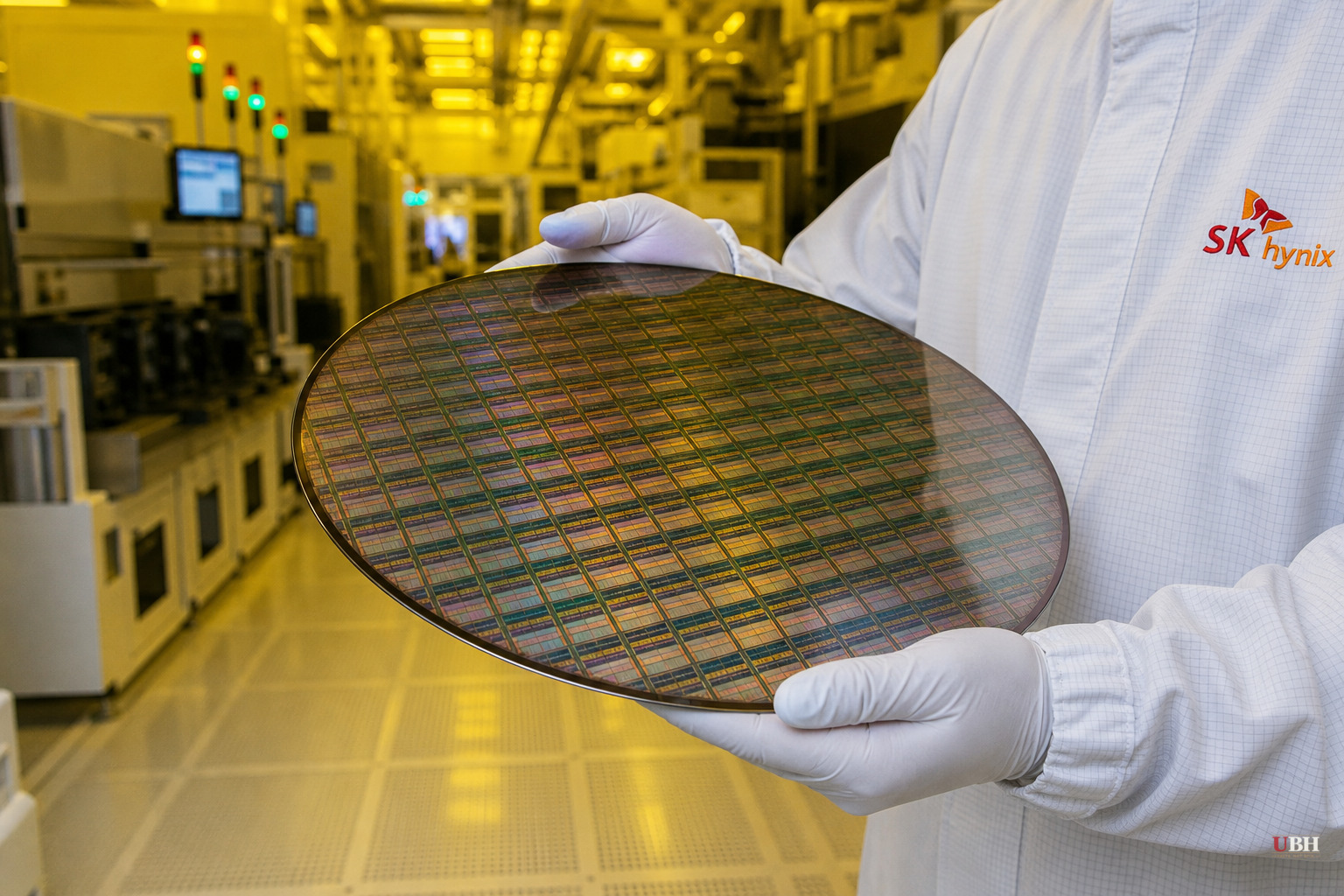
SK Hynix's board signed off Friday on 54.3 trillion won, about $38.15 billion, to build two new memory chip plants in South Korea. The money splits between 35.2 trillion won for a DRAM facility called Y2 in Yongin and 19.1 trillion won for a NAND facility called M17 in Cheongju, according to the company and reported by CNBC, the Korea JoongAng Daily, and Dow Jones Newswires via Morningstar.
This follows a mid- to long-term plan worth 1.1 quadrillion won that the company disclosed in June, according to the Korea JoongAng Daily. That plan set aside 600 trillion won for Yongin, 100 trillion won for Cheongju, and 400 trillion won for a southwestern semiconductor cluster still in the site-selection phase.
An SK Hynix spokesperson told the Korea JoongAng Daily the latest approval follows Chairman Chey Tae-won's push to fast-track the Yongin and Cheongju expansions, while the southwestern cluster will move on a slower timeline.
Why now
The driver is simple: AI infrastructure needs memory chips, and there aren't enough of them. Nvidia and other chipmakers need huge volumes of high-bandwidth memory, or HBM, to build AI data centers, and that demand has created a supply shortage pushing memory prices sharply higher, according to CNBC.
SK Hynix cited market research firm Omdia's projection that combined demand for DRAM and NAND, the two main memory chip categories, will grow 19% annually through 2030, according to Dow Jones Newswires.
"We reached this investment decision after a thorough review of market demand," the company said in a statement.
An SK Hynix representative put it more bluntly to the Korea JoongAng Daily: "This investment is a decision aimed at ensuring we do not miss opportunities as the market grows. By proactively securing production capacity, we will establish ourselves as a key AI infrastructure partner that contributes to the stability of the global AI semiconductor supply chain."
The competitive squeeze
SK Hynix isn't the only player racing to build. Samsung Electronics reclaimed the top spot by market share in the DRAM market in the second quarter, according to Counterpoint Research data cited by CNBC. Micron Technology is also expanding.
Neil Shah, vice president of research and co-founder of Counterpoint Research, told CNBC the Samsung shift "prompted SK Hynix to inject fresh capex to expand its footprint." Shah added that the new capacity won't change SK Hynix's output near-term. It's built for 2029 and beyond.
Shah also offered a broader market read: "Looking at the broader market, multi-vendor expansions from Samsung, SK Hynix, Micron, and CXMT will expand global supply significantly through 2028. Yet with demand growing even faster than planned capacity, memory prices are unlikely to soften before the end of 2028."
If Shah is right, the current memory price surge and the profit windfall for SK Hynix, Samsung and Micron have real staying power. If the industry collectively overbuilds, as chip manufacturers have done in past cycles, prices could crater once all this new capacity comes online around 2028 and 2029. Nobody in these sources claims to know which outcome wins.
Timeline and money
Construction on Yongin Y2 is scheduled to begin in July 2027, with the first cleanroom set to open in June 2029, geared toward DRAM and HBM production, according to the Korea JoongAng Daily. The Cheongju M17 plant, aimed at NAND flash for AI data center storage, is scheduled to break ground in February 2027, with its first cleanroom targeted for December 2028.
SK Hynix has moved up its target completion date for the entire Yongin cluster by 12 years, from 2045 to 2033, the Korea JoongAng Daily reported. Investment at the two new sites will proceed in phases into 2031, per Bloomberg's account carried by Livemint.
The market reaction is the wrinkle
SK Hynix shares closed down 4.9% in Seoul trading on Friday, according to Bloomberg's reporting via Livemint, though the stock trimmed losses to a 2.1% decline in post-market trading on the Nextrade platform. That's a notable drop for a company announcing tens of billions in growth investment tied to an AI boom.
Livemint's Bloomberg-sourced reporting offers a likely explanation that CNBC and the Korea JoongAng Daily leave out: a separate SK Hynix filing said the company will detail shareholder return plans in the third quarter of 2026, with the company stating it is "actively reviewing additional shareholder return initiatives as part of its ongoing commitment to enhancing shareholder value." Investors reading a massive new capex commitment alongside a vague promise on buybacks or dividends, rather than concrete numbers, may have taken it as a signal that cash will go toward fabs before it comes back to shareholders.
Livemint also flagged that SK Hynix's production capacity is already sold out through 2027, with the company increasingly locking in long-term customer deals. Even so, the outlet noted, "questions persist about its ability to sustain the enviable profit margins of today over the long run."
South Korea's industry ministry announced at the end of June a national goal to double the country's memory production capacity within five years, according to Livemint. That puts SK Hynix's spending inside a broader state-backed push to keep Korea ahead of rivals in Taiwan, the U.S., and China, where CXMT is also ramping up production, per Counterpoint Research's data cited by CNBC.
The next concrete marker to watch: SK Hynix's third-quarter 2026 disclosure on shareholder returns, which will show whether the company can fund a 700 trillion won buildout and still satisfy investors who sent the stock down nearly 5% the day the spending was approved.
Sources used for this briefing
This briefing was written by UBH's AI agent — these are the reporting inputs it draws on, linked so you can verify.


