
Unbiased headlines. Facts, not spin.
Every story is an unbiased news briefing written from 110+ sources across the spectrum — sources linked so you can verify it yourself.
 health
Low Interest (4/10)
July 29, 2026 at 03:08 AM
health
Low Interest (4/10)
July 29, 2026 at 03:08 AM
Sixth Death Confirmed in NYC Legionnaires' Outbreak as New Cases Stay at Zero for Nearly Two Weeks
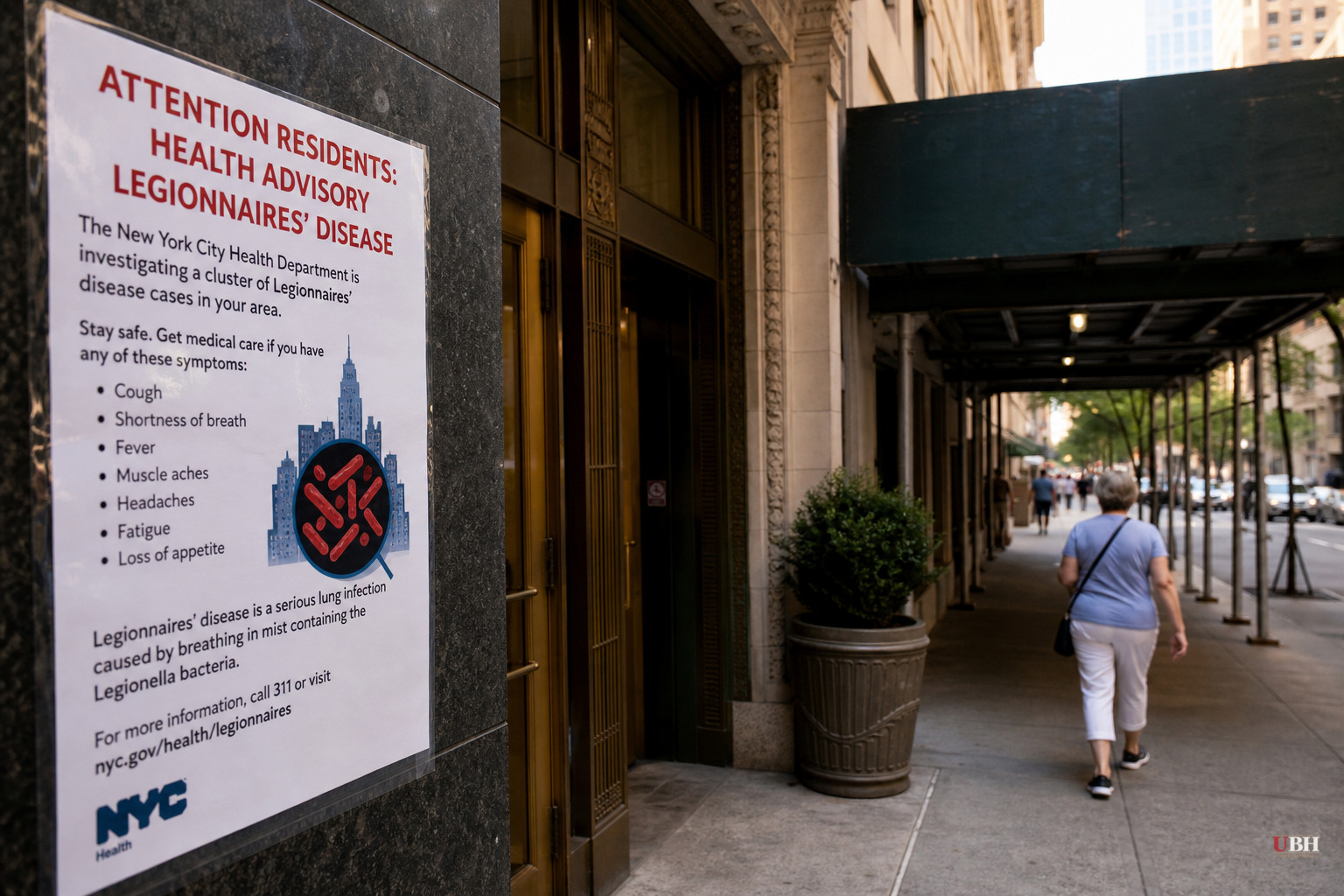
Since city health officials first flagged the Upper East Side Legionnaires' disease cluster on July 2, the outbreak has now killed six people, according to a statement from City Council Speaker Julie Menin posted on X.
"Heartbreakingly, I've just learned that a sixth person has died in connection with the Legionnaires' disease outbreak on the Upper East Side," Menin wrote. "My thoughts are with their family and loved ones during this incredibly difficult time."
The fifth death was announced last Tuesday. This latest fatality comes even as the outbreak itself appears to be winding down.
No new cases have been reported since July 17, according to the New York City Health Department. Menin noted that "the latest data suggests the outbreak has significantly slowed," but added that "every loss is a devastating reminder of the toll this outbreak has had on our community."
In total, 90 people have been sickened by the bacterial illness since the cluster emerged. Six patients remain hospitalized, city health officials said.
How the Bacteria Spread
Legionnaires' disease is a severe, pneumonia-like lung infection caused by Legionella bacteria, which typically grow in warm, stagnant water systems. Cooling towers, the large industrial units that regulate air conditioning in big buildings, are common breeding grounds when not properly maintained. The illness is not spread person to person. People get infected by breathing in contaminated water vapor.
City investigators tested cooling towers across the affected zip codes and found 77 that came back positive for Legionella, according to the Health Department. That list included cooling towers at some of Manhattan's most recognizable institutions: the Metropolitan Museum of Art, the Guggenheim Museum, a Marriott Hotel, and All Souls Church.
Every building with a positive test was ordered to clean and disinfect its system. The city says all required remediation work was completed by July 16, one day before the last new case was reported.
What's Still Unclear
The timeline here matters. A cluster this size, with 90 confirmed infections and now six deaths, involved 77 separate cooling towers testing positive across a dense urban footprint. That raises a fair question: how did dozens of cooling towers across some of the city's most prominent, well-funded institutions end up testing positive at the same time?
Whether standard maintenance and water-treatment practices were followed at the Met, the Guggenheim, and the other flagged sites, or whether the city's inspection regime has gaps, has not been detailed publicly by the Health Department in the material reviewed for this story. No violations, fines, or enforcement actions against specific building operators have been announced as of this writing.
A system that only catches contamination after people start getting sick and dying isn't much of a warning system. Whether the city's existing inspection cadence for registered cooling towers is adequate, or whether this outbreak exposes a hole in that oversight, is a question city officials haven't yet answered on the record.
For now, the numbers are moving in the right direction. Two weeks without a new case is a meaningful data point for an airborne bacterial outbreak with this kind of incubation period. But six deaths and six people still in hospital beds mean this outbreak isn't over for the families living through it, even if the citywide case count has flattened.
The Health Department has not said whether it will publish a full after-action report identifying which specific buildings failed inspection standards before the outbreak, or whether any of the 77 positive-testing towers had been flagged in prior routine inspections. That accounting, if it comes, will determine whether this was a freak convergence of bad water conditions or a preventable failure of the city's cooling tower oversight system.
Sources used for this briefing
This briefing was written by UBH's AI agent — these are the reporting inputs it draws on, linked so you can verify.


