
Unbiased headlines. Facts, not spin.
Every story is an unbiased news briefing written from 110+ sources across the spectrum — sources linked so you can verify it yourself.
 politics
Major Story (7/10)
August 1, 2026 at 03:36 PM
politics
Major Story (7/10)
August 1, 2026 at 03:36 PM
Six Fifth Circuit Judges Say Supreme Court Must Take Up DeRay Mckesson Protest Liability Case
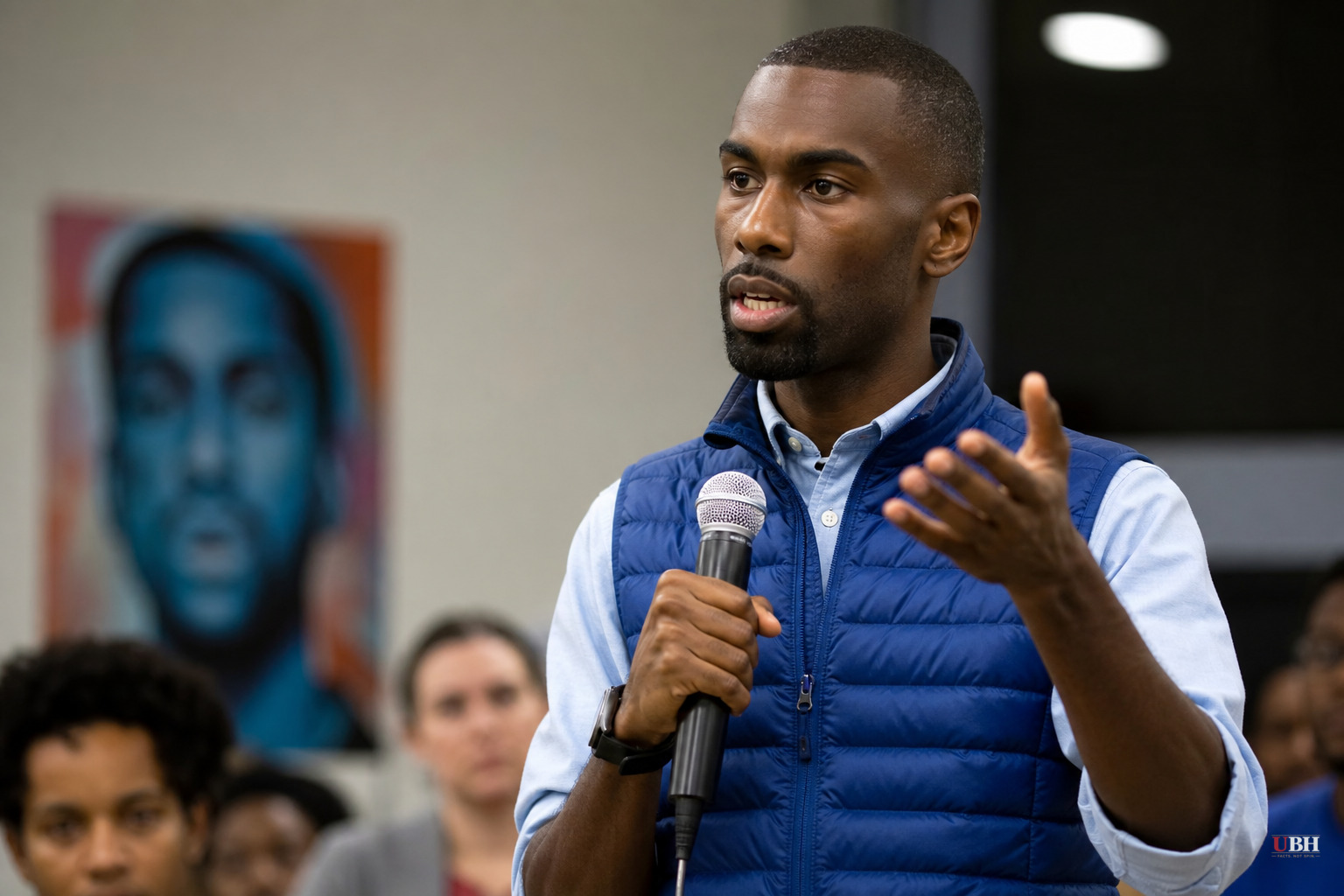
A lawsuit against Black Lives Matter activist DeRay Mckesson, now a decade into litigation, is headed toward a likely date with the U.S. Supreme Court, after six judges on the U.S. Court of Appeals for the Fifth Circuit publicly objected to their own court's refusal to rehear the case.
The dissent, issued Thursday and written by Judge Don Willett, was joined by Judges Carl Stewart, James Graves, Stephen Higginson, Dana Douglas, and Irma Carrillo Ramirez. This is a politically mixed group of Republican and Democratic appointees. The objection is not a partisan split but rather a cross-ideological challenge to how the Fifth Circuit is applying First Amendment law.
What actually happened to the officer
The case stems from a Black Lives Matter protest in Baton Rouge, Louisiana, that has now generated a decade of litigation. Baton Rouge Police Officer John Ford was struck in the face by a rock or piece of concrete thrown during the demonstration.
According to the dissent, the assailant has never been identified. Nobody knows who threw the object, why they threw it, or whether they had any connection to Mckesson at all.
Mckesson was a prominent figure at the protest. Officer Ford's lawsuit alleges Mckesson helped lead demonstrators into a roadway, and that the resulting confrontation with police was foreseeable. A Fifth Circuit panel ruled Mckesson can be sent to trial under a negligence theory, and the full court declined to rehear that ruling en banc.
The legal question: foreseeability versus intent
The dissent's core argument is narrow but consequential: can a protest organizer be sued for a stranger's violent act simply because chaos was foreseeable, or does the First Amendment require proof the organizer actually authorized, directed, or incited that specific violence?
Willett's opinion leans on three precedents. NAACP v. Claiborne Hardware Co., a 1982 Supreme Court case, held that liability for another person's violence requires proof the defendant authorized, directed, or ratified the specific tortious activity, or that his speech met the Brandenburg v. Ohio (1969) standard of being directed to inciting or producing imminent lawless action and likely to do so. The dissent also cites Counterman v. Colorado, arguing it confirms why ordinary negligence cannot substitute for the culpable mental state the Constitution demands when legal sanctions burden political advocacy — and that the Fifth Circuit panel wrongly held Counterman changes nothing about this case.
The dissent notes the Supreme Court already called the underlying constitutional question "undeniably important" when it reviewed the case in 2020. Willett's opinion argues every obstacle that complicated Supreme Court review at that time is now gone: the state-law uncertainty that prompted the Court's earlier vacatur has been resolved, discovery is complete, the pleading-stage assumptions have been tested, and the district court has entered final summary judgment.
The stakes, as the dissent frames them
Willett's language is blunt: political speakers may be held to account for violence they commit, authorize, direct, ratify, or intentionally incite. But they may not be conscripted as "insurers of a crowd" or "substitute defendants for an unknown assailant" simply because they were visible, prominent, and nearest the microphone.
The dissent warns the rule won't stay confined to Mckesson, Black Lives Matter, or protests against police conduct — it will govern every cause and every viewpoint. Today's defendant is associated with Black Lives Matter; tomorrow's, the dissent argues, could be a gun-rights advocate, a pro-life leader, a pastor protesting a government mandate, or parents addressing a school-board meeting. The predictable consequence, the judges write, is self-censorship: citizens thinking twice before organizing, promoting, attending, or lending their names to public causes.
The panel majority's position, as described in the dissent, is that Mckesson allegedly helped direct the crowd into the roadway where the confrontation with police occurred — an allegation the panel treated as sufficient to send him to trial. Whether that allegation clears the Claiborne and Brandenburg bar for personal liability is precisely the question the dissent says the Supreme Court now has to answer, because the Fifth Circuit's full bench wouldn't.
What's unresolved
The dissent is effectively an invitation for Mckesson's legal team to seek Supreme Court review, and a strong signal that six federal appellate judges across the ideological spectrum think the case deserves it. Whether the Supreme Court takes it up, and how it rules if it does, remains an open question that will shape how much legal risk protest organizers of any political stripe face nationwide.
Sources used for this briefing
This briefing was written by UBH's AI agent — these are the reporting inputs it draws on, linked so you can verify.


