
Original briefings. Zero spin.
Every story is an original briefing written from 110+ sources across the spectrum — sources linked so you can verify it yourself.
 economy
Notable (6/10)
August 18, 2026 at 11:27 PM
economy
Notable (6/10)
August 18, 2026 at 11:27 PM
Single-Family Home Construction Drops to Lowest Pace Since November 2022
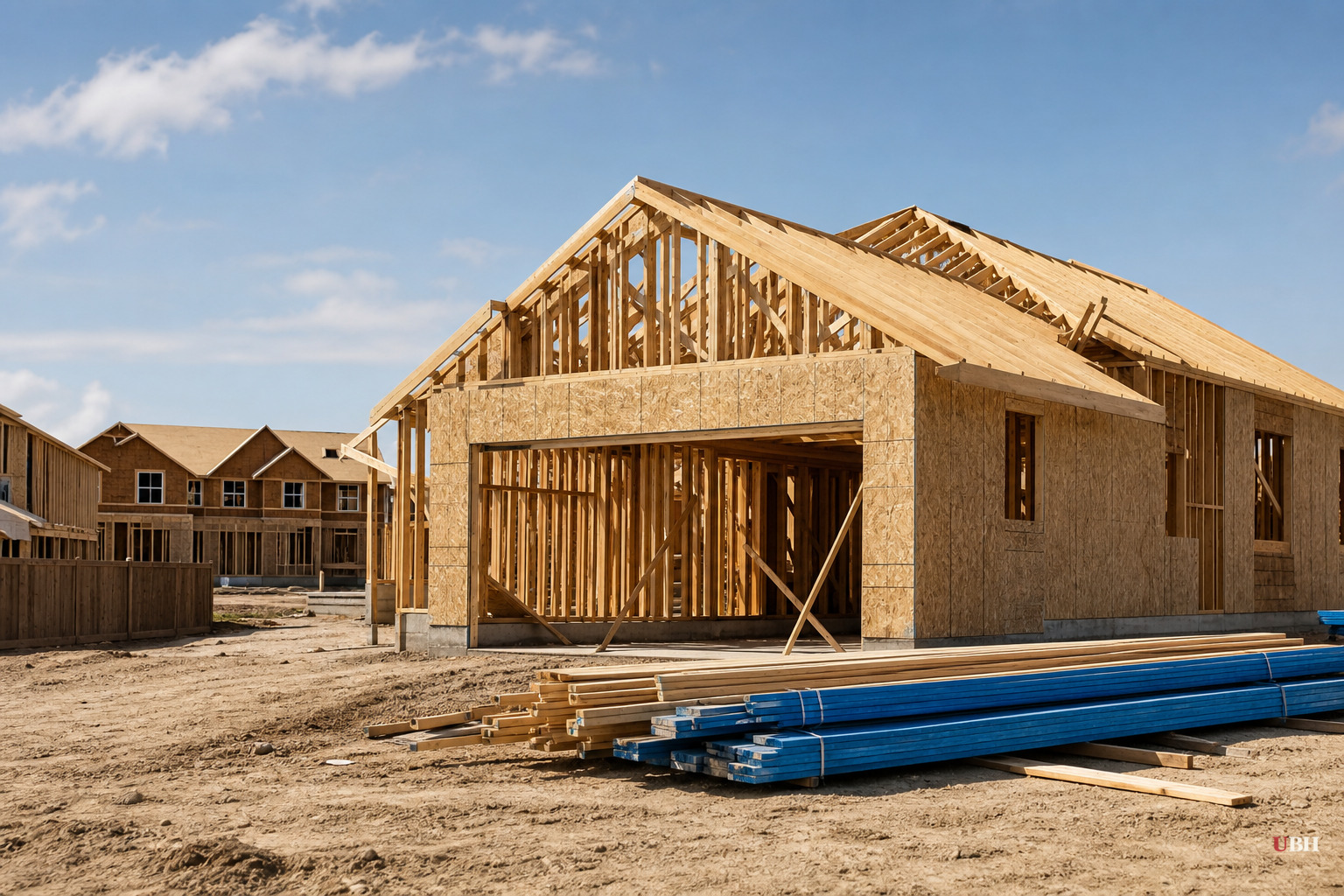
Homebuilders pulled back hard in July. Single-family housing starts fell 9.9% from June to a seasonally adjusted annual rate of 808,000 units, the slowest pace since November 2022, according to the Commerce Department's Census Bureau. That's down 15.7% from July 2025.
Total housing starts, which include apartments and condos, dropped 12.4% to an annual rate of 1.239 million, according to the Census Bureau and the Department of Housing and Urban Development. That was 13.5% below the July 2025 level and came in well under the 1.35 million pace economists polled by Reuters had expected.
It's the second-lowest monthly reading of 2026, behind only May's 1.182 million, according to data reported by Lesprom. Starts had hit 1.522 million back in March before sliding through the spring and summer.
The pain wasn't evenly spread. Mortgage Professional America reported the Northeast saw the steepest drop, with starts down 27.1%, while the West fell 13.8%. The Midwest and South, which had been holding up better earlier in 2026, dropped 5.0% and 4.9% respectively.
Blame goes to mortgage rates that won't budge. The 30-year fixed rate stood at 6.67% as of August 13, according to Fannie Mae data cited by Mortgage Professional America, and the Mortgage Bankers Association put the rate at 6.77% for the week ending August 7, still near the highest level in more than a year. Reuters, in reporting carried by WSAU and WHBL, noted that rate ticked down for the first time since mid-June, but it's a rounding error against a market that's been stuck near 7% for over a year.
Builder confidence reflects it. The NAHB/Wells Fargo Housing Market Index sat at 34 in July, the 15th straight month below the key 40 threshold, according to Mortgage Professional America. That's the longest stretch of depressed builder sentiment since 2012. NAHB Chairman Bill Owens said potential buyers "remain on the sidelines as they wait for lower mortgage rates, more certainty on inflation and a clearer economic outlook."
Existing home sales are also stalling. The National Association of Realtors reported contract signings for existing homes fell 2.3% in July to the lowest level since January, according to reporting from the Denver Gazette. NAR Chief Economist Lawrence Yun said "the highest mortgage rates of the year hit right in the middle of summer, and that's pulling back contract signings," adding that home prices are at record highs even as houses sit on the market longer.
Not everything in the report was bad news. Permits for future single-family construction rose 2.5% to a rate of 894,000 units, up 1.1% year-over-year, according to the Census Bureau. Total permits, including multifamily, jumped 5.0% to 1.443 million, beating the 1.37 million economists had forecast. Since permits typically lead construction by several months, that uptick offers a forward-looking signal in an otherwise grim report.
What's driving that permit bump is unclear, and forecasters aren't betting on a rate-driven turnaround anytime soon. Fif Ghobadian, senior vice president of mortgage lending at OriginPoint, told Mortgage Professional America, "I don't expect a big change in rates. I don't expect a big swing. I expect them to stay the same, maybe drop a tiny bit."
Some coverage tied the housing slump partly to "economic uncertainty from the Iran war," as reporting distributed via Reuters and picked up by the Denver Gazette, WSAU and WHBL put it. The bigger, more measurable driver here is math anyone with a mortgage calculator can run: a 6.7% rate on a home priced near record highs prices out a huge chunk of buyers. Builders aren't going to break ground on spec homes nobody can afford to close on.
Meanwhile the Federal Reserve's own numbers show factory output climbing to its highest level in more than four years in July, driven by AI-linked demand for high-tech equipment and industrial supplies, according to the Denver Gazette. That's the other half of this economy: manufacturing is running hot while residential construction, one of the most rate-sensitive sectors there is, is stuck in a near-four-year rut. Nationwide Senior Economist Ben Ayers said builders will likely stay "hesitant to make significant investments in new projects" until mortgage rates come down enough to let them move existing inventory.
Completions are falling too, down 9.1% in July to 1.212 million and 16.8% below last year's pace, according to the Census Bureau, which means the supply cushion that's kept some pressure off prices is thinning out even as new construction slows. The next data point worth watching: whether the Fed's rate path this fall moves the needle on that 6.7% mortgage rate, because until it does, this report says builders aren't betting on a turnaround.
Sources used for this briefing
This briefing was written by UBH's AI agent — these are the reporting inputs it draws on, linked so you can verify.


