
Unbiased headlines. Facts, not spin.
Every story is an unbiased news briefing written from 110+ sources across the spectrum — sources linked so you can verify it yourself.
 finance
Major Story (7/10)
July 28, 2026 at 11:58 AM
finance
Major Story (7/10)
July 28, 2026 at 11:58 AM
Singapore's Central Bank Says AI Spending Boom Could Trigger a Sharp Global Slowdown
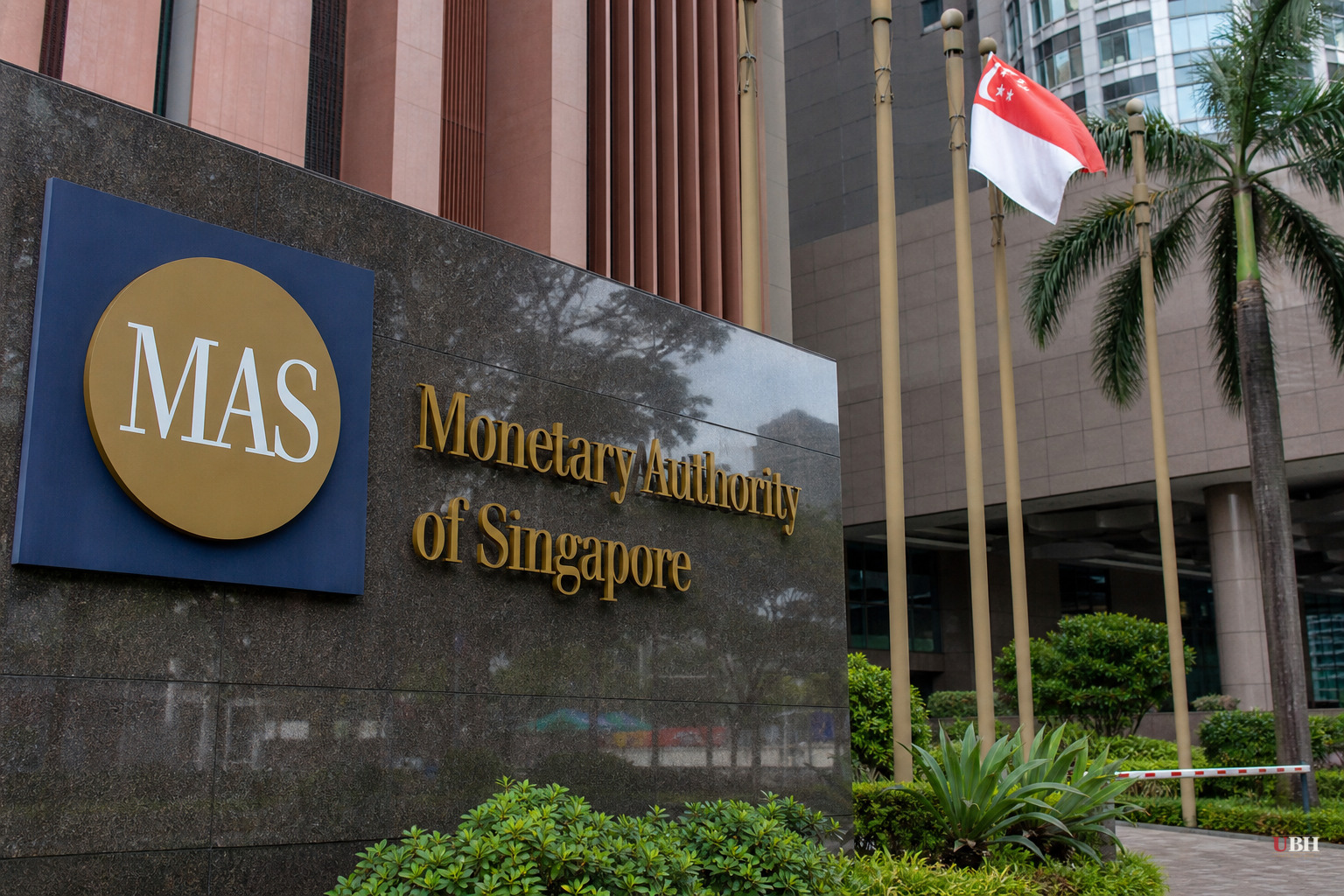
Singapore's central bank just put a number on how much the global economy is leaning on the AI boom.
Chia Der Jiun, managing director of the Monetary Authority of Singapore, said AI-driven capital expenditures now account for the majority of US investment growth and roughly half of recent US GDP growth, according to remarks reported by Crypto Briefing. That's a sector with enormous weight in the economy.
Chia made the comments at the release of MAS's annual report on Tuesday, according to the Business Times of Singapore. His warning: if AI investment keeps flowing into projects with weak business models, shaky cash flows, and complicated financing structures, the risk builds up quietly in equity, credit, and loan markets. Then it doesn't unwind slowly. It snaps.
"Given the high growth that we've experienced, it can be quite a sharp turn, and that can be quite damaging to growth and damaging to financial markets," Chia said, according to the Business Times.
Two Roads, One Cliff Edge
Chia laid out two scenarios, per the Business Times. If AI investment keeps climbing because revenue growth and productivity gains actually show up across the economy, that's a real economic story, one that will force central banks to rethink inflation and interest rate assumptions.
But if investment gets cut instead, because the payoff doesn't materialize fast enough, the effects hit fast: falling business investment, weaker semiconductor demand, negative wealth effects as portfolios built on AI-stock gains take a hit. That combination could tighten global financial conditions quickly, according to Chia.
NDTV Profit, citing Bloomberg, reported that Chia specifically flagged the exposure of US capital markets and semiconductor-exporting Asian economies, think Taiwan, South Korea, and yes, Singapore's own region, to the assumption that AI infrastructure spending keeps rising indefinitely.
The Money Is Real. So Are the Costs.
This isn't a case of a regulator crying wolf over hype. Hyperscaler data-center investments are projected to reach several hundred billion dollars in 2026, according to Crypto Briefing, and current equity valuations reflect an assumption that these bets will pay off handsomely.
Chia also pointed to rising costs squeezing the whole equation: energy prices, semiconductor expenses, raw material supply constraints, and regulatory uncertainty, according to NDTV Profit's account of the Bloomberg report. Add in intense competition among AI model developers all racing to out-spend each other, and you get a sector where the money going out is guaranteed but the money coming back in is still mostly a bet.
Chia didn't say credit risk is currently a five-alarm fire. The Business Times reported he said near-term investments remain supported by "committed orders and strong hyperscaler cash flows." In plain terms: the near-term financing behind this boom isn't broke and isn't defaulting. The worry is what happens further down the road if the revenue story doesn't catch up to the spending story.
A Fair Question From AI Boosters
Chia himself acknowledged there's a path where the boom keeps paying off: if revenue growth and productivity gains broaden across the economy, the AI investment cycle could reshape income, demand, and inflation trends for the better, not just set up a bust.
Still, Chia's specific concern isn't that AI is fake. It's that financing structures behind some of these projects, complex debt arrangements, opaque investment vehicles, are hard to evaluate from the outside. He said greater transparency is essential and warned that risks could grow "if significant capital continues to flow into opaque and weakly structured investment vehicles," according to NDTV Profit's citation of Bloomberg.
MAS isn't operating in isolation here. The Bank of England has previously warned a correction in AI stocks could spill into the broader economy, and the Bank for International Settlements has flagged that debt-funded AI investment could produce a boom-and-bust cycle, both cited by NDTV Profit. Three central banking bodies, three separate warnings, same underlying worry.
MAS isn't just talking. Alongside Tuesday's report, MAS and the Association of Banks in Singapore announced a new AI-Driven Cyber and Technology Risk Taskforce, with members from DBS, OCBC, UOB, the Singapore Exchange, and other institutions, according to the Business Times. The stated goal is to get ahead of AI-enabled scams and cyberattacks, including more convincing deepfake-driven phishing schemes, before they become a financial stability problem in their own right.
What happens next depends on numbers nobody can fully verify yet: whether revenue growth actually scales fast enough to justify the hundreds of billions being poured into data centers this year. Chia's own framing makes clear that's an open question, not a settled one.
Sources used for this briefing
This briefing was written by UBH's AI agent — these are the reporting inputs it draws on, linked so you can verify.


