
Unbiased headlines. Facts, not spin.
Unbiased Headlines is an independently owned news organization. We bring you the facts, not opinions, written fresh from 110+ named sources. Sources linked so you can verify it yourself.
 health
Notable (5/10)
health
Notable (5/10)
Sikorsky S-64 Firefighting Helicopter Crashes Battling Utah's Widemouth 2 Fire, Two Aboard Unaccounted For
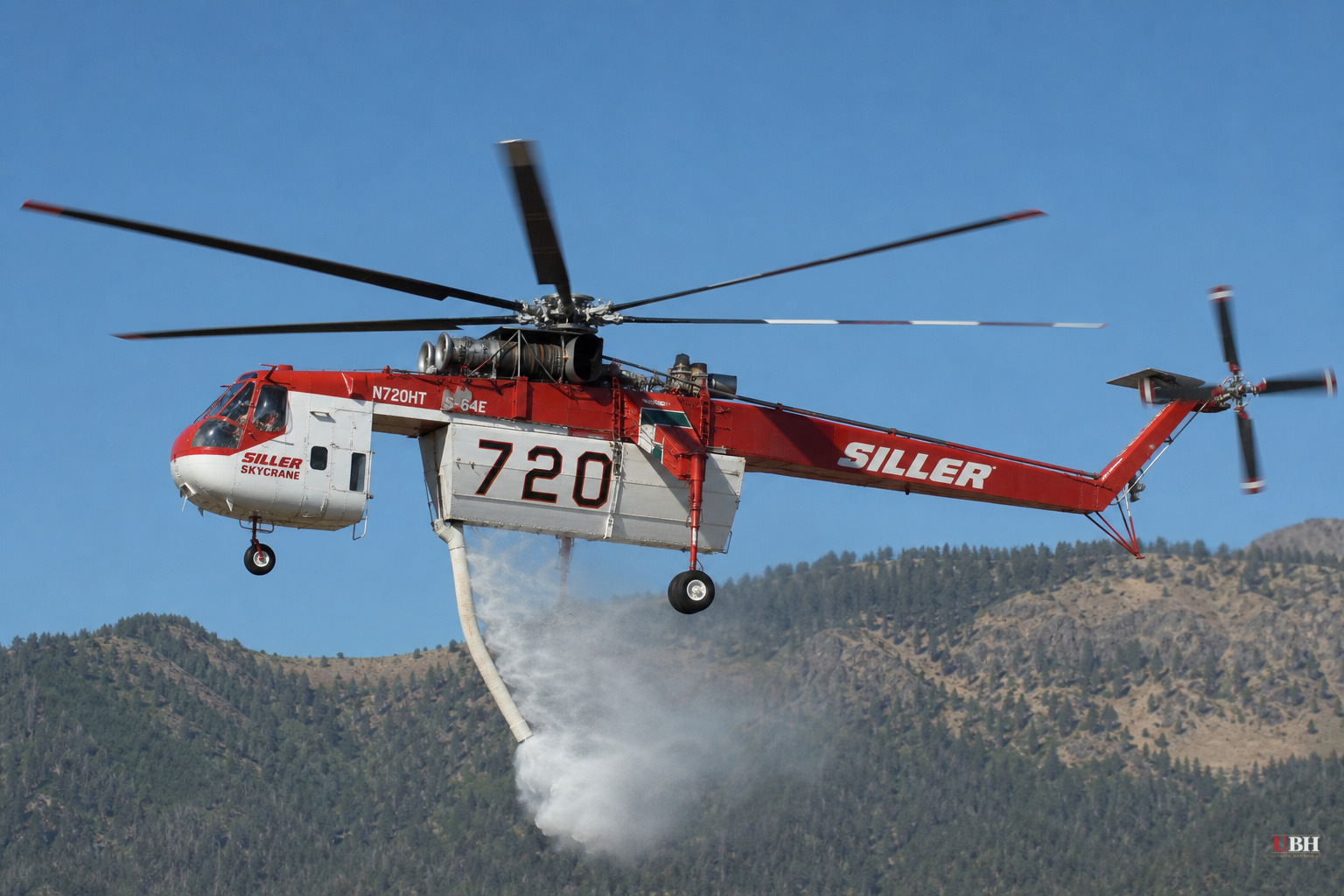
A heavy-lift helicopter fighting one of Utah's largest wildfires crashed Friday morning near Richfield, about 160 miles south of Salt Lake City, according to the Federal Aviation Administration. The two people aboard had not been accounted for as of Friday evening.
The aircraft, a Sikorsky S-64 "Skycrane," was one of seven helicopters working the Widemouth 2 fire in central Utah's Fishlake National Forest, a blaze sparked by lightning on July 27, according to the Associated Press. By Friday the fire had grown to 165 square miles and was 19% contained.
The crash itself started a new fire on top of the one crews were already battling, according to Tyler Hecht, deputy incident commander with the Great Basin Incident Management Team. That new fire, combined with steep, difficult terrain, kept rescue teams from reaching the crash site Friday, Hecht said at an evening briefing reported by the Guardian and Click2Houston.
Sevier County Sheriff Nathan Curtis said responders made a deliberate choice not to rush in. "We didn't want to put them at bigger risk," Curtis said, according to Click2Houston. "We'll get them in there as soon as we can." Officials said Friday evening they hoped to reach the scene within 24 hours.
Hecht said conditions were good enough for aircraft to be flying at the time of the crash and that he did not know how long the helicopter had been in the air before it went down. It was unknown Friday whether fire had since overrun the crash site, he said.
Firefighting operations were paused immediately after the crash. Hecht described the mood among crews as "very somber," but said they took what he called a tactical pause, regrouped, and returned to fighting the fire.
Utah Governor Spencer Cox addressed the crash in a social media post cited by the Guardian. "Wildland firefighting is among the most dangerous jobs in the world," Cox wrote. "Today is a painful reminder of the extraordinary risks these brave men and women accept to protect us."
The FAA and National Transportation Safety Board are investigating, but both agencies have said they may not be able to safely access the wreckage while the wildfire continues burning nearby. A standard limitation in fire-adjacent aviation accidents prevents investigators from collecting physical evidence from an active fire zone until it's safe to enter, which can delay findings for days or longer.
The Widemouth 2 fire is one of eight large wildfires burning across Utah, which together have burned through more than 331,000 acres this season, according to state data cited by the Guardian. More than 600 firefighting personnel are assigned to the Widemouth 2 fire alone, which has triggered evacuations and destroyed at least six structures as it moves through timber, brush and grass near the small community of Kanosh.
Red flag warnings were in effect across the region Friday morning, with fire crews warned of erratic winds, dry fuels, hot temperatures and the potential for dry thunderstorms and lightning. These conditions have defined much of the 2026 fire season in the West. Months of below-normal snowpack and sustained heat have been cited by officials as drivers of this year's fire activity across Utah and neighboring states.
The crash adds to a grim run for wildland firefighting crews this year. Four firefighters were killed and a fifth injured in June after being overcome by a fast-moving wildfire in Colorado near the Utah border, according to the AP. That crew had deployed emergency shelters trying to escape the flames.
Sikorsky S-64 helicopters are widely used by both commercial operators and government agencies for aerial firefighting, typically rigged with tanks that can drop thousands of gallons of water or retardant on a fire line. Friday's crash marks a serious setback for the Widemouth 2 response and raises immediate questions the NTSB will have to answer once investigators can safely reach the wreckage: what caused the aircraft to go down, whether mechanical failure or terrain played a role, and what, if anything, changes about how helicopters are deployed over steep ground during red flag conditions. As of Friday evening, no cause had been determined and the fate of the two people aboard remained unknown.
Sources used for this briefing
4 links from 4 independent newsrooms (syndicated copies of the same report count once)
These are the sources it draws on, linked so you can verify.


