
Original briefings. Zero spin.
Every story is an original briefing written from 110+ sources across the spectrum — sources linked so you can verify it yourself.
 economy
Major Story (7/10)
August 18, 2026 at 11:13 PM
economy
Major Story (7/10)
August 18, 2026 at 11:13 PM
Shapiro Flips on Data Centers, Signs Executive Order Requiring Local Approval and Developer-Paid Power in Pennsylvania
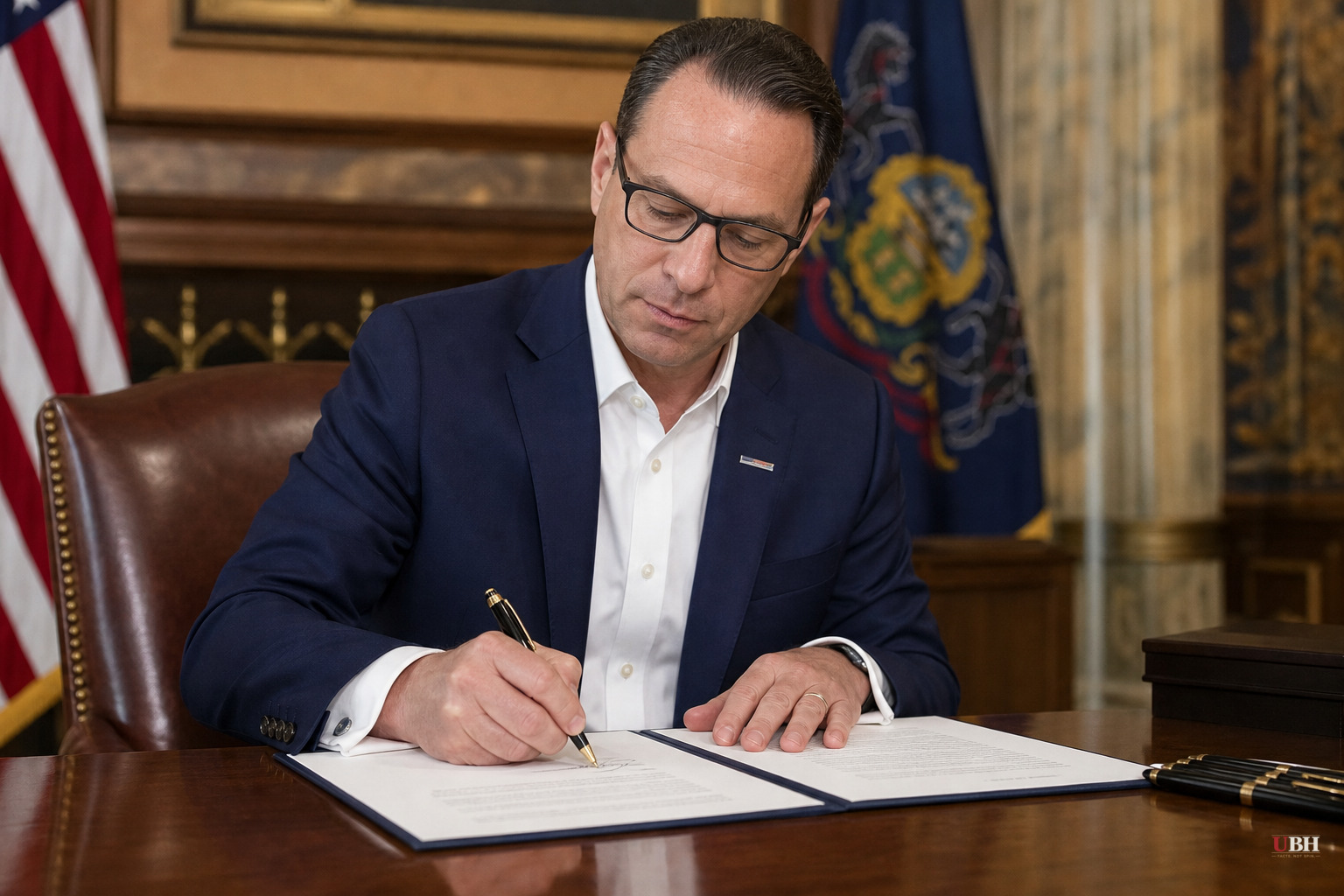
Governor Josh Shapiro spent last year selling Pennsylvania as an AI powerhouse, touting a $20 billion Amazon commitment to build data centers in Bucks and Luzerne Counties. On Tuesday, August 18, 2026, he signed an executive order designed to stop the very industry he recruited.
The order locks in Shapiro's Governor's Responsible Infrastructure Development (GRID) standards, first proposed in February, according to NBC News. Data center developers must now get local government approval before getting a state permit. They must pay the full cost of their own electricity generation, hire locally, meet water-conservation rules, and sign legally binding commitments to those terms. Nondisclosure agreements between the state and developers are banned outright.
Shapiro also stripped data centers from Pennsylvania's fast-track permitting program, meaning even the Amazon-backed projects he once celebrated lose that expedited status going forward, according to the Philadelphia Inquirer.
"I have no other choice than but to take this executive action to protect the good people of Pennsylvania from these predatory developers," Shapiro said, according to the Inquirer. In his public remarks he went further, saying, "We will not be bullied by these developers. We will not be bulldozed by the lawyers working for these big tech companies," as reported by NBC News.
Why the reversal
Shapiro's GRID standards were originally pitched in February as voluntary guidelines tied to tax incentives. They went nowhere in the GOP-controlled state Senate, according to the Inquirer. Rather than wait for legislation, Shapiro used executive authority to make them mandatory.
The political backdrop matters. Shapiro is up for reelection this fall against Republican Stacy Garrity, and he's widely floated as a 2028 Democratic presidential contender, according to CNN. The Inquirer reported last week that his early embrace of data centers was testing his previously sky-high approval ratings with Pennsylvania voters increasingly hostile to the projects.
That hostility isn't isolated to Pennsylvania. A March 2026 Gallup poll found seven in ten Americans don't want a data center in their community, and a June 2026 Reuters/Ipsos survey found 77% expressed concerns about data center development, according to the Epoch Times. Data Center Watch reported at least 75 projects worth roughly $152 billion were denied, tabled, or withdrawn by local governments in just the first quarter of 2026.
A bipartisan retreat
This isn't a partisan story. Democratic New York Governor Kathy Hochul announced a statewide moratorium on hyperscale data centers, and Republican Texas Governor Greg Abbott paused new data center grid connections on August 3 pending a statewide audit, according to Fox News. At least 14 other states, including Maryland, Michigan, Minnesota, Wisconsin and Virginia, are weighing similar moves.
In Texas, Democratic state lawmaker Gina Hinojosa is running a TV ad accusing Abbott of "selling you out" to data center companies, according to CNN. In Pennsylvania's 8th Congressional District, Democrat Paige Cognetti, the mayor of Scranton, is running a $200,000 ad campaign against Republican Rep. Rob Bresnahan invoking data centers, saying "we are not for sale," according to Breitbart's report on the Associated Press wire story. Bresnahan, for his part, has introduced the Local Control Protection Act to limit corporations' ability to sue over local zoning denials, though the bill hasn't moved out of committee.
The other side of the ledger
Fox News makes a fair point: communities that shut out infrastructure development have historically been the ones left behind economically, the way towns that rejected 19th-century railroads and canals missed out on the growth that followed. Fox also cites a Lawrence Livermore National Laboratory analysis that found none of the seven factors driving above-inflation electricity price increases from 2019 to 2024 were tied to data centers. The White House announced in late July that Amazon, Google, Meta, Microsoft, OpenAI, Oracle, xAI and more than 200 other companies agreed to cover 100% of the power infrastructure costs their data centers require, according to Fox.
Industry and its allies say the grid-cost fears are overstated and self-correcting as large-load tariffs spread to 19 states. Residents and now a bipartisan slate of governors say the risk to water tables, electric bills, and rural land isn't worth waiting to find out. In Cheyenne, Wyoming, that friction turned into direct democracy: an ad hoc group of residents gathered signatures from 10% of registered voters in 20 days to force a referendum after the city council approved a 3,460-acre annexation for a Microsoft expansion, according to the Epoch Times.
Pennsylvania's order stops short of an outright moratorium. Amazon's projects, and every future proposal, must now clear local approval and meet GRID's terms to get a state permit.
Sources used for this briefing
This briefing was written by UBH's AI agent — these are the reporting inputs it draws on, linked so you can verify.


